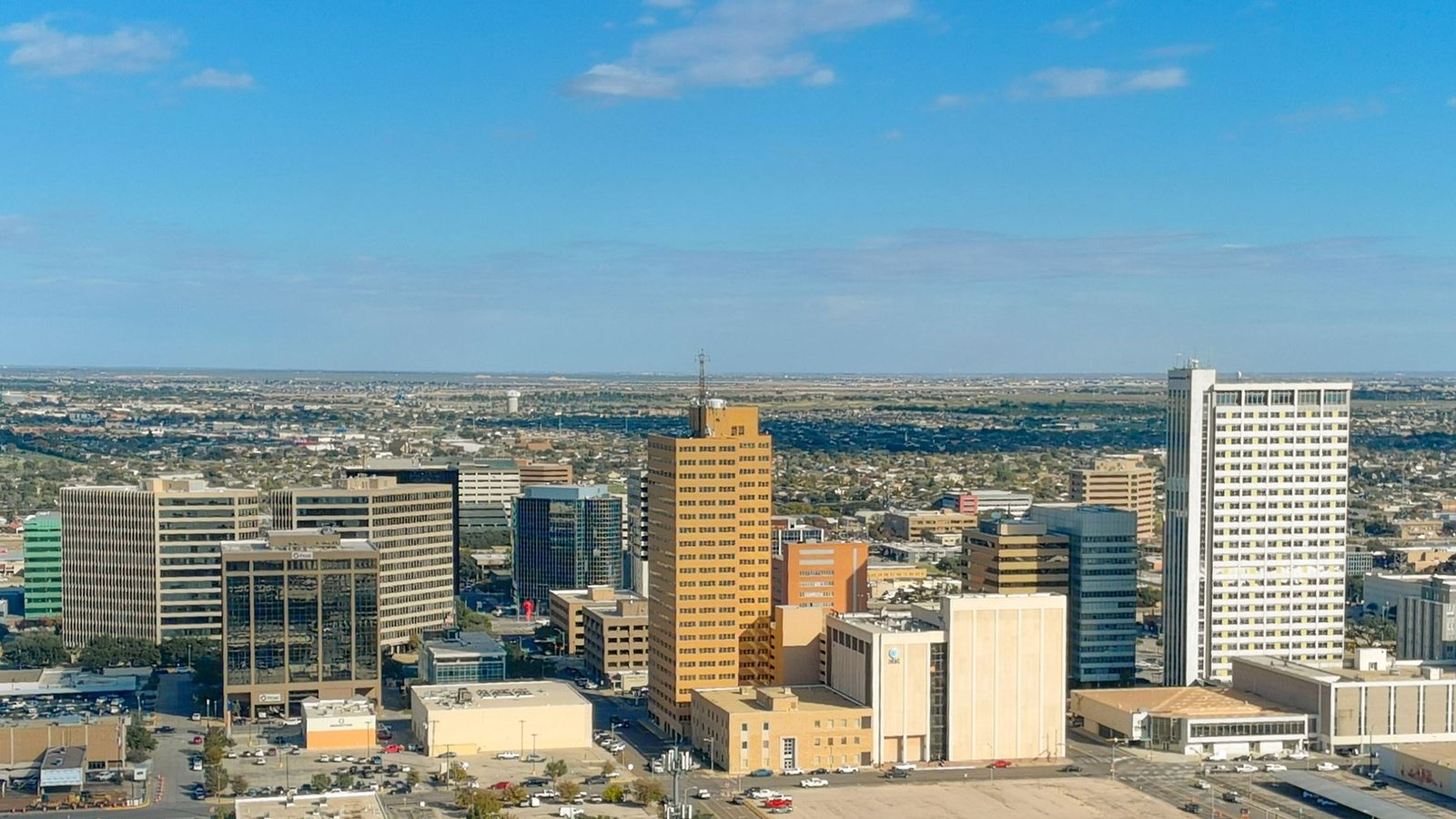
Concrete for Farm, Gin and Equipment Buildings Out of Midland, Texas
Farm and ranch owners who buy a building shell near Midland still have to get a floor under it, and the floor is usually the part that stalls the job. A cotton module shed, a shop for tractors and sprayers, a storage barn with a drive-through lane: each needs a slab that is flat enough for the equipment, thick enough for the loads and poured while the weather allows. We build that work from Midland, where the batch plants are close and the highway network lets crews fan out in every direction.
The roads explain the logistics. Interstate 20 and Business I-20 cross Midland alongside SH 158, SH 191 and SH 349. The loop routes are numbered 40, 250 and 268, so a crew leaving a Midland yard can reach a ranch gate, a gin lot or an oilfield-adjacent shop without crossing a single town center at rush hour. We plot every ag-building job on that grid first, count the miles to the plant, and decide whether the pour runs as one long morning or splits across two.
What follows is how we handle concrete for buyers in Midland County and the farm country beyond it: what we bring, how permits and reviews tend to go, which owners call us, and how we fit a pour between wind and heat.
Work that travels with a farm building slab
A slab for an agricultural building rarely arrives alone. The same owner wants a truck apron and wash pad, a set of equipment pads for a fuel tank or a compressor, and a concrete approach so loaded trailers do not rut the yard. We scope these together because the forms, the rebar and the mobilization are shared, and a second trip out to a remote site costs far more than adding a day to the first.
Footings are the other half of the conversation. A pre-engineered shell needs footings and stem walls sized to the reactions on the engineer's drawings, and in open country the wind loads drive those numbers. We confirm the sequence with the metal building erector before we cut a single trench so the anchor bolts land where the column plates expect them.
Permits and plan review for buildings outside the loops
For a commercial slab within Midland, we confirm city permit review and use its adopted construction code, and the review turns on drainage, subgrade preparation and the engineer of record. Outside city limits the path is different, and many ag buildings on open land see lighter oversight. Lighter review does not mean lighter structure, so we still build to the engineer's details and keep the cylinder and slump records that an insurer or lender may ask for later.
One site condition shows up on the plans of nearly every job here. At an elevation of roughly 2,779 feet, Midland has the Midland Draw watercourse crossing its northern limits, so low spots shed water toward the draw. We look at grading before we price, because a pad that drains toward the building instead of away from it will give the owner a wet floor in the first hard rain.
Who calls us from Midland for outbuildings and yards
Our calls come from general contractors erecting metal shells, from agriculture and dairy owners who handle their own procurement, and from oil, gas and midstream operators who run farm-style shops on lease roads. Each of them cares about a different thing. The general contractor wants a clean turnover date, the grower wants the slab done before harvest equipment needs the shed, and the operator wants a pad that holds a service truck.
Terminal expansion at Midland International Air and Space Port broke ground in October 2025, with completion expected in 2027. That airport lies between Midland and Odessa. Its program affects regional demand for labor and ready-mix. We watch that demand because a heavy public pour on a given day can tighten truck supply for a small private slab, and we book ours with that in mind.
Fitting a pour between wind and heat
Midland's climate record sets the calendar. Airport climate normals give roughly 24 days reaching 100 degrees F annually. Mornings at freezing or colder number about 58, and annual precipitation averages just 13.51 inches. That is a dry place, which sounds easy for concrete until the wind and the sun pull moisture off a fresh surface faster than a crew can finish it. Summer slabs start at first light and finish before the afternoon heat. Winter slabs wait for a forecast above the cutoff and get blankets.
We schedule backward from the plant. A truck dispatched from a Midland batch plant to a ranch road east of town may spend a long time in transit, so we confirm retarder and mix temperature with the supplier, line up a second truck for any pour over a few yards, and keep a standby crew on the ground. Wind delays are called on the morning of the pour, and we move the date without penalty to the owner if the readings are bad.
How we plan a remote ag pour
Our planning starts with a map and a phone call to the plant. We note the miles from the plant to the site, any caliche or sandy ground on the access road, the weight limits on the farm-to-market road, and whether a pump truck can reach the building. Those answers decide whether we bring a mixer chute or a boom pump, how many trucks we stack, and what time the first load leaves.
Next we write the pour sequence in plain steps for the owner: subgrade check, vapor barrier if the use calls for it, steel, forms, placement, screed, finish, cure, saw cuts. Everyone on the site, including the shell erector, gets the same sheet. If a step slips, the sheet shows what moves after it, so nobody finds out a day late.
Concrete placement and site-work coordination
The concrete partners we coordinate place, screed and finish the concrete, set the forms and tie the reinforcing steel. For slab-on-grade work in an equipment shed we handle control joint layout and curing so the floor does not curl at the doors. Where a job needs a pump we arrange concrete pumping and placement with a local operator and stay on site to direct it.
Site utilities and earthwork are different. We set a work sequence for the trenching, pad-preparation and imported-fill contractors. Their compaction must meet the engineer's requirements before forms can be placed. We do not claim that work as our own, and the owner sees each trade's scope separately.
Reaching the surrounding ranch and farm country
From Midland the concrete partners head to Stanton along the interstate, to Big Spring farther east, and south and west to Odessa, West Odessa and Andrews. Each leg has a different haul time from the batch plant, and we quote each site from its own number rather than a flat regional rate.
If the project sits on a county road beyond those towns, send us the coordinates. We will tell you plainly whether the plant's mix will stay workable on the drive, or whether a closer source in the next town makes more sense.
Send the site location and building plan
Share the address or coordinates, the building footprint and what will sit on the floor. We read it against the haul, the weather record and the shell schedule, then talk through truck count, crew travel and a workable pour window.
Common Questions
How far from Midland will you build an agricultural building slab?
The limit is the haul, not the map. We look at the minutes between the batch plant and the site, the road surface and how many trucks the pour needs, then tell you whether the mix will arrive workable. Many sites within a couple of hours work well. Beyond that we may suggest a closer plant or a split pour.
Do farm buildings need engineered slabs?
Usually yes if a lender, insurer or erector is involved, and often when equipment loads are heavy. We pour to the engineer's thickness, joint pattern and reinforcement. If an owner has no engineer, we ask the shell supplier for the design loads and flag what is missing before we price.
What does wind do to a fresh slab near Midland?
Wind dries the surface faster than the concrete bleeds, which causes plastic shrinkage cracks. We use windbreaks, evaporation retarders, early finishing and prompt curing, and we move the pour if the forecast gusts are too strong for the crew to keep up.
Can you pour around harvest or equipment deliveries?
Yes. Tell us the date the shed has to be usable. We schedule the slab to cure with enough time for the load, and we sequence the shell erection around it so equipment can move in without scarring the floor.