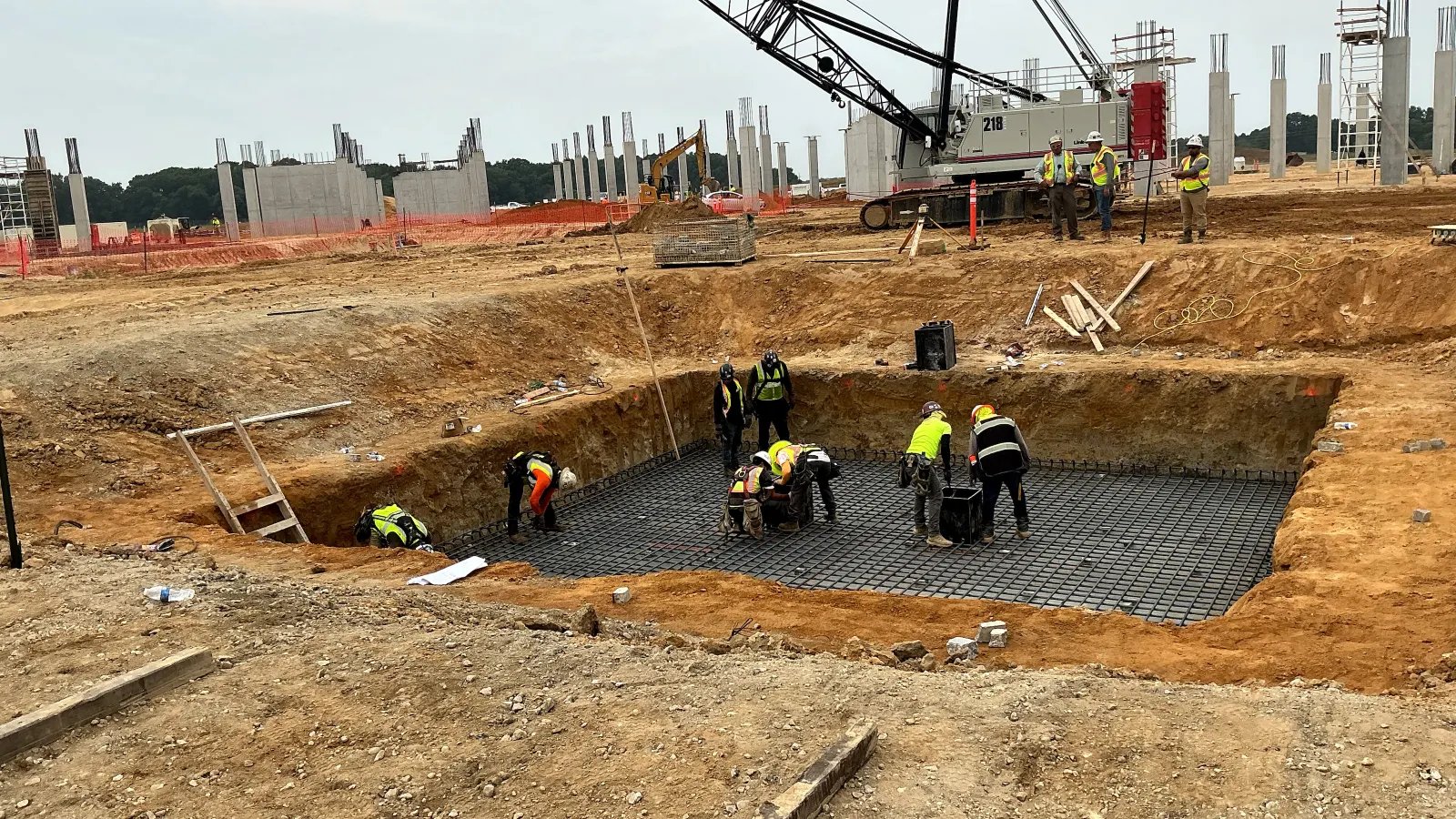
General Contractor Concrete Subcontracting Across West Texas
Most general contractors who call us from West Texas are not asking whether concrete can be placed in a given town. They are asking who will be on the site on the pour day, how many trucks will arrive and what happens if the second load is late. A prime contractor with a fixed completion date wants a concrete subcontractor that has already thought about the miles.
Concrete Contractors of West Texas works under general contractors and construction managers on foundations, slabs, paving and flatwork, while trade partners we schedule take the utilities and earthwork. The concrete partners we coordinate mobilize from job to job across the South Plains, the Permian Basin, the Big Country, the Concho Valley and the Trans-Pecos, and every bid we submit starts from a haul-time and crew-travel number rather than a unit price alone.
That approach suits a GC because it shows where risk sits. If your project is in Stanton, on Interstate Highway 20 in the Martin County seat, the logistics are different from a job beside the junction of U.S. Highways 62 and 70 at Floydada. We tell you that in the bid.
How a concrete subcontractor fits your master schedule
We ask for the master schedule early and mark the concrete milestones on it: footing pours, slab placements, curing and strip dates, and the point where the next trade needs the slab. Then we back into our own mobilization dates, accounting for crew travel and the days the equipment needs to stage before work starts. A job two hundred miles from the last one does not get a Monday start unless the crew leaves the previous site on Friday.
Each week we send a short look-ahead listing the next pours, their volumes and the plant confirmations. If a pour is at risk from wind, heat or a late inspection, the look-ahead says so before the day arrives. General contractors tell us the habit is more useful than a long narrative report, because they can forward it to the owner's representative with no editing.
Specifications, special inspections and the local permit office
On a typical commercial job we receive a project manual with concrete sections referencing mix designs, curing requirements, reinforcement placement and testing frequency. We review those sections against the drawings and send a short list of questions before bid day, because a conflict between a specification and a detail is much cheaper to resolve on paper than in the field.
Permits in this part of Texas vary by town. Some county seats have a small permit office that turns reviews around quickly, while others route through a county or a consulting engineer. We follow the adopted building code as the local permit office applies it, we coordinate with the special-inspection firm on the sample schedule, and we keep break results and delivery tickets organized for your closeout file. If a cylinder break comes in low, we notify you the same day and propose a corrective path with the engineer of record.
The buildings we pour for under general contractors
General contractors bring us a mix of project types: warehouses with large slabs and truck courts, school buildings with phased foundations and flatwork, and shop and office buildings for oilfield and agricultural owners. Each type has its own pour rhythm. A warehouse is mostly about slab flatness and joint layout over a large footprint, while a school has many smaller placements that have to finish ahead of the framing crew.
We price each building type from the same inputs, but we shape the crew differently. A large slab needs more finishers and a laser screed, and a small footing job needs more forming and fewer hands on the trowel. Telling us the building type and its slab thickness at the start lets us send the right crew the first time.
Other owners behind the same general contractors
A GC's backlog is rarely one kind of owner, and the concrete partners follow that mix. The prime contractor who builds a clinic for a developer may also hold a county building contract, so we also work on projects described on our municipal and public works page, with their bonding, prevailing-wage and documentation rules. The same GC may be hired by commercial developers who care more about the opening date than about the paperwork.
Rail and highway access shapes the supply side of these jobs. The Texas Pacifico line runs 376 miles from San Angelo Junction near Coleman through San Angelo to Alpine, and a project near that line may be able to receive steel, rebar or precast by rail before it moves by truck. When the schedule depends on delivery of materials we are not supplying, we ask the GC to share the delivery dates so the pour plan has no gaps.
Concrete services most GCs bundle into one subcontract
Prime contractors prefer fewer subcontracts, so we offer the pieces of the structure that connect. Concrete formwork and rebar placement are scoped with the pour, which keeps one party responsible for the reinforcement and the form it sits in. Where the owner requires third-party verification, we manage concrete testing and quality control sampling so cylinders are cast, cured and delivered on the schedule the lab expects.
If the contract also calls for earthwork or utilities, partners we manage perform it and we keep the sequence linked, so the GC makes one call about order of work even with several companies on the lot.
What a typical concrete subcontract includes
A standard subcontract with us lists the footings, grade beams, slab on grade, thickened edges, slab penetrations and exterior flatwork shown on the drawings. We clarify what is included and what is not, especially on topics that can slip through the gap between trades: waterproofing under a slab, vapor barriers, sleeves for plumbing, embedded items for the steel erector and anchor bolts set to a template.
On a job in Stanton or Floydada, we also list the temporary items that a remote site needs, such as concrete washout, pump setup, curing blankets and the portable restroom for finishing crews who arrive from a distance. These are small lines on the bid, but putting them in writing removes the argument later about who was supposed to provide them.
Send the drawings and the schedule
Send the concrete sheets, the project manual sections and the dates your owner has given you. We will reply with questions and a pricing breakdown that separates distance costs from material and labor.
Common Questions
How do you price concrete work that is far from our home office?
We separate mobilization, daily crew travel and equipment staging from the unit prices for concrete, so you can see what the distance costs. If you can combine our work with another trade's mobilization to the same town, we price the shared savings.
Will you carry a performance bond on a public GC contract?
Bonding requirements depend on the owner and the contract value. Tell us what the prime contract requires, and we will confirm what we can provide before submitting a bid.
What do you need from us before a pour date can be confirmed?
We need a signed-off subgrade or a clear date for it, rebar inspection scheduled, the plant confirmation and a weather window. We ask for the inspector's name and phone so we can check access the day before.
Who coordinates with the special-inspection firm?
We do. We give the inspection firm our pour calendar and the delivery ticket data, and we coordinate cylinder casting, curing and pick-up on the schedule their lab requires.
What happens if wind or heat shuts down a planned pour?
The foreman decides on site. We tell your superintendent the same day, move the pour to the next workable window and tell the plant. Where a delay affects another trade's start, we say so in writing.