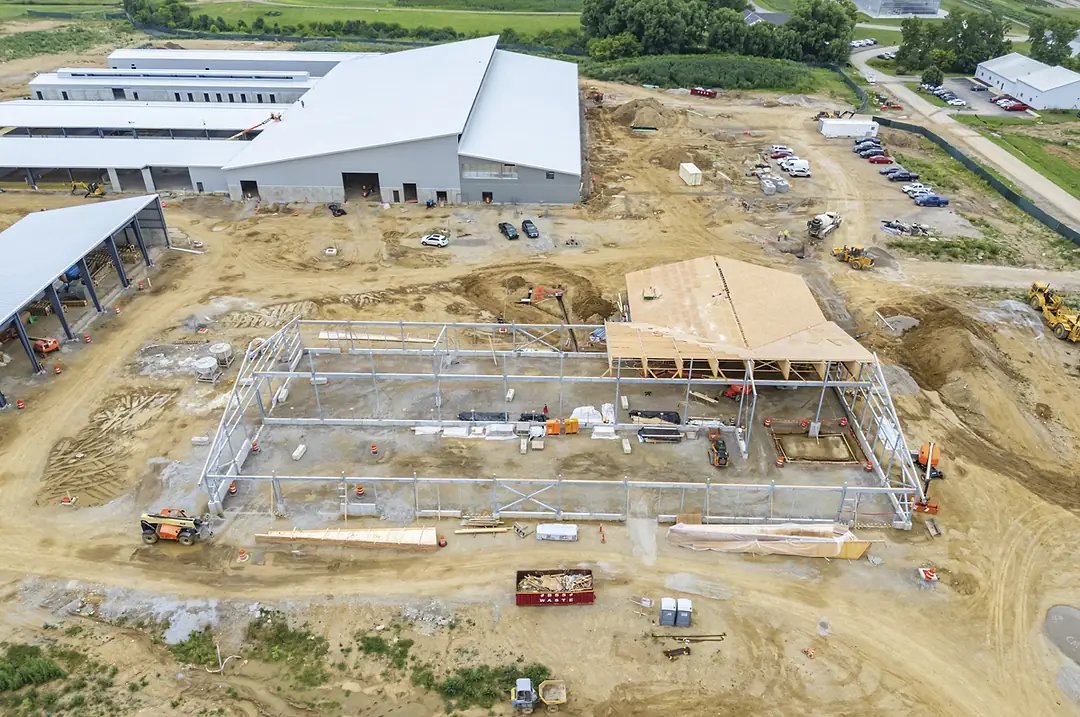
Concrete for Agriculture and Dairy Owners in West Texas
Barns, feed pads, milking parlors, gin yards and grain handling floors are built for animals, equipment and weather that do not wait on a schedule. On the South Plains and across the Big Country, an agricultural owner often has a short window between harvest and planting, or between herd changes, when a floor can be poured and cured. If the window closes, the work waits another season.
Concrete Contractors of West Texas places slabs, feed lanes, wash pads, equipment aprons and farm drive concrete for agricultural and dairy owners, and we coordinate trade partners for earthwork, ponds and utilities. We begin with the owner's calendar and the distance from the batch plant to the farm gate, because a ranch road ten miles from pavement is a different job from a barn beside a state highway.
Barns, parlors, pads and processing floors
The buildings on a farm or dairy vary in what they ask of concrete. A pre-engineered metal building used as a shop or equipment barn needs a stem wall and slab that match the frame's reactions. A milking parlor needs sloped floors, trench drains and a finish that gives traction when wet. Feed lanes and holding pens take constant scraping and washing, so the surface must be dense and well cured.
Processing buildings such as cotton gins and packing facilities share some traits with food and beverage processing plants: washdown, floor slope and chemical resistance. We ask owners what the floor will carry and how it will be cleaned, then design the finish and joint pattern.
Permits, wastewater rules and engineered details
Livestock operations fall under state environmental rules for wastewater and runoff, and owners often have a nutrient or waste management plan from an engineer. Concrete lagoon liners, collection channels and containment pads must match the details in that plan. We work from the engineer's drawings and ask for revised sheets when site conditions change.
Building permits for farm structures vary by county. Some counties leave agricultural buildings largely unreviewed, while others require a plan check for any structure with people inside. We ask the county early and describe what the owner can expect.
Weather, water and farm economies
Tahoka has a semiarid climate with average annual precipitation of about 20.68 inches, a July mean daily high of 93.3 degrees F and a record low of 15 degrees below zero F. That range, from hot summers to hard winter nights, shapes when concrete can be placed. Midland's airport record for 1991 to 2020 works out to roughly 13.5 inches of rain a year, with 24 days of triple-digit heat, plus 58 frosty mornings, so the workable window narrows at both ends of the year.
Water also shapes the work. In the Concho Valley, the city of San Angelo sits at the junction of the North, South and Middle Concho rivers, and a flood in 1882 destroyed the Tom Green County courthouse at the former county seat of Ben Ficklin. Farm owners near rivers and draws plan pads and lanes with that history in mind.
Farms, feedlots and dairies on the long roads
Crane sits on a highway that reaches Odessa 32 miles to the north and McCamey 21 miles to the south, with State Highway 329 crossing town. Farm and ranch properties along roads like these may be far from a ready-mix plant, and the drive affects how much working time the mix needs. Clyde, inside the Abilene metro area and served by its own consolidated school district, shows another pattern: farms close to a larger city with shorter hauls but heavier traffic.
We mobilize crews across the South Plains, the Big Country and the Concho Valley, price distance separately and tell the owner how many pours we can combine into one visit.
Where farm concrete costs come from
Farm budgets are close, and owners want to see what drives the number. Thickness is the largest driver, followed by reinforcement, the length of haul and the number of separate pours. A feed lane that is 6 inches thick costs less than one that is 8 inches, but it may need replacement sooner under heavy mixers. We offer the options and explain the trade.
Site work adds to the total. Pond and basin excavation, grading and drainage go to partners we manage and are priced on their own so that an owner can phase them. Combining several small pours into one mobilization reduces cost per yard.
Working around the farm calendar
We ask for the dates that matter: harvest, calving, planting, the arrival of new equipment. Then we plan so concrete is placed and cured before those events. Where cattle or other animals are present, we fence the work area, agree on gate procedures and keep chemicals out of animal contact.
The same crews and equipment serve plant and shop owners and utility and energy owners nearby, which helps when a farm sits beside a plant or a pipeline corridor and shares its road. Many owners do part of the work themselves, such as clearing the site or hauling gravel. We are glad to coordinate that if the scope is clear, though we remain responsible for the work we place, including forms, reinforcement, placement and finishing.
Safety around animals, equipment and chemicals
A farm job involves hazards that urban sites do not have: loose animals, farm equipment moving across the site, grain dust and manure gases in confined structures. We hold a safety talk at the start of every visit, lock gates behind us and walk the route with the farm manager.
Heat is a major risk in summer, and the concrete partners we coordinate carry water, rest in shade and stop early when conditions demand it. Confined spaces such as pits and tanks follow written entry procedures.
Drainage, manure and washdown
The greatest design challenge on a dairy or feed yard is moving liquid. Floors slope to channels and channels lead to collection basins. If any of these is off by even a small amount, water stands, animals slip and surfaces degrade. We shoot elevations before placement and again after, correct if needed and document the results.
Concrete exposed to manure, acids and salts requires a well-graded mix, low water content and good curing. The owner and the engineer choose among sealers and coatings for areas with heavy chemical exposure. For containment pads, culverts and headwalls and detention and retention ponds, we coordinate with the excavation and drainage trade partners.
Tell us the calendar and the gate
Tell us where the farm is, what the pad has to carry and which dates matter. We will check the road and the plant and talk through a pour plan that fits your season.
Common Questions
Can a feed lane be poured between harvest and planting?
Often yes, if the subgrade is ready, the plant is confirmed and the weather cooperates. We plan the sequence backward from the planting date and keep a second pour day available.
What finish should a milking parlor floor have?
A broomed or grooved finish gives traction, with a slope to the drain that keeps liquid moving. The veterinarian or equipment supplier may want to weigh in, and we adapt.
Do you coordinate pond and basin work?
We coordinate the trade partners who excavate and shape ponds and basins, and we place concrete inlets, outlets and headwalls where the design calls for them.
How do you handle a farm road with soft shoulders?
We drive the route, review weight limits and bring in fewer yards per truck if needed. Sometimes the owner can stabilize a stretch with gravel before the pour.
Will you work around animals?
Yes. We fence the work area, close gates, schedule around movements and talk with the owner about handling.