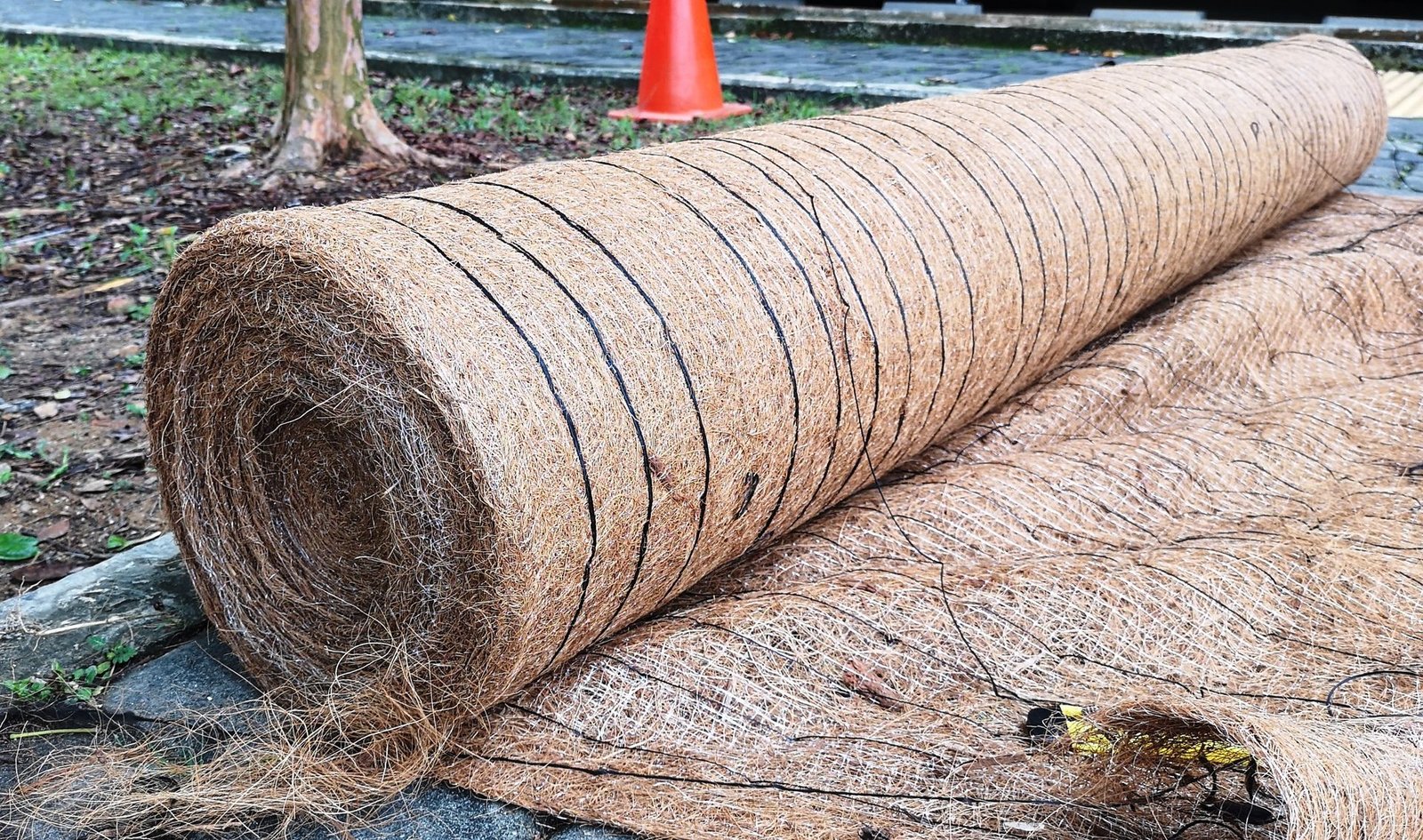
Stormwater and Erosion Control on West Texas Concrete Sites
A stormwater pollution prevention plan is only as good as the silt fence still standing after the last gust front, and in West Texas that is a real test. Open ground dries to dust, then a short heavy thunderstorm moves it all in an hour, and the plan on paper does not stop the water. We treat erosion control as a set of physical items that have to be built, inspected and repaired through the whole life of a job.
Earthwork and barrier installation go to trade partners under our coordination, while we keep the daily watch from the concrete side of the site, where trucks, washouts and fresh slabs bring their own risks. A concrete washout that overflows into a drainage swale is a violation just as much as a silt fence that fell over, and it is ours to prevent.
The notes below describe where erosion control comes up on different buildings and owners, what it costs, which rules apply and how it fits the schedule on a remote job.
Sites where erosion control shapes the work
Large warehouse and distribution sites have the most disturbed ground, with big pads and long perimeters that drain in several directions. Manufacturing plants and truck terminals follow, as do school campuses and medical buildings, where neighbors and public spaces sit next to the work. Smaller shops and metal buildings may fall below the acreage that triggers a formal permit, but runoff still needs to be controlled.
The Census Bureau identifies Fort Hancock as a census-designated place in Hudspeth County. For a pad near Fort Hancock, we review the parcel survey, drainage plan and receiving outlets to establish the control layout. We coordinate the trade partners around the actual direction of runoff and the accepted protection requirements.
On a tilt-up or large slab job the washout area, the concrete truck lane and the stockpile of formwork all sit close to the perimeter controls, so we lay out the pour site with the stormwater map open. Placing the washout inside the fenced area and away from every inlet is a decision made on day one, not in the middle of a pour.
Owners with the most at stake
Energy developers carry some of the heaviest stormwater obligations, since wind and solar sites cover large areas and use many access roads. McCamey carries a legislative title as the Wind Energy Capital of Texas because of the wind farms around it, and sites like those depend on well-built road and pad controls to keep soil in place.
Municipal owners and school districts follow the plan closely and inspect often. Agricultural owners may see the issue differently: topsoil is an asset on a farm, and a stormwater plan that holds it in place has value beyond compliance. See utilities and energy companies and agriculture and dairy for how the priorities differ.
Oilfield and midstream owners add a spill-prevention layer on top of ordinary sediment control, and the two plans must not contradict each other. We read both documents together so that a berm built for stormwater does not trap fuel, and a containment pad does not send runoff straight to a ditch.
What a plan costs to build and maintain
The cost is not just the initial installation of fence, wattles, rock entrances and inlet protection. Maintenance is the larger line over a long job: every storm may damage something, and every sediment pile needs removal. Inspection labor, reporting and the cost of the stormwater professional add to the total.
Distance affects the price too. A crew that has to drive hours to repair a fence after a storm costs more than one already on site. For this reason, we set up a maintenance schedule with a local trade partner whenever the site is far from our staging point, and we price the visits openly instead of hiding them.
Soil type changes the number of controls needed. Fine sandy soil travels farther than clay, so it calls for longer fence runs and more inlet protection, and steeper ground needs check dams or wattles at shorter spacing. The same acreage can cost twice as much to protect on one lot as on another, which is why we look at fine grading plans and slope lengths before quoting.
Permit coverage, plan contents and inspections
Construction that disturbs a certain amount of ground requires coverage under the state construction general permit, with a plan that names the controls, the responsible parties and the inspection schedule. Smaller sites may need a notice or a simpler plan, and cities may add their own rules. A sign at the entrance and a copy of the plan in a box on site are standard.
Inspections follow a set frequency and after significant rain, and the inspector documents deficiencies and corrections. Sul Ross State University in Alpine sits on a 647 acre rural campus, and big public sites like that often add reporting requirements through the owner. We keep the logs current so that an agency visit finds nothing missing.
The plan has to match the site as it exists this week, not the site on the original drawing. When the grading phase moves a drainage path, the plan is amended and the log records the change. We coordinate those updates with the general contractor and the trade partner running mass grading, so the paper stays truthful.
Putting controls in before the first cut
Erosion control goes in before clearing, not after. The first step is the entrance, the perimeter and the inlet protection, and we do not allow stripping to start until the inspector or the stormwater lead confirms them. As grading progresses, controls shift with the work, and temporary seeding or mulch goes on idle areas.
Plains conditions complicate the picture. Oil was discovered near Plains in 1936, and agriculture and oil provide most of the town's taxable revenue, so many sites near Plains are heavily trafficked by farm and oilfield trucks that wear down rock entrances quickly. We expect to refresh those entrances more often than the plan shows.
Final stabilization is the last step and the one most often forgotten. After paving and flatwork are done, disturbed ground still needs seed, mulch or sod before the permit can be closed, and the best seeding window in West Texas follows the rains. We tie that closeout to the work of topsoil stripping and stockpiling, since the saved topsoil is what the seed grows in.
Ask about your stormwater plan
Forward the grading plan, the stormwater plan if one exists and the site address. Our next step is to review the controls, point out where concrete operations add risk and ring back about who maintains what, so no one is surprised after the first storm.
Common Questions
Do we need a stormwater plan for a small site?
Possibly. Coverage turns on how much ground is disturbed and on whether the lot belongs to a larger common plan. Even below the threshold, the city or county may require controls. We check with the local permit office at bid time and write the answer into the scope.
Who is responsible for the controls on a site with many trades?
The permit holder carries the main responsibility, and each trade is responsible for what its work creates. For concrete, that means washouts, truck rinse water and saw-cutting slurry. We keep our items contained and report any damage to the controls we notice so the general contractor can fix it.
How do you handle a concrete washout in a dry region?
We use a lined, bermed washout or a portable container, sized for the number of trucks. Water evaporates, the solids harden and are hauled away, and the container is inspected daily. A washout that overflows or sits near a drainage swale is moved before it becomes a violation.
What if a big storm damages the controls?
We inspect after any significant rain, document what failed and repair it as soon as the ground allows. Sediment that left the site is removed and reported if the rules require it. Prompt repair, with photos and dates in the log, is what satisfies an inspector.