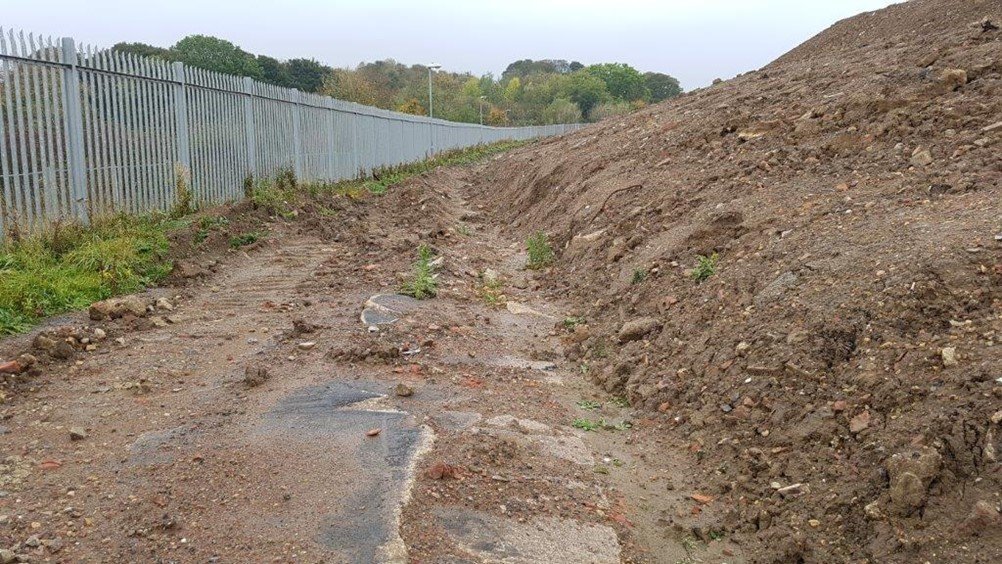
Topsoil Stripping and Stockpiling Before Concrete Work in West Texas
Topsoil has to come off before a slab can go down, and where it goes afterward is a question that gets answered too late on many jobs. In West Texas the surface layer is often thin, and the material beneath it can be caliche, gravel or clay, so the stripping depth varies from one corner of the pad to another. We plan the strip, the pile and the reuse as a single decision.
We coordinate trade partners for the stripping and the stockpile work, and we focus on what the exposed subgrade tells us. A clean strip shows the soil underneath, which helps the engineer decide whether more work is needed. A messy strip, with organic material mixed in, can leave a soft layer that cracks a slab months later.
The sections below deal with the region, the connected services, the buyers, our method, the cost and the scope, as they apply to a stripping and stockpile plan.
Thin soil, hard layers and blowing ground
The ground in West Odessa is a shallow gravelly loam resting on caliche and gypsum, and caliche pits dot the southwestern side of the community. In that kind of ground, topsoil may be only a few inches deep, and stripping beyond it is excavation, not stripping. Knowing where the line sits saves money on both sides of it.
Wind is the other regional fact. Exposed topsoil dries and blows, so piles need protection or they leave the site. The Roscoe Wind Farm covers nearly 100,000 acres and was completed in 2009 after four phases built between 2008 and 2009, and the lesson from projects of that scale is that large disturbed areas must have a plan for soil that is held, seeded or covered.
Because the surface layer is so thin in many places, owners sometimes ask whether stripping is worth the trouble. It usually is, since even a few inches of organic soil under a slab can rot and compress, and the same material is scarce and expensive to bring back for landscaping later. We show the owner both numbers.
How stripping connects to the next steps
Stripping comes after site clearing and grubbing and feeds into building pad preparation. When the soil beneath is poor, the path continues to over-excavation and recompaction.
Topsoil that is not reused on site may leave through the haul network. We coordinate with import, export and haul-off so the pile does not become a surprise at the end of the job.
Landscape and drainage areas get topsoil back at the end, which requires a final grading pass, so we link this scope to fine grading as well. Where a site has runoff problems while the soil sits in piles, erosion control and SWPPP controls apply to the stockpile as much as to the open pad.
Who needs soil set aside
Developers need topsoil for landscape areas and drainage swales, and public owners often specify it for restoration. Agricultural and dairy buyers value topsoil highly and may want it saved for reuse in fields. See agriculture and dairy projects for how that preference shapes the plan.
Energy and utility developers have large areas to disturb and restore. Culberson County Airport is a county-owned public-use airport about 3 miles northeast of Van Horn, and sites near Van Horn and similar small airports often have wide, flat expanses where topsoil handling is simple but the haul is long.
Public owners such as counties and school districts often specify topsoil depth and quality for the finished landscape. Utility owners restoring a pipeline corridor are asked to put back the same layer they took off, in the same order, so seed can recover. In both cases, a record of where each pile came from helps the restoration go smoothly.
How we plan the strip
Our first step is a walk with the earthwork partner, probing in several spots to learn how deep the organic layer runs. Then we mark the strip limits, the stockpile location and the haul path. The pile goes upwind of work areas if possible, on stable ground, and away from drainage paths.
During stripping, we watch for material that does not belong in the pile, such as trash, rock or soft clay. Once the strip is complete, we check the exposed surface with the engineer and, when necessary, call the lab for a proofroll before the next stage starts.
Stockpile height and slope matter more than people expect. Tall, steep piles lose material to wind and rain, and they can compact the soil at the bottom until it turns sour. We keep piles low, shape the sides to a gentle angle, and place them where equipment will not drive across them during the rest of the job.
Where the money goes
The cost depends on stripping depth, area and the distance the soil moves. A pile stored on site is cheap, while hauling topsoil off and bringing it back later doubles the trucking. Protecting a pile with seeding, mulch or a cover adds a line item, but it prevents losing the material to wind.
Some sites sell or give away surplus topsoil, which can offset cost. Others have contamination or weed concerns that limit reuse. We share the options early so that the owner can decide before the crews arrive.
Reuse on the same property is nearly always cheaper than hauling off and buying replacement, and the savings grow with the distance to the nearest soil supplier. In remote counties, topsoil may be scarce enough that a saved pile is worth more than the cost of stripping it.
What the scope covers
The scope states the stripping depth, the stockpile location, the pile height and slope, and the protection measures. It also lists who handles the replacement at the end of the job, since topsoil spread over final grade needs its own fine grading pass. Tests for organic content may be required if the soil is to be used under landscaping.
The stripping scope stands apart from the pad work, so the owner sees exactly what it adds. When the project is large, we break the site into phases, strip only the area needed for the current phase, and leave the rest undisturbed to limit erosion.
Plan the strip with us
Pass along the site drawings, the soil report and the grading plan, and name the closest town. We will probe the depth, pick a pile location and phone with any questions about reuse before the strip is booked.
Common Questions
How deep is topsoil on a typical West Texas site?
It varies widely. On native range it may be only a few inches, and on irrigated farmland it can be a foot or more. We probe the site before pricing, because stripping depth multiplied by area decides the volume. The engineer or soil report can confirm what counts as topsoil and what counts as subgrade.
Can topsoil go under the slab?
No. Organic material compresses and decomposes, which leads to settlement and voids. It must come off before any structural fill or slab. The topsoil can be reused outside the building footprint, for landscaping and drainage areas, if it is clean and protected.
How do you keep a stockpile from blowing away?
We shape the pile with gentle slopes, wet it as needed and apply a cover, mulch or temporary seed. Location matters too: placing it downwind of open areas and beside a barrier cuts losses. For long projects, a tackifier or erosion blanket may be used.
Who owns the topsoil?
The project owner usually owns it unless the contract says otherwise. Some owners want it saved for later use, and others allow the contractor to dispose of it. We confirm ownership in writing before stripping starts so that nobody is surprised by a pile that is gone.