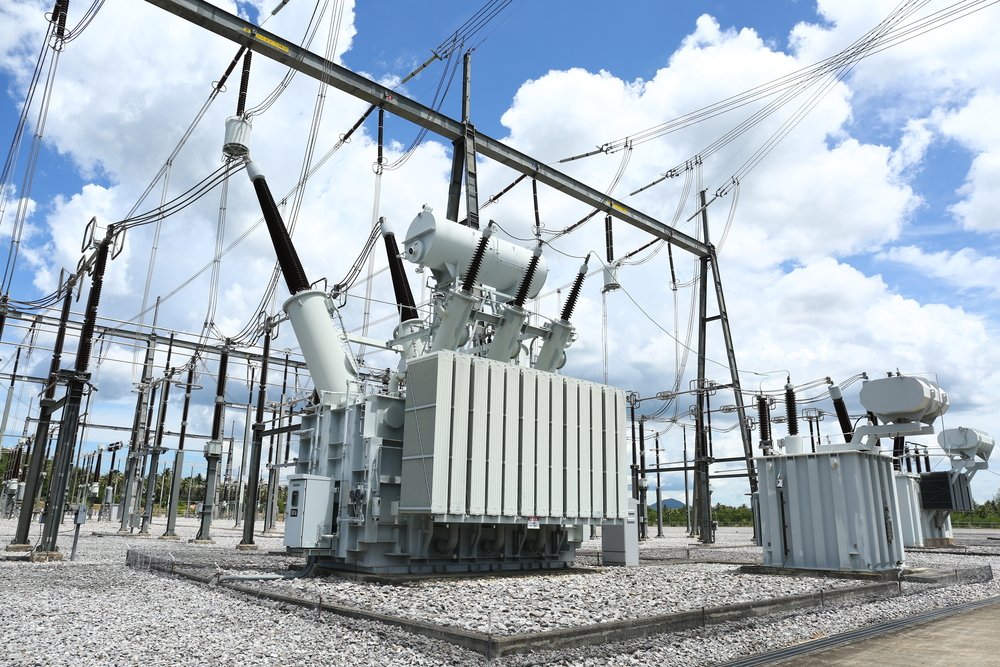
Concrete for Utilities and Energy Companies in West Texas
Wind turbines, substations and pipeline facilities in West Texas are built far from the places where concrete is made. A foundation for a substation control house or a transformer pad has a small volume compared with a warehouse floor, but the drive to deliver it can take a full morning. Utilities and energy companies know this, and the useful question for a concrete contractor is how the work gets organized across that distance.
Concrete Contractors of West Texas pours equipment pads, duct bank encasements, vault and manhole structures and the foundations for small buildings that energy and utility owners need, and we coordinate the trade partners for trenching, conduit and earthwork. The concrete partners we coordinate move between sites, and we plan around the plant, the weather and the owner's outage windows. A utility cannot always release a circuit on the day we would like to pour, so we treat the outage calendar as a fixed point.
Concrete and trench services utility owners combine
Utility projects tend to include a bundle of related scopes. Electrical duct banks are encased in concrete with spacers and rebar and placed in trenches that must be open only as long as the weather allows. Conduit and fiber trenching often accompanies road and plant work, and manholes, vaults and structures must be set, sealed and backfilled in an order that does not trap water.
When an existing line is in the way, utility relocation is coordinated with the line owner, since we place concrete after the owner confirms that the old facility is out of the way. We carry the schedule that ties these pieces together, so the owner has one contact for the sequence even if several trade partners are on the right of way.
Small buildings and equipment foundations on energy sites
An energy or utility site contains many structures that are not buildings in the usual sense: control houses, switchgear pads, generator bases, cable vaults, tank rings and equipment skids. Each has its own tolerance and its own installation date. We read the manufacturer's drawings for embedded plates, anchor bolt patterns and conduit stub-ups, and we build templates so the equipment fits when it arrives.
Larger facilities such as operations centers and data centers follow commercial building practice with added attention to grounding grids and redundant utility paths. We pour the slabs, but we also pay attention to the details between the slab and the electrical gear, because the electrical contractor and the equipment supplier will check them again.
Bollards around exposed equipment, pipe supports and small containment curbs are the last pieces to get attention and the first to be damaged when they are missing. We list them in the scope during review, along with the stub-ups that the electrician needs to find in the right place after the slab is cured.
Hot, dry ground and long days in utility country
Kermit, at roughly 2,861 feet, has a hot arid climate, and the gauge at Winkler County Airport records only about 11.7 inches of precipitation in an average year. That dryness keeps many sites workable for most of the year, but it makes curing a daily task, since a pad or duct bank can lose surface moisture within an hour of finishing. We bring curing compound, blankets and water to every pour and assign someone to check the surface through the first night.
Texas State Technical College near Sweetwater began offering the state's first community-college wind energy program in 2007, and the Legislature gave McCamey the title of Wind Energy Capital of Texas. Both facts point to the same practical concern for a concrete contractor: wind farms are built on exposed land, often with limited access roads, and turbine foundations are large pours that need rebar cages, heavy pumps and a continuous supply of trucks. We discuss access road condition and haul routes before we quote a foundation.
How we schedule around outages and inspections
We begin with the owner's constraints: outage windows, environmental permits, landowner agreements and inspection requirements. From there we design a sequence that limits the time a trench stays open and that places concrete in the hours when mixes behave best. Where an outage is fixed to a date, the pour plan has a primary day and a backup day, each with a plant confirmation.
Oil was discovered near Plains in 1936, and agriculture and oil still provide most of the town's taxable revenue, so energy companies there share roads and plants with farm equipment and local construction. We ask owners to tell us about other activity near the site, and we adjust truck timing to avoid the busy hours. A call to the local plant manager often reveals more about road conditions than the map does.
For owners with ongoing programs, we keep a record of each site visited, including access, plant location and lessons learned, so the next project in the same area begins with better information. That record includes notes on oil, gas and midstream facilities and on the municipal and public works projects that share the same corridors.
Energy activity around the proposed work
West Texas energy work spreads from wind turbines on ridgelines to pipeline stations, from substations near towns to service buildings at the edge of oil fields. Crews can find themselves in McCamey one week and farther west the next, and the common thread is that the owner needs a reliable, documented concrete scope at every location.
We ask each utility or energy owner for standard details, approved mixes and any preferred suppliers, and we apply them across sites for consistency. When an owner has no standard, we propose one based on the soil, climate and load.
Access is the quiet cost in this work. Lease roads and ranch gates carry limits that nobody posts, and a loaded mixer truck is heavier than most oilfield pickups. Before a first pour on a new site we drive the route with the owner's field representative, note gates, cattle guards and low-water crossings, and agree on who maintains the road while our trucks use it. Those notes go into the pour plan and into the price.
Send the outage dates and drawings
Send the drawings, the outage calendar and the site locations. We will check haul distances and plant supply and talk through a pour plan that fits your windows.
Common Questions
Can you work within a utility outage window?
Yes. We plan a primary and a backup pour day, confirm the plant for both and keep crews and equipment on hand so that an approved outage is used fully.
How do you handle duct bank encasement in a long trench?
We place concrete in sections that match the trench length the crew can cover safely, install spacers and rebar as the owner's drawings require, and keep the open trench as short as the weather and safety allow.
Do you pour turbine foundations?
We discuss turbine foundations case by case. They are large placements that depend on plant capacity, pump access and a continuous supply of trucks, and we review the site before we commit.
What curing do you recommend in hot, dry conditions?
We use curing compound or wet curing, wind protection and shade where practical. The plan is written for each pour so that someone on the crew is responsible for it.
How far ahead should we notify you of a pour at a remote substation?
As early as the outage is known. We need time to reserve the plant, arrange crew travel and stage equipment, and a longer lead time gives us room to move a pour if the weather turns.
Who coordinates trenching and conduit?
We coordinate the trade partners who do trenching, conduit and earthwork, and we hold the schedule between them and the concrete partners.