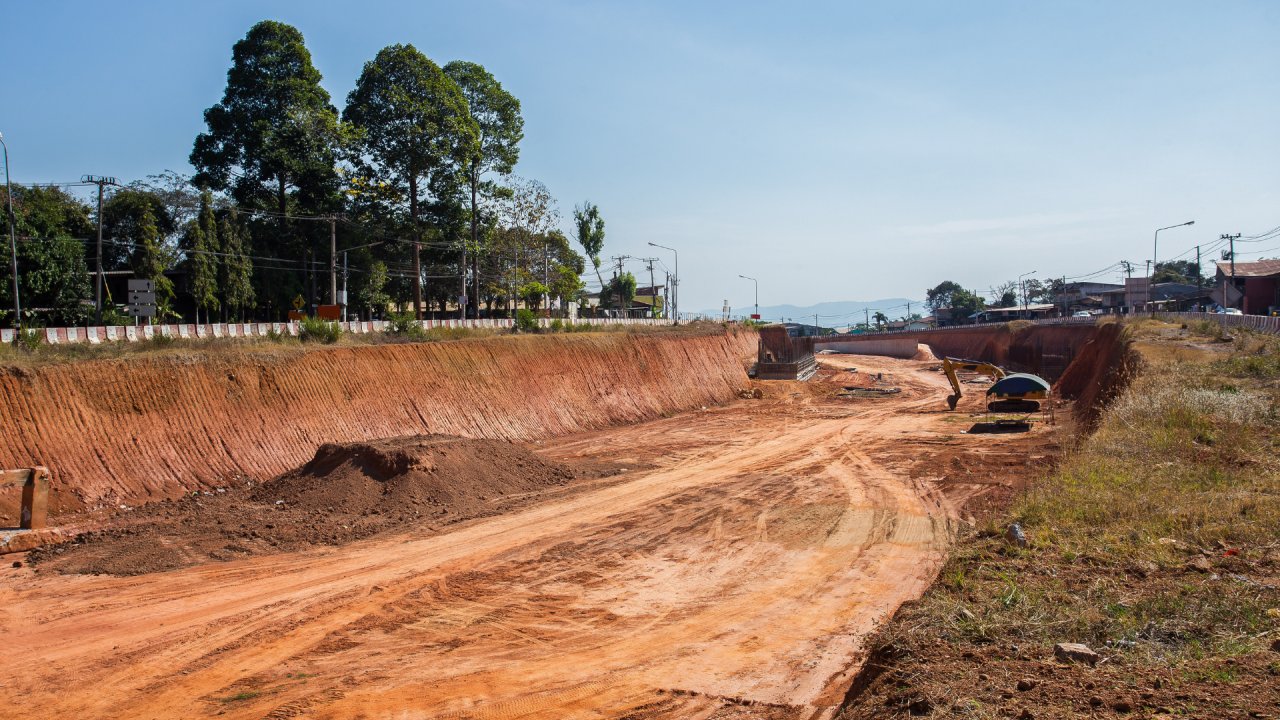
Fine Grading for Slabs and Pads in West Texas
Fine grading on a West Texas pad is the last pass of dirt work before concrete, and it is where a tolerance measured in tenths of a foot turns into a slab thickness that the batch plant bills by the cubic yard. A subgrade that runs a half inch high at one corner and low at another costs real yardage, so we ask for a finished-grade check before the forms go in instead of after the trucks are rolling.
Our job is to hold the line between the grading partner, the testing lab and the forming and placing partners we coordinate. The grading partners we coordinate move the dirt; we walk the pad with the stakes and the drawings and decide whether it is ready for steel and concrete. On a job a long drive from the nearest batch plant, a rejected subgrade is never a small delay, because the mixers may already be loaded, so we settle the grade the afternoon before the pour.
Below are the points we cover with owners, general contractors and engineers of record when a trim pass is on the schedule: safety around the equipment, how the work fits a delivery window, which buyers ask for it, and the site conditions that change the answer from one county to the next.
Safety on a pad during the trim pass
A pad being trimmed has a motor grader or a skid steer with a laser blade moving across it, a survey crew on foot with stakes, and often the carpentry partners setting edge forms along the perimeter. We keep those groups apart by time and by marked lanes, and the equipment operator gets a clear view of every person on the pad before the machine moves. Reverse alarms stay on, and nobody walks behind a blade without eye contact.
Dust and wind add a second layer. Fine material blown across a pad in a West Texas afternoon irritates eyes and lungs, so the grading partner wets the surface lightly and we avoid trimming in the strongest gusts. Trench edges, open utility cuts and stockpiles around the pad get barricades before the first pass, because a tired operator at the end of a heat-soaked shift should never be the only barrier.
Where the trim pass sits in the pour schedule
The trimmed grade should sit as near to the pour date as the weather lets it. A trimmed subgrade that sits for a week can dry out, crust, or take on water from a storm, and any of those brings the lab back for another density check. On sites far from town we usually schedule the trim for the day before the slab, with forms already set and the batch plant told what yardage to hold.
Travel time shapes that sequence. When crews drive a couple of hours each way, a pour day has no slack for a second grading visit, so we confirm the lab report, the stake check and the form line before anyone loads a truck. If wind rises past what a finish crew can handle, the trim stays protected, and we move the pour instead of re-trimming it.
Who asks for finished grade
General contractors building shops, clinics and retail pads ask us to carry the grading handoff so that the dirt subcontractor and the slab crew are working from one set of numbers. Industrial owners with heavy floor loads and wind or utility developers with equipment pads want the subgrade documented in writing. County and municipal buyers care about it for sidewalk, ramp and drive approach work, where the grade decides whether water leaves the surface.
Agricultural owners with gin yards, shop floors and equipment lots tend to ask a different question: how much flatness do they actually need. The answer ranges widely, so we match the trim tolerance to how the floor will be used. A hay barn apron and a vehicle maintenance bay do not need the same grade control. See how we approach agricultural projects and municipal and public works for the two ends of that range.
Conditions that change the trim
Soil decides how fine the grade can get. Caliche and gravelly fill trim cleanly and hold their shape under a roller, while clay-rich ground softens after rain and ruts under tires. In the sandy ground near the dunes, loose surface material moves with the wind and the final pass has to be protected or rebuilt. We read the geotechnical report for the soil type and ask the grading partner how it behaves before we set a crew date.
Drainage is the second consideration. A pad that sits a few inches too low on one side will pond, and ponding on a slab edge becomes joint distress later. We confirm the finish grade against the drainage plan and the nearest low point, and we look at where roof and apron runoff will actually go. When a design calls for building pad preparation with import material, the trim waits until that layer has passed its compaction test.
Trim work from McCamey to Abernathy
Fine grading follows the same roads as the rest of our work. McCamey, in southwestern Upton County, lies along U.S. Highway 67 just short of the Pecos River, so a crew headed there from the Permian Basin plans around one corridor and the wind that crosses it. Abernathy, with Interstate 27 and U.S. Highway 87 running through it about eighteen miles north of Lubbock, is a much shorter hop for a South Plains crew.
Those two places show why we price by road distance and not by a regional flat rate. Dyess Air Force Base lies just south of Tye, and work around Tye and Abilene comes out of a different staging point than a pad near McCamey. Each visit is built around the nearest plant, the nearest lab and the most direct farm-to-market road.
Pads and floors we trim for
A warehouse floor needs the tightest control, since forklift traffic reads every ripple, so we pair trim work with the surveying needed for a super-flat floor slab or a conventional slab-on-grade floor. Truck courts and dock aprons want a controlled slope to the drains. Medical offices and schools usually need accessible routes that meet the grade limits for ramps and landings.
Metal buildings on rural lots are the most common request in the small towns, where the pad is a modest rectangle and the owner wants it right the first time. For those, we confirm that the trim pass, the vapor barrier and the form line are all finished in a single visit, which saves a second trip over a long county road.
Send us the pad drawings
Mail us the grading drawings, the soil report and your target pour date, and name the closest town. We will mark the haul distance, name the trim tolerance we would hold, and call you with the questions that need an engineer before a crew gets scheduled.
Common Questions
What tolerance should a subgrade meet before you pour?
It depends on what rides on the slab. A general shop floor can accept a tolerance of roughly a half inch from design grade, while a warehouse that will run narrow-aisle equipment needs much tighter control, set by the floor specification. We take the number from the plans and the engineer, check it with a rod or laser before forms are set, and write down the result.
Who is responsible if the trim is off when the trucks arrive?
The grading partner owns the grade, and we own the decision to place on it. If the subgrade fails our check, we hold the pour and send the crew back to the partner for a correction. When trucks are already on the road, we talk to the batch plant immediately about slowing or diverting the load, and we record the delay so the schedule stays honest.
Does rain ruin a trimmed pad?
A heavy rain can, especially on clay-bearing soil. West Texas storms tend to be short and intense, so the usual damage is local: low spots that hold water and a soft crust over an otherwise sound layer. We re-check moisture and density before pouring. If the surface has softened, the grading partner scarifies and re-compacts it, and the lab signs off again.
Can fine grading be done by the concrete crew?
We coordinate grading, preparation and concrete placement as linked scopes. The plan identifies the trade responsible for each activity and the condition required before forming, reinforcement and placement can begin.