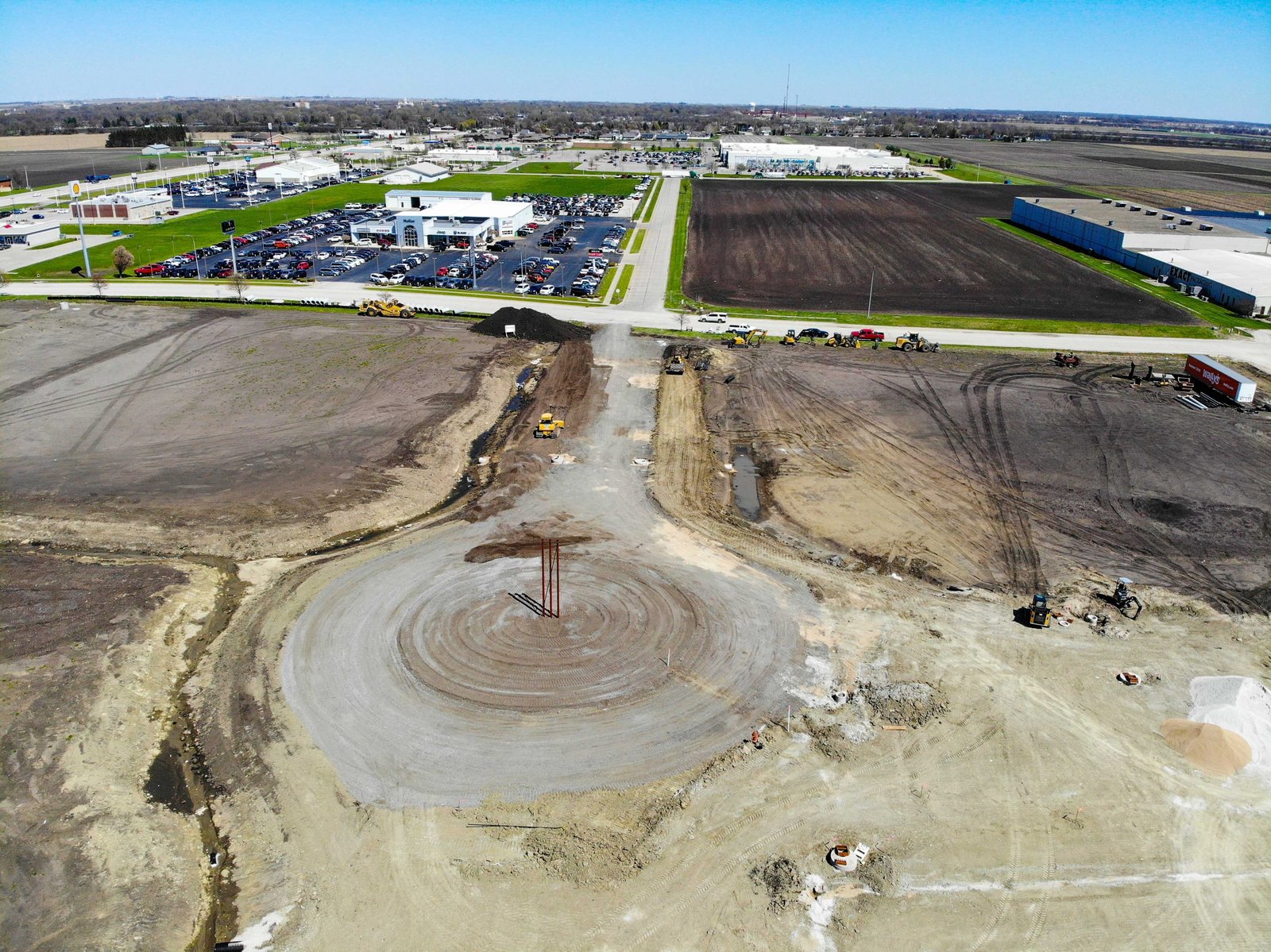
Mass Grading for West Texas Sites
Cut and fill totals decide whether a mass grading job pays for itself, and on wide-open West Texas ground the difference between balancing a site and hauling dirt away is measured in truck miles. We manage mass grading for warehouses, plants, truck yards, subdivisions, wind and energy sites and public facilities: stripping, cutting, filling, shaping and compacting a site to the elevations on the grading plan. Trade partners run the scrapers, dozers, graders, compactors and water trucks under our coordination, and the concrete partners we coordinate take over for forming, utilities and concrete when the grade is accepted.
Mass grading sets the shape of a site: where water runs, how high the building pad sits, how steep the drives are and how much material comes in or goes out. A well-planned job moves each cubic yard once and as short a distance as possible. A poorly planned one handles the same dirt several times and trucks it across the county.
The land itself helps and hurts. Much of the region is flat, which keeps cut and fill modest, but flat sites have little fall for drainage, and a pad that sits too low floods the first time the weather turns. We spend time on the grading plan before any machine starts.
What mass grading includes
The scope starts with erosion control and clearing, then stripping topsoil and stockpiling it for reuse. Cut areas are excavated and the material is placed in fill areas in lifts, each one compacted and tested before another goes on top. Haul roads are shaped and watered, and drainage swales, berms and pond basins are cut to grade as they appear in the plan.
Finish work follows: the pad is trimmed to subgrade within the tolerance the engineer sets, slopes are shaped and stabilized and the site is left drained. Site clearing and grubbing comes before it, and building pad preparation follows, with fine grading for the last inches.
Where the money goes
Quantities drive everything. The number of cubic yards cut, filled, imported and exported sets the equipment hours, and the haul distance sets the truck count. A balanced site, with cut equal to fill, is the cheapest. Importing select fill adds the cost of the material and the long haul, and exporting unsuitable soil adds a disposal location.
Moisture is another factor. Soil that is too dry will not compact and needs water, which in dry country means a water source and trucks. Soil that is too wet needs drying time. Rock, caliche and hard layers slow the work and may need ripping or hammering. We state our assumptions about soil type and price the exceptions separately, so a surprise in the field has a known cost.
Planning the earthwork
Before moving soil, we study the grading plan alongside the soil report and the topographic survey, and we build a simple earthwork model of cuts, fills and haul distances. The model shows where material should come from and go, and which areas to build first so haul roads stay short.
On the ground, a survey crew stakes the grades and checks them as lifts are placed. A testing firm checks compaction and moisture, and we do not cover a lift that has not passed. We keep a daily log of quantities moved, which lets the owner track progress against the estimate and gives the engineer a clear record for acceptance.
Fitting earthwork around weather
Earthwork is the trade most exposed to the weather. Rain stops compaction, wind dries the surface and creates dust, and summer heat dries fill faster than a water truck can keep up. We schedule major cuts and fills for the driest part of the season when possible, and we plan the haul roads so equipment can work on firm ground after a storm.
Equipment mobilization is a significant item. Scrapers and large dozers travel on lowboys, and a single move can take a day or more over long roads. We combine tasks to avoid repeated moves and keep machines on a site until the heavy work is complete. Concrete crews start on the pad as soon as the engineer accepts the subgrade.
Moving large machines safely
Mass grading puts large machines close together on an open site, and the principal hazards are collisions, rollovers and backing accidents. We lay out one-way haul routes, mark speed limits, require backup alarms and spotters and keep foot traffic away from active areas. Slopes and deep cuts are checked before equipment works near the edge.
Dust and heat are constant concerns in West Texas. Water trucks control dust to protect crews and neighbors, and operators get shade, water and breaks. Wind can reduce visibility, so work pauses when dust makes operation unsafe. Daily meetings cover the day's plan and any changes.
Soils, slopes and water
Lamesa, out on the Llano Estacado near 2,992 feet, collects around 17.6 inches of rain in a typical year. In flat, dry areas around Lamesa, the grading plan has to provide enough slope for drainage with little natural fall, and even a small pad-level error of a few inches can redirect runoff across the property.
Interstate 20 crosses the north end of the Southwest Sandhill area, and State Highway 18 follows its east side, a long drive down the road from the larger Permian Basin cities. Sandy ground near Southwest Sandhill raises its own questions about compaction and erosion, so the plan covers stabilizing slopes and protecting the work from wind.
Who we grade for
Logistics and warehouse developers need large, flat pads with controlled drainage, and the grading is a major piece of their budget. Industrial and manufacturing owners need pads for heavy equipment, yards and rail or truck access.
Public owners grade for schools, parks and drainage projects, and energy companies grade for laydown yards, substations and access roads. In each case, the owner benefits from a contractor who sees the earthwork and the concrete as one job, since the grade we hand over is the grade we pour on.
Send the grading plan
Send the plan, the soil report if one exists and the site address. We will estimate quantities, talk about haul routes and weather windows, and plan the handoff to the pad crew.
Common Questions
What does it mean to balance a site?
Balancing means the soil cut from high areas equals the soil needed to fill low areas, so no material has to be imported or exported. It is the cheapest way to grade. The grading plan may be designed to balance, and we check the numbers early.
How is compaction checked?
A testing firm measures the density and moisture of each lift and compares it with the lab standard. A lift that fails is reworked before the next one is placed. We keep the test records in the closeout file.
Can you grade during wind or rain?
Light wind is manageable with water trucks for dust. Rain stops compaction work until the soil dries. We schedule around the forecast and adjust equipment to fit conditions.
What if we hit rock or caliche?
We stop, record how far the hard layer extends and bring the engineer and owner in on the choices. Ripping, hammering or blasting may be required, and each has a different cost. Early test pits reduce the chance of surprise.
Who sets the grades in the field?
A licensed surveyor stakes the lines and grades from the approved plan. The concrete partners follow the stakes and check them often. The survey also verifies the final grade before concrete work begins.