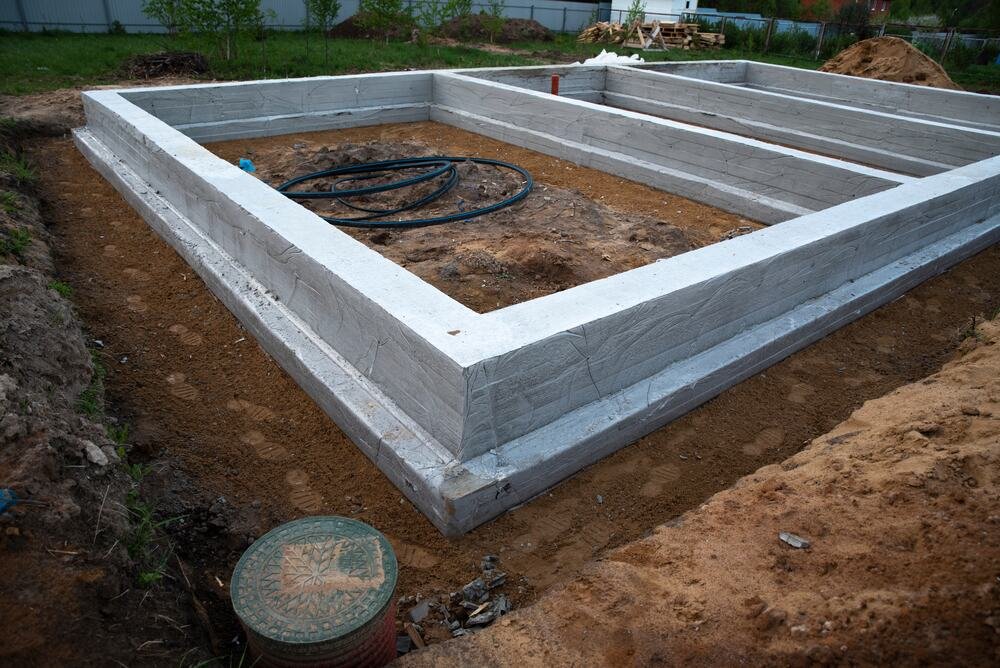
Grade Beams in West Texas
Void forms under a grade beam decide whether a pier-supported building stays level through ten wet and dry seasons, and the cheapest place to get that detail right is in the forms before the concrete arrives. A grade beam carries wall and column loads between drilled piers or spread footings, and in expansive clay country it is also the member that keeps the soil from pushing the slab around.
We build grade beams under tilt-up panels, metal buildings, warehouses, schools, clinics and agricultural structures. Forms and concrete are ours. Survey crews, trenchers and steel suppliers answer to us as partners so the beams land where the engineer drew them and where the wall panels or steel columns will actually sit.
On a regional job, the question is rarely how to build a grade beam. The question is how many truck loads it takes, how far each one drives and what happens to the trench if rain or wind arrives before concrete does. We write that into the plan along with the beam schedule so the foundation is a controlled sequence from excavation to cure.
Beams in a region of long hauls and mixed soils
Most grade beam work we see falls on three corridors. Plainview is where Interstate 27 crosses U.S. 87, U.S. 70 and State Highway 194, a junction that handles grain, cattle and building materials. Slaton has a major BNSF Railway yard, and its warehouses and rail-served sites call for beams that tolerate heavy point loads.
In the Concho Valley, San Angelo is served by U.S. Highways 87, 67 and 277 and State Highways 208 and 126, which makes it the supply base for jobs across the surrounding ranch and small-town country. Each corridor has its own aggregate sources, its own plants and its own soil. We adjust mix, reinforcement and beam depth to what the geotechnical report says, and we do not carry a standard section from one town to the next.
What the drawings and the permit office will ask for
Grade beams are structural members, so the permit set will include beam schedules, reinforcement details, cover requirements, void form specifications and the special inspections the engineer has called for. In most West Texas jurisdictions, the local permit office reviews against the adopted building code, and smaller towns may rely on the engineer of record and the owner's inspector to carry much of the review.
We keep the submittal package ready: mix designs, rebar mill certifications, void form product data and the placement schedule. Special inspectors typically check reinforcement before each pour and test cylinders after it, so we plan inspection visits into the calendar with enough lead time that a remote inspector can reach the site. Missing that visit is the easiest way to lose a pour day.
How far we will take a beam crew
A forming crew can travel across the region, but it does not go cheaply. Sundown sits at the junction of Farm Roads 301 and 303, about 15 miles southwest of Levelland in Hockley County, and a job there is a short move from the Levelland area. A job farther down a farm-to-market road might mean a half-day drive each way for forms, steel and crew.
We tell you early which category your site falls in. In the South Plains, the Concho Valley and the Big Country, we stage forms and rebar at the closest practical point and run the pour from there. When a project is far enough to need lodging, the number appears as its own line so you can decide whether grouping beam work with other foundation scope saves money.
Void forms, trench conditions and weather
A beam trench left open while forms are ordered is a trench that collects water and sloughs. We cut the trench, set the forms and place the concrete in a tight sequence, usually within a day or two of each other, and we schedule around forecast rain and wind. Void forms or cardboard systems have a service life once they are wet, so we do not set them until the pour is imminent.
Another consideration is the distance between piers and the length of beam each pour covers. We pour continuous runs where the engineer allows it and set construction joints at points approved in advance. Where beams intersect with drilled pier foundations, we verify pier tops and dowel projections before placing steel, since a few inches of error at the pier turns into a rework item at the beam.
Sequence on the day of the pour
We start with the survey. Beam centerlines, top-of-concrete elevations and embed locations are staked before the first form is set. Reinforcement is placed to the schedule with chairs and spacers that hold cover, and the inspector signs off before the truck is called. Trucks are sequenced so the pump or chute is never waiting and never overloaded.
After the pour, we strike side forms on the schedule the engineer sets, check the beam tops against elevation and look at the voids for cleanness. Backfill and compaction against a beam are coordinated with the earthwork partner so heavy equipment does not load green concrete. When a slab-on-grade work follows the beams, we hand over a clean, surveyed foundation, not a rough one.
Buildings that depend on grade beams
Tilt-wall buildings rely on grade beams under panel bearing lines. Metal buildings on piers use them to tie column bases together, and agricultural buildings such as barns, feed facilities and equipment shops often use a beam-and-pier system because it is quick to build and tolerates shifting soil, which is why agriculture and dairy owners choose it so often.
In Post, oilfield service firms share the local economy with farms and ranches, and that mix shows up in shop buildings, yards and office-warehouse combinations that use the same foundation system. We review the loading from overhead cranes, truck traffic and tanks before locking the beam size, since those are the loads that the original sketch often misses.
Tell us the beam schedule and the town
Pass along the foundation plan, soils report and address. From those we map out forms, steel and truck miles and suggest a pour order that keeps trenches open for the shortest possible time. Reach a project manager by phone or through the quote form.
Common Questions
Do grade beams need void forms in every West Texas soil?
No. Voids matter where the soil can swell and push upward on the underside of the beam. The geotechnical report states whether voids are required and how deep. We follow it and flag any mismatch between the soils report and the structural drawings.
Can grade beams be poured in cold or windy conditions?
Yes, with the right controls. Cold ground and frozen subgrade must be thawed or protected before concrete goes in, and wind calls for windbreaks and prompt curing. Our hot and windy and cold weather plans are part of the pour submittal.
How long before forms can come off?
Side forms usually come off within one to three days, depending on mix, temperature and what the engineer allows. We follow the engineer's strip schedule, and cylinder results back up the decision when the weather has been unusual.
What does a beam crew need from the general contractor?
Staked lines, a graded work area, clear access for trucks and a notice period for inspections. If the site is remote, we also ask about water, restroom facilities and where a trailer or forms can be staged safely.
Is it cheaper to use spread footings instead of piers and beams?
Sometimes. On a good bearing layer with little swell, spread footings can cost less. When soils move, piers and beams cost more up front and prevent expensive slab repair later. We price both when the design allows.