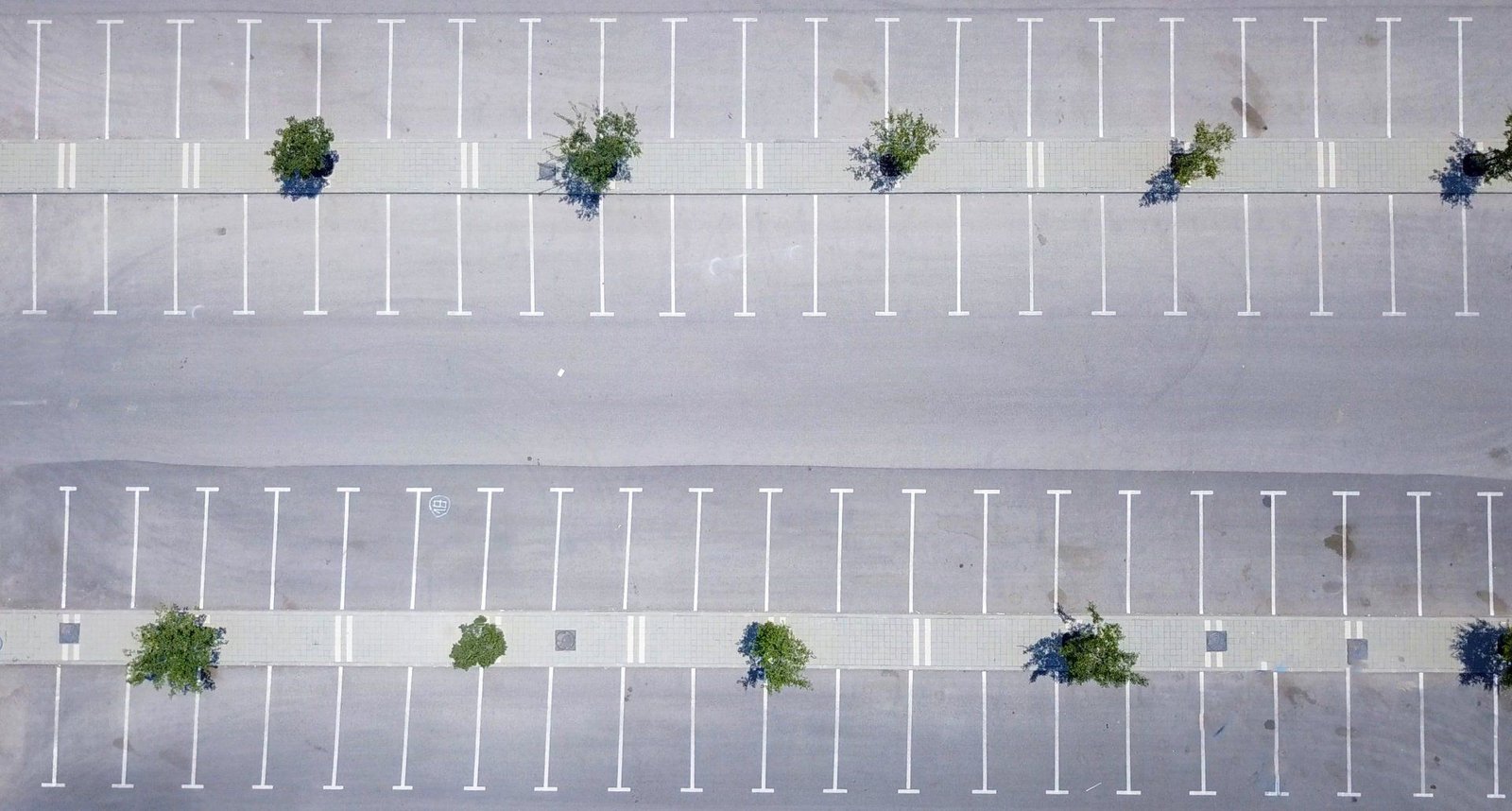
Parking Lot Concrete in West Texas
Parking lot concrete costs more on day one than asphalt and then stops asking for money, which is why West Texas owners who plan to hold a property tend to look at it twice. Summer sun softens asphalt where cars turn, and trailers dent it where they park. A concrete lot keeps its edges, resists oil and gives striping a clean surface to stay on.
We build lots for shopping centers, clinics, schools, churches, offices, restaurants, plants and city facilities. The work includes subgrade acceptance, base, forms, reinforcing where required, placing, texturing, joints and curing, plus curbs, islands, ramps and wheel stops. Earthwork and utilities come through partners we coordinate.
Below we describe the price drivers, where we travel, how we run a lot, related work, scheduling, our scope and the owners involved.
What changes a parking lot price
Lot size sets the base, but layout shifts it. Many islands, curved aisles and drainage inlets add forming and finishing labor. Thickness matters: a car-only lot can be thinner than one that serves delivery trucks and trash vehicles, and good designs place thicker concrete where heavy vehicles run.
Distance and supply add to the price. Crew travel, a paving or screed setup and a ready-mix source of limited capacity change the cost of a lot at the edge of a county road compared with one in a larger town. Material hauled a long way can also arrive warmer, so we ask the plant to track the load temperature and plan a mix that holds its slump through the drive. We show mobilization separately and offer alternatives, such as phasing the lot to fit the plant's daily output.
Lots from the plains to the mountains
Crosbyton lies on U.S. Highway 82, about 36 miles east of Lubbock, and Lamesa's local economy rests on cotton farming, so lots at agricultural suppliers and community buildings must handle trucks as well as cars. When Webb Air Force Base closed in 1977, its grounds turned into Big Spring Industrial Park, which today carries the McMahon-Wrinkle Industrial Airpark name and large paved areas that remind us how much pavement this region carries.
The Marfa Visitor Center lists a municipal airport serving private aircraft, while Sterling City is on the North Concho River in the east central part of Sterling County. Jeff Davis County lists its courthouse at 100 Court Avenue in Fort Davis. At each proposed property, we confirm the vehicle use, site access and placement conditions before organizing concrete deliveries. We mobilize crews to Crosbyton and Big Spring alike, adjusting for each place.
How we build a lot that drains and lasts
We begin with the drainage plan. Slopes, inlets and flow lines decide where water goes, and we verify them against the final grade before forms are set. Joints are laid out in panels that are roughly square and not too large, with dowels at construction joints and sealant where the design requires it. We mark the layout on the base before the pour, so the owner and engineer can see where every saw cut will fall and move a joint away from an inlet or a light base.
On pour day, we place concrete in strips or bays, screed to grade, float, broom and cure. Curb and gutter are placed with the lot or ahead of it, depending on the design. Striping happens after the concrete cures and the surface is clean, and we advise the striping contractor about timing so paint adheres.
Services that go with a lot
A lot usually includes curb and gutter and ADA ramps and accessible routes, along with sidewalks to the building. Heavy areas for trash or delivery trucks may follow our concrete paving standards.
If the lot sits next to a loading area, we pair it with dock aprons and truck courts. We also coordinate lighting bases, bollards and sign foundations, which are cast into the lot as it is built so the work is not cut out later. We also leave sleeves under the lot for future irrigation or electric lines when the owner asks, because trenching through a finished concrete lot is a repair nobody wants to price.
Scheduling lot construction
Lots are built in phases to keep businesses open. We split the area, pour one half while the other stays in use, and cure before opening. Concrete reaches traffic strength in a few days, and we mark barricades and give the owner a clear date.
Summer pours start early, with a cooled mix where the heat calls for it, and winter pours get blankets. Long hauls call for mix adjustments, and we coordinate with the plant on truck spacing. Rain and wind can delay a lot, and we keep a spare day in the plan. When the lot serves an open business, we also post the next three days of work at the entrance so employees and customers know which stalls to avoid.
What our scope covers
We form, reinforce, place, finish, joint and cure the concrete, and we build the curbs, islands, wheel stops and ramps as shown. We also provide test reports for strength and slump and keep logs of weather and mix. Warranty questions are answered with those records.
We do not do the earthwork or the pipe. Those are partner trades whose work we coordinate, and we write grade tolerances into the handoff. A walk with the engineer before paving avoids surprises, and a final walk after cure documents the result. That walk checks panel edges, drainage on a wet surface, ramp slopes and joint cleanliness, and any item that needs attention is listed with a date before the crew leaves the area.
Owners who build concrete lots
Commercial developers build lots for centers and pad sites, and school and healthcare owners build them for staff, visitors and buses. Churches, clubs and city facilities also invest in lots that last. Each owner has a different budget and traffic, and we match the design to both.
We encourage owners to think about maintenance in the lease. Concrete lots need joint sealing and occasional spot repairs, but they avoid the resurfacing cycle that asphalt needs. Comparing the full cost over the life of the lot often changes the decision.
Send the site plan for a lot
Share the plan, the use and the address. We will check drainage, supply and travel, then reply with a price and the questions that affect it.
Common Questions
Should the lot be concrete or asphalt?
That comes down to traffic, budget and expected life. Concrete costs more at first and needs less maintenance, particularly where heat and heavy trucks work asphalt. We provide a side-by-side if asked.
How many days before we can park on it?
Often three to seven days in warm weather, based on the strength of the concrete. We confirm with test data and set a reopening date. Heavy trucks wait longer.
Will oil and fuel stains show?
Concrete resists oil better than asphalt, though stains can show on light surfaces. Sealers and prompt cleanup help. We can suggest products for gas stations and truck areas.
Can you pour a lot around existing buildings and trees?
Yes, with care. We hand-form around structures, protect roots where the owner wants a tree kept, and sequence pours so trucks can reach each bay. Tight sites may call for a pump instead of direct chute placement, and we price that option in the bid.
What about striping?
Striping goes on after the concrete cures and is clean and dry. Many contractors wait about thirty days for certain paints, and we advise on timing. Thermoplastic and epoxy options last longer on concrete.