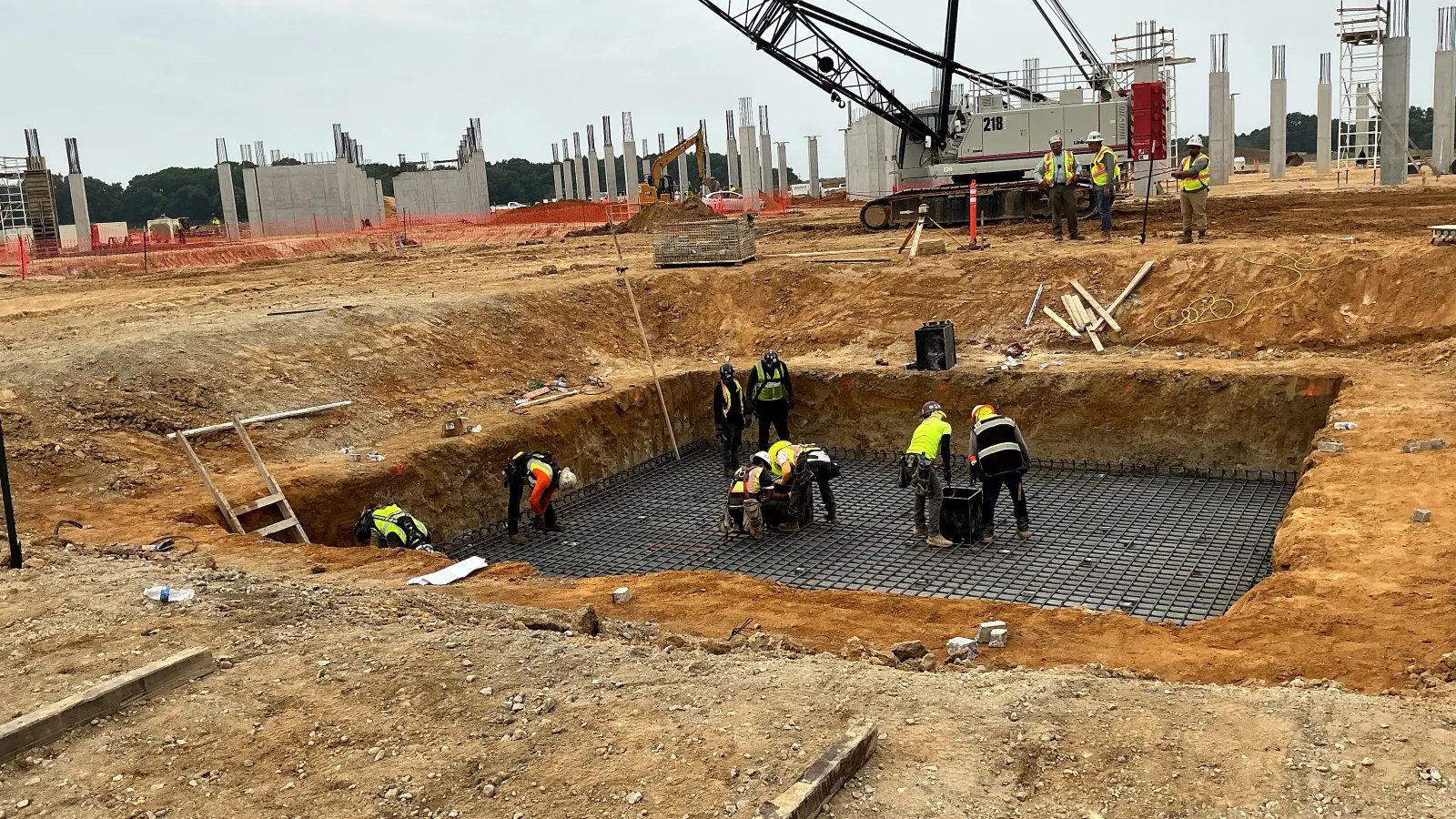
Concrete for Commercial Developers Across West Texas
A commercial developer in West Texas usually discovers that the pad is the cheap part and the distance is the expensive part. The land may be a pad-ready lot on a farm-to-market road outside a county seat, and the nearest dependable batch plant may be a long drive away, with the nearest second plant farther still. We start a developer's job by putting a tape on that distance and building the schedule backward from it.
Concrete Contractors of West Texas pours foundations, slabs, drive aisles and flatwork, with the utilities and earthwork around them handled by trade partners that we schedule. Developers hire us because the question they bring is rarely just a price per yard. It is whether a shopping center in Snyder, a clinic pad near Slaton or a medical office on the Concho Valley side of the map can open before the lease commencement date, given wind days, heat and a single supply of ready-mix.
How we plan a commercial pad before any form is set
We begin with three numbers: the haul time from the nearest batch plant to the slab, the crew travel time from wherever our people finish the previous day, and the length of the pour window in the month you want to place. On a lot in Snyder those numbers look nothing like a lot near Slaton, where U.S. Highway 84 and Farm to Market Roads 400 and 41 decide which direction the trucks arrive from and how a driver finds the gate.
Once the numbers are on paper we walk the lot with your civil engineer and the trade partners who will cut the utilities and grade the ground. The point of the walk is to agree on who touches the dirt first and where the concrete trucks will turn around, because a truck backing onto fresh subgrade ruins it. We write the order of work as a sequence you can hold us to, with the pour days marked and the contingency days named.
Single-source ready-mix and what it does to a commercial schedule
In many small West Texas towns one plant supplies most of the commercial concrete within reach. That is fine until two projects want the same morning, or until a plant shuts for maintenance in the middle of your tilt or slab sequence. Developers who plan around this early get better placement dates than developers who learn about it the week before the pour.
We confirm plant capacity and mix availability as part of pre-bid, and we ask the plant to hold a standing order for the larger slabs on your calendar. If a second source exists within reasonable haul time, we price it as an alternate so you can see the cost of redundancy. Slabs placed in summer carry an additional line for retarders and evaporation control, which we describe under hot and windy weather concrete.
Foundations, slabs and flatwork on a commercial lot
The concrete package for a typical retail or office pad is footings, a slab on grade, sidewalks, a trash enclosure pad, accessible routes and a drive aisle that carries delivery trucks. The scope gets complicated at the edges, where the slab meets the sidewalk and the sidewalk meets a parking field another contractor is paving. We place and finish the slab on grade to the flatness the finish trades need, and we sequence curbs and walks so that the paving crew is not waiting on us.
Our parking lot concrete crews use the slab's grade control.
Safety on an open lot with other trades working
A commercial lot in this region has plenty of traffic while the job runs: dump trucks, utility crews, surveyors, delivery drivers and the occasional passerby from the farm-to-market road. We lay out a site plan that separates truck routes from workers on foot, mark the pump set-up, and brief every crew on wind limits before the day starts.
Wind decides whether a pump boom can swing and how rebar mats get flown, and the foreman on site makes that call. Lender, city and special inspectors all need access, so we build their visits into the pour plan instead of letting them stack up on placement morning.
Where commercial development sits among the other owners we serve
Commercial developers are one of several owners we mobilize crews for. The same equipment and crews also work for general contractors holding the prime contract, and for logistics and warehouse developers whose slabs are heavier and whose truck courts are larger. Seeing both kinds of project keeps our pricing honest for a retail pad.
West Texas commercial demand follows the rest of the economy. Gaines County has about 400,000 irrigated acres and ranks second among Texas cotton-producing counties, so a retail or service pad there is serving a farm-and-oilfield customer base that spends on a seasonal rhythm. Roscoe Wind Farm runs 627 turbines rated at 781.5 MW in total, and maintenance and visiting crews from projects like it fill hotel and restaurant lots along the nearby interstate.
Reaching sites from the South Plains to the Concho Valley
We mobilize crews across the South Plains, the Permian Basin, the Big Country, the Concho Valley and the Trans-Pecos, and the cost of getting there is built into the bid line by line rather than hidden in a generic mobilization number. A developer in Snyder, where Western Texas College offers petroleum technology, solar energy technology and welding programs, is close enough to the Big Country that a crew can run from a nearby job.
If your lot sits in Snyder or another county seat, we describe the mobilization plan on the first call, including crew travel, equipment staging and where we expect to buy concrete.
The concrete and site services developers bundle with the slab
Developers rarely buy a slab alone. A commercial lot also needs pad preparation, utility stub-outs and an exterior flatwork package, and we coordinate those pieces so one party answers for the schedule. Our building pad preparation scope covers the proof-rolled subgrade and select fill that the slab sits on, and our site utilities coordination ties water, sewer and electrical stub-outs to the foundation layout so no one cuts a fresh slab for a missed sleeve.
On the building side, the same crews place concrete for retail shopping centers and office buildings, and we can quote the whole package or just the pieces you want to hold with a different contractor.
Building the delivery schedule around pours, not around the calendar
The commercial schedules we see that hold up were built from pour days outward. A slab is placed on a date that clears the utility inspection, the plant confirmation and the weather window, and the framing or steel crew mobilizes after cure and strip, not on a guess. We share a short look-ahead each week with the developer and the general contractor, naming the next three placements, their volumes and the one thing most likely to move each of them.
Tell us the lot and the lease date
Send us the address, the building footprint and the date your tenant needs the keys. We will look up the nearest batch plant, work out crew travel and come back with a pour sequence and a priced scope that you can set against your budget.
Common Questions
How far should a developer expect concrete to travel in this part of Texas?
It depends on the town. Some county seats have a plant within minutes, while others depend on a plant a long drive away or a portable setup. We ask for the actual plant location during pre-bid and price the haul, including a time limit on the mix so it is still workable when it arrives.
Can you hold a pour date if the only ready-mix plant is shared with other projects?
We can reserve a standing order and keep the plant informed of volume and start time as the date approaches. We cannot control another contractor's priorities, so we build a backup day into the sequence and a fallback mix into the order.
What does wind do to a commercial slab pour?
Wind strips water off a fresh slab quicker than a trowel crew can close the surface, and plastic shrinkage cracks follow. We use fogging, evaporation retarders and windbreaks, and we sometimes shift the start to the early morning or the evening.
Do you quote just the slab, or the whole concrete scope for a retail or office pad?
Either. Some developers ask for the full package including sidewalks, curbs, dumpster pads and drive aisles. Others hold the paving with another contractor and ask us only for the building slab and footings.
How do utilities and grading affect your price?
Grading and utility trenches set the subgrade we pour on and the sequence we work in. We coordinate the trade partners who do that work, and we price the concrete assuming a signed-off subgrade, with a line for rework if conditions change after the concrete partners we coordinate arrive.