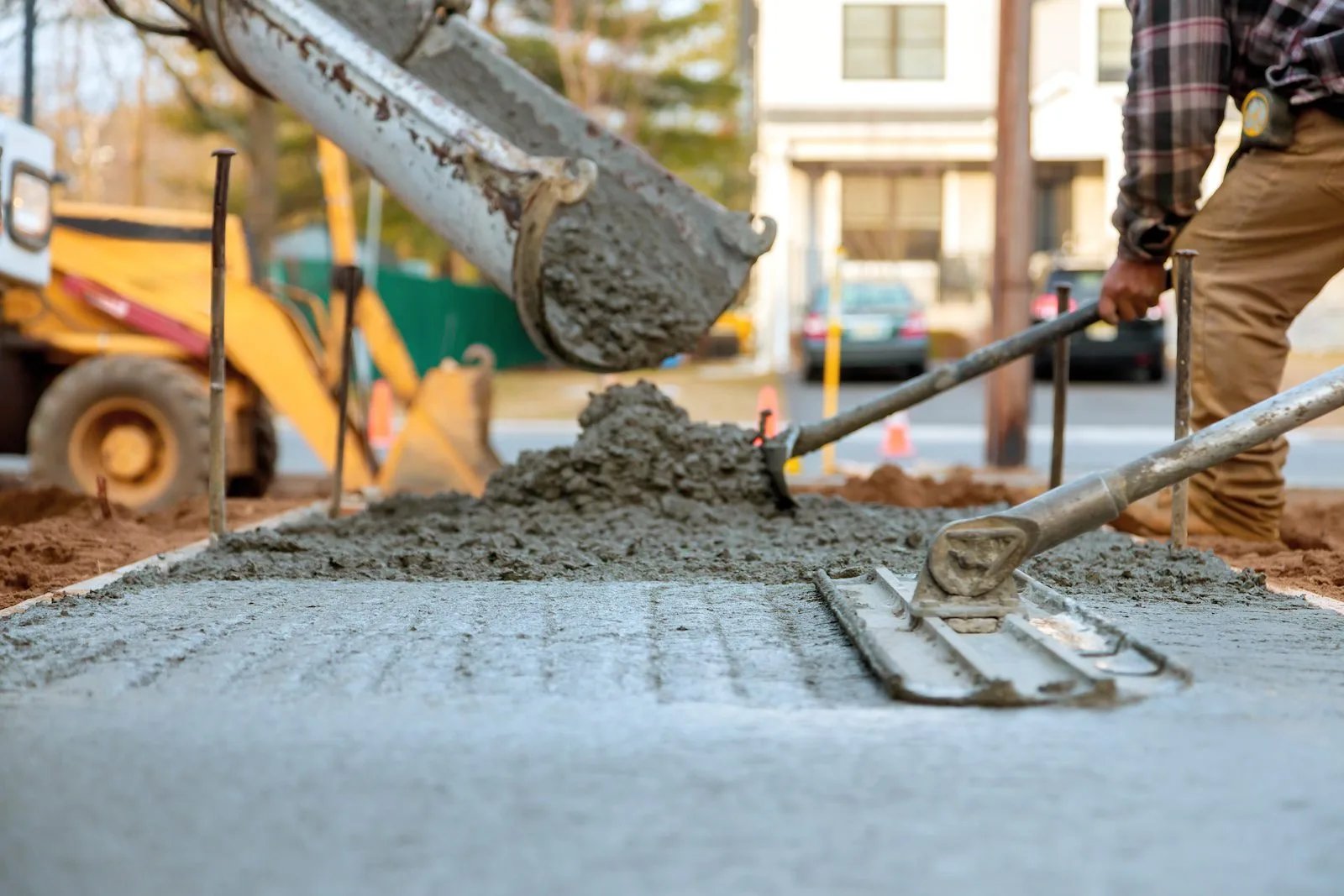
Sidewalks and Flatwork in West Texas
Sidewalk and flatwork contracts around West Texas county seats are small by the yard and large by the mile, because the crew often drives farther than the concrete runs. A block of sidewalk in a courthouse square, an apron at a fire station and a patio behind a clinic may all be awarded in one season, and the scattered locations are the real challenge. We handle that by grouping nearby work, sharing mobilizations and keeping a crew that finishes cleanly and moves on.
Flatwork covers sidewalks, driveways, aprons, patios, plazas, ramps, pads and walkways. It is the concrete people touch every day, so quality shows quickly: slopes that drain, joints that line up, edges that do not chip, and surfaces that stay safe for walking. We build flatwork for owners ranging from municipalities and school districts to developers, retailers and industrial plants.
The sections below describe the places and buildings we serve, what moves the price, the decisions that help a project, related services and the way we work.
Where flatwork shows up
Public buildings need walks and ramps that meet accessibility rules, and municipal projects often include sidewalk replacement along a main street. Sweetwater is the Nolan County seat; Nolan County covers 914 square miles and is crossed by Interstate 20, US 84, US 277, SH 70 and SH 153. A county of that size shows how many separate walks, ramps and aprons can be awarded within a single jurisdiction.
Schools and campuses add walkways between buildings. Sul Ross State University in Alpine sits on a 647 acre rural campus, and a campus that size is mostly walks, plazas and service drives. Retail centers need entry walks, curb ramps and loading aprons. Each building has its own traffic, and we size panels and reinforcing accordingly. A service walk behind a school kitchen sees delivery carts and the occasional truck tire, while a walk by a library door sees strollers and wheelchairs, and the two should not be built the same way even if the plan shows one detail for both.
What changes the price of flatwork
Area and thickness set the baseline, but flatwork is more sensitive to site conditions than large slabs. Demolition of old walks, hand excavation near utilities and trees, forming around curves, and haul-off of broken concrete add up. Small quantities do not benefit from economies of scale, so the price per square foot can run higher on a few hundred feet of walk than on a large plaza.
Mobilization matters most. State Highway 214 passes through Muleshoe and continues south through Morton and Plains. A sidewalk project beside an active business needs coordination of customer and delivery access. We review the proposed phases and temporary routes with the owner, then organize the placement and protection requirements. Grouping several nearby tasks under one mobilization often lowers the cost for every owner. We also look at how much concrete each location needs, because a short run of walk in a distant town may be better served by a small-load arrangement with the plant than by a full truck that partly goes to waste.
Things to settle before we form
Start with slope and drainage. A sidewalk that holds water becomes a hazard in winter and a maintenance problem year-round. Cross-slope limits on accessible routes are strict, and we check them with a level as forms go in, not after the pour. Tell us where irrigation lines, lighting and signs sit so we avoid them or move them in advance. If a utility box or hydrant sits inside the walk line, we raise it at the start, because moving it later means a second trip with a second crew.
Also agree on the finish: broom, light texture, color, saw-cut patterns or a stamped border. Joint spacing should respond to the width of the walk. Tree roots, existing utilities and drainage structures often shape the layout, and an early walk of the site with the owner can save a change order. McCamey was declared the Wind Energy Capital of Texas by the Texas Legislature, and the work on streets and facilities in a small place like that benefits from the same early planning.
Work that connects to flatwork
Most projects tie into curb and gutter, where the flatwork meets the street, and into ADA ramps and accessible routes, where the details are measured to the inch. Decorative surfaces are described under decorative and stamped concrete.
Municipal owners can find our approach to public work under municipal and public works, and the concrete partners we coordinate regularly mobilize to Sweetwater and neighboring towns. A Texas State Technical College branch near Sweetwater began offering the state's first community-college wind energy program in 2007, a sign that local campuses keep growing their walks and parking.
How we pour and finish flatwork
We set forms to line and grade, compact and trim the base, place reinforcing where specified and check slopes. The concrete is placed, screeded, floated and finished, with edges tooled and joints cut or tooled at the right spacing. A broom finish gives traction, and curing compound or wet cover protects the surface.
We protect the work after the pour: barricades, signs and a plan for when the walk may be used. Cleanup includes backfilling edges, removing forms and hauling off debris. Before we leave, we walk the job with the owner or inspector and note any items to touch up, so the site is complete when the crew drives away. On a long drive, a missed punch list item is expensive for everyone, which is why we check each panel for finish, edge and slope before packing the trailer.
Send the list of walks and aprons
Share a site list, drawings and the locations that need work. We will check which items can be grouped, how far the concrete partners must travel and what supply is available, then reply with a plan and clear questions.
Common Questions
What depth of concrete does a walk need?
Four inches is typical under foot traffic, but driveways, aprons and areas that trucks cross need more. The drawings decide, and where they are silent we recommend thickness and reinforcing based on the loads. A walk that vehicles cross by habit should be built like a driveway.
Can you work in front of open businesses?
Yes, with phasing. We pour half a walk at a time, keep entrances accessible with temporary ramps, and coordinate times with the businesses. Early morning pours reduce disruption, and clear signs help customers.
Why do sidewalks crack, and can you prevent it?
Shrinkage, soil movement, roots and heavy loads all contribute. Joints at proper spacing, a well-compacted base and good curing reduce cracks and guide the rest. We do not promise a crack-free walk, but we plan for fewer and tidier ones.
What time of year is best for flatwork?
Spring and fall give the easiest conditions, with mild air and moderate wind. Summer pours need early starts and quick curing, and winter pours need protection from freezing nights. We schedule around the season, and we tell the owner when a date is likely to face weather trouble.
Do you handle removal of old sidewalks?
We coordinate sawing, demolition and haul-off, and we include them in the scope when requested. Removal often turns up buried utilities, so we locate them before breaking concrete and tell the owner what we find.