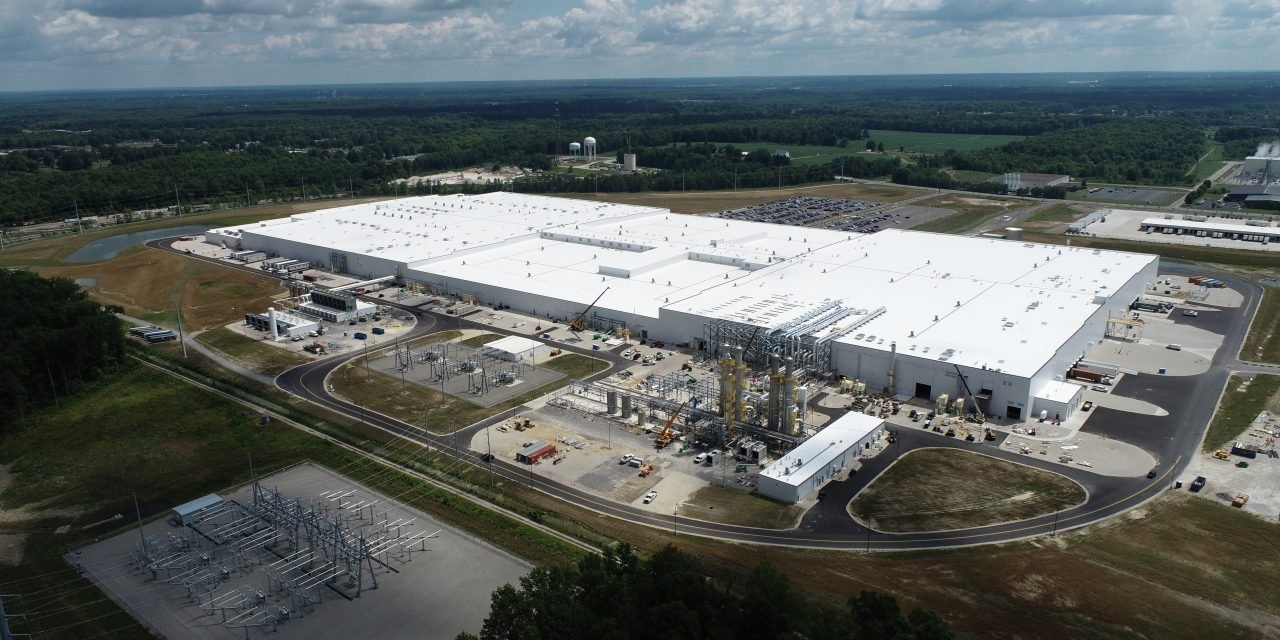
Automotive and EV Plant Concrete in West Texas
A vehicle assembly line tolerates very little movement in its floor, and in West Texas the first complication is usually not the floor at all but the distance between the plant site and the nearest batch plant that can supply the volume. Automotive and electric vehicle plants ask for a large flat footprint, heavy equipment bases, wash and paint areas that need sealed and sloped concrete, and truck circulation for parts coming in and finished vehicles going out. Before we talk about flatness numbers, we ask where the site sits, how many miles ready-mix has to travel, and whether the access is a state highway, a farm-to-market road or a rail spur.
We place and finish the foundations, floor slabs, equipment pads, truck courts and employee parking that make up the concrete side of these plants, while trade partners that we coordinate handle the pipe and dirt work around them. Because the region is wide, we price mobilization as its own line item: crew travel, form hauling, equipment staging and any remote pour logistics. An owner comparing candidate sites in the Permian Basin, the South Plains or the Big Country will see different haul times for each, so we compare them before site selection.
We do not design the vehicle line, the battery process or the paint system. We build the slab and site that those systems are bolted to, and we ask the equipment suppliers for their foundation requirements early, since anchor bolt layouts and pit locations shape the pour sequence more than any other detail.
Services that go into a plant slab
The floor of a vehicle plant is rarely one product. The main production hall usually calls for a heavily reinforced or post-tensioned slab with tight tolerances, so our super flat floor slabs work is the starting point, and a plant with a long conveyor or automated guided vehicles will usually want it. Battery handling and paint areas often add curbed containment, which is a different pour with different details, covered in our containment pads and secondary containment page.
Outside the building, trucks do the damage. Inbound hauls arrive at dock aprons and staging courts that need thick, jointed paving, and the yard where finished vehicles wait is a wide field of pavement that has to drain. Those packages fall under truck courts and dock aprons. Under all of it sit water, fire line, sanitary and electrical ducts, set by utility partners so trenches close before the base course goes down.
Concrete placement and related trade coordination
The concrete partners we coordinate do the concrete itself: footings, piers and grade beams, the main floor, equipment bases, ramps, curbs and the paving around the building. When the nearest plant is a long drive away, we also plan the hauls in detail, including how many trucks arrive per hour, how long the mix can ride before it is rejected, and what happens if a truck breaks down on a farm-to-market road halfway to the site.
Pipe and dirt work are different. Partners that we coordinate perform them, the proposal says so plainly, and the owner has one contact who understands how the dirt and pipe sequence has to match the pour sequence. We remain responsible for the interface: elevations at the building pad, sleeves through the slab, and the compaction records the engineer will ask for before any concrete is placed.
Specifications, permits and the city or county office
A new plant brings a lot of documents. The owner or design-builder normally issues a specification section for the floor that sets flatness, curing method, joint layout and testing, and we price from that rather than from our own assumptions. The permit office in the host town reviews the building against the adopted code, and the stormwater plan is reviewed on its own track.
Industrial owners also tend to bring their own quality system. We expect third-party testing of cylinders and slump on every truck for structural pours, a written pour plan for the main floor, and curing that does not depend on the weather being kind. West Texas wind and low humidity can dry a slab surface faster than the mix expects, so the plan for evaporation control, windbreaks and early curing goes in writing before the first truck arrives. That plan follows the method laid out in hot and windy weather concrete.
Owners who build this kind of plant
Vehicle and battery plants in this region come from a few sources. A manufacturer may be adding capacity near a rail line or highway corridor, a developer may be building a shell for a tenant who has not been announced, or an energy company may be adding a manufacturing arm that serves wind and solar fleets. Rail matters to all of them. Roscoe has a Union Pacific line through its middle, and an older short line once carried freight about 50 miles to Fluvanna, which is a reminder that rail corridors cross this country and that sites with a siding hold real value for parts and vehicle movements.
Training and labor matter too. Labor matters as well: the technical college branch near Sweetwater launched a wind energy program in 2007, the first of its kind at a Texas community college, which is the sort of local training manufacturers look for. If you are working for an industrial owner, our page on industrial and manufacturing owners describes how we price and phase work for them, and the neighboring manufacturing plant and warehouse pages cover the buildings that often sit beside a vehicle plant.
Where we mobilize for plant work
Plant sites in this region cluster along interstate and rail corridors, and we mobilize crews to them as the schedule calls for. A site along the I-20 corridor between Midland, Big Spring, Sweetwater and Abilene sits in a different haul zone than one on the South Plains near Lubbock, and both differ from a Trans-Pecos site where every load of concrete is a long drive. The write-ups for the I-20 corridor and the I-27 corridor describe how we reach sites along those routes.
Water is a real siting factor. Abilene gets just under 24 inches of rain in a normal year, and Fort Phantom Hill, Kirby, Abilene and Lytle are the reservoirs behind its supply. A plant that uses water for wash, cooling or paint has to answer where that water comes from, and the answer shapes the utility plan, the stormwater plan and how we sequence trenches.
Send the parcels and the floor specification
If you are comparing sites for a vehicle, battery or parts plant, send the parcel locations, the floor specification and the target schedule. We will respond with the haul distance for each site, the mobilization plan, and a list of questions the geotechnical report needs to answer before anyone commits. Use the form at the top of the page to reach our estimator.
Common Questions
How far does ready-mix have to travel to a West Texas plant site?
It depends on the site, and that is the first number we ask for. In larger cities a batch plant may be a short drive from the pad, while in small towns one plant may serve the whole county. For a floor that has to be placed continuously, we check the plant's production rate, a backup plant, and the haul time so that the mix does not age past its limit before it is placed.
Can a plant floor be poured in the wind and heat of this region?
Yes, with a plan. We schedule large placements for early morning, add windbreaks and evaporation control, use retarders where the engineer permits, and begin curing as soon as finishing allows. If wind speeds climb above what the finishers can work in, we stop the placement at a planned joint and move on rather than risk cracking the floor.
Do you handle the utilities and grading for the plant?
Trade partners that we coordinate handle the pipe and the dirt, and we manage the interface with the concrete work. That means one team watching the sequence, even though other firms may install the pipe or move the soil. The proposal states which scopes are ours to place and which are coordinated.
What is included in mobilization pricing?
Mobilization covers crew travel and lodging where needed, hauling forms and equipment, setting up staging, and returning when the schedule requires. We list it separately so an owner can compare sites on equal terms, since the same plant would carry a different mobilization number at a South Plains site than at a Permian Basin site.
When should we involve you in site selection?
As early as the short list of parcels exists. A quick review of haul distance, soil conditions, and utility availability for each parcel costs very little and sometimes changes which one wins.