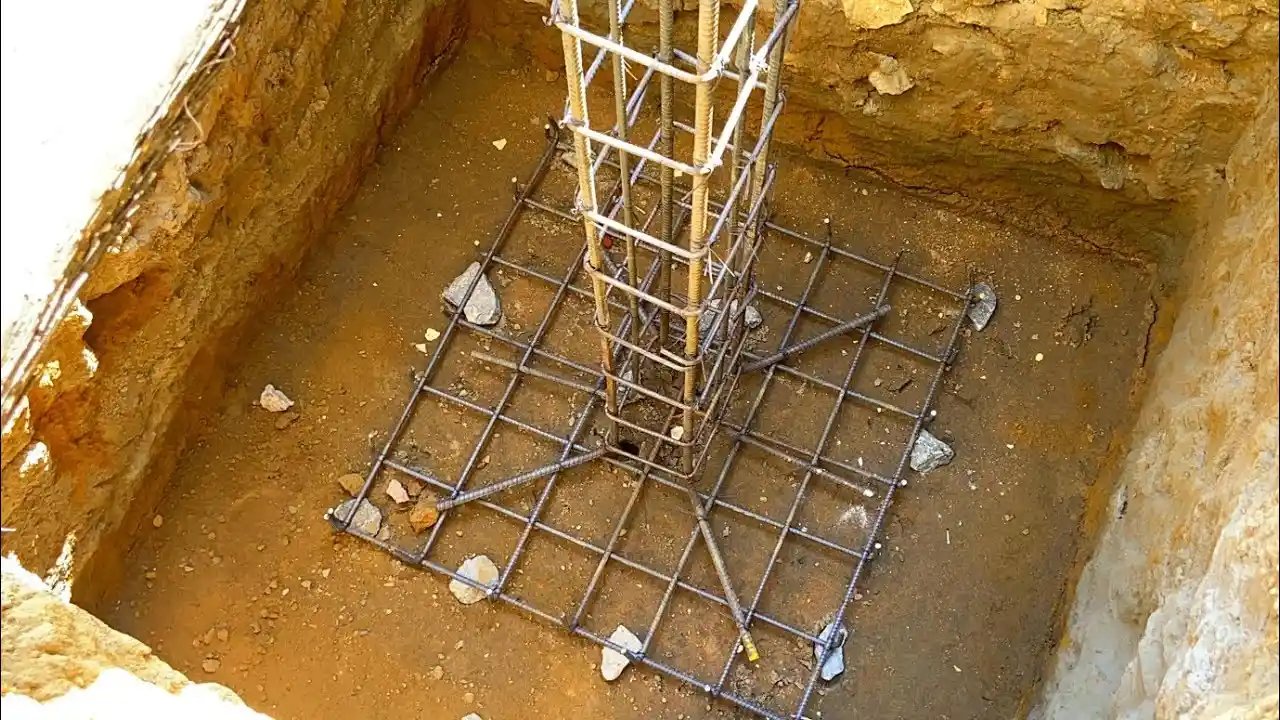
Rebar Placement in West Texas
Rebar that sits a half inch too low in a slab on grade is invisible once the concrete covers it, and it can cut the member's capacity enough to matter. Reinforcing steel only works where the drawings put it, and the only time to confirm that is the hour before the truck arrives, when the inspector, the foreman and the placing crew can still walk the mat together.
We place and tie reinforcing steel for foundations, grade beams, drilled pier cages, walls, columns, suspended slabs, industrial floors, paving, ramps and equipment pads. Fabricators supply bar to the shop drawings, and the placing partners set it, chair it, tie it and hold it for inspection. Dowels, embeds and anchor bolts are checked at the same time so the steel and the hardware agree.
Steel in West Texas is a delivery problem as much as a placing problem. Bar is cut and bent in a shop that may be hundreds of miles away, trucks arrive on a schedule that depends on weather and distance, and a short load can idle a pthe concrete crew. We plan steel deliveries as carefully as we plan concrete deliveries, because a pour with no rebar cannot start.
Buildings and structures that need steel
Tilt-wall buildings use rebar in panels, footings and slabs. Manufacturing plants need heavy mats under machines and in loading areas. Education buildings and healthcare facilities add suspended slabs and shear walls. Farm buildings, grain bins and gin foundations use heavy reinforcing under high point loads.
Andrews built its own city loop, Loop 1910, at a cost of $13 million, and it opened in October 2013. Roadway and paving projects like it use reinforced concrete at curbs, aprons and bridge-type crossings, and the same rebar practices apply to the private lots and industrial yards that grow up along such routes.
Placing steel from shop drawings to inspection
Our scope starts with review of the structural drawings and the shop drawings from the fabricator, which we compare to catch conflicts early. We coordinate delivery, receive and inspect the steel, sort it by mark and stage it close to the work. Then we place bars, tie intersections, set chairs and spacers, install dowels and corner bars and check cover and lap lengths.
Special details need extra care: couplers, headed bars, epoxy-coated or galvanized steel, welded wire reinforcement and post-installed dowels. For elevated slabs and decks, we place top and bottom mats with correct support spacing and keep conduit and sleeves from crowding the steel.
Impalement, lifting and handling
Protruding bars are an impalement hazard, so vertical bars get caps or guards. Heavy bundles are lifted with proper rigging and set down on level dunnage. Workers on mats wear gloves and eye protection, and walkways are provided on steel to prevent twisted ankles. Wind can make long bars hard to handle, and the foreman can stop the lift when gusts rise.
Hot weather adds fatigue and heat illness risk, because steel gets hot enough to burn skin. We schedule heavy placement for the cooler hours, provide water and shade and rotate crews. At Monahans Sandhills State Park, a short drive from Monahans, the wind moves whole dunes and sometimes does it overnight, which shows how hard it can work on exposed ground in the Permian Basin.
Getting steel there before the trucks
Rebar lead times vary, and the fabricator needs approved shop drawings before cutting. We build the steel schedule backward from the pour date: approval, detailing, fabrication, delivery, placement, inspection. The state's farm-to-market road network came out of the 1949 Colson-Briscoe Act, meant to link rural areas to market towns, and it now accounts for over half of TxDOT's maintained mileage, which means steel often travels the last leg on a narrow, load-limited road.
We confirm the delivery route, any weight restrictions and the site access for a flatbed. If the road or site cannot take a full load, we plan multiple smaller deliveries. We also hold a small reserve of tie wire, chairs and extra dowels on site so a short count does not stop the crew.
Cover, congestion and the wind
Concrete cover is the distance from the steel to the surface, and it protects the bar from corrosion. Where the slab will see de-icing salt, fertilizer or oilfield brine, cover is a durability issue, and the drawings may call for more than the standard dimension. We check chair heights and use spacers that will not break under foot traffic.
Congestion occurs where beams, columns and dowels meet. A detail that looks tidy on the drawing may be impossible to build with full-size bars, so we ask the engineer early and mock up complex joints. Hale Center is on the Llano Estacado at about 3,419 feet, near Running Water Draw and Yellow House Draw, and open ground like that offers little shelter. Wind drives dust into formwork and onto bars, so we blow out forms right before the pour.
Reinforcement placement and fabrication handoffs
The concrete partners we coordinate tie and place reinforcement on most flatwork, footings and grade beams, and we coordinate placing partners on large structural jobs with heavy mats and cages. Fabrication and detailing come from the supplier's shop, and welding of rebar or couplers is done by qualified partners when called for.
Because the same company places steel and concrete, there is no argument at the pour about who moved a bar. We take photos of the mat before concrete covers it and keep them with the inspection record. If the inspector finds an issue, our foreman fixes it on the spot, and the correction is noted on the inspection sheet with the time so that the record shows the steel was right before concrete went in.
The walk before the pour
Our process ends with a walk. The foreman, inspector and, when needed, engineer walk the steel together with the drawings in hand and a tape measure. They check bar size, spacing, cover, laps, dowels, embeds and openings. Every item is fixed or recorded before the concrete is ordered.
We also coordinate with concrete formwork so steel and forms are sequenced, and with drilled pier foundations when cages are set in shafts. For industrial and manufacturing owners, we keep mill certifications and placement records for the project file.
Send the shop drawings and the pour date
Give us the steel schedule, the site address and the date you want to pour. We will use the pour deadline to plan delivery and reinforcement placement, then identify any access or supply issue that could delay them.
Common Questions
How far in advance should rebar be ordered?
As early as the shop drawings are approved. Lead times depend on the fabricator and the size of the order, and delivery to a remote site adds days. We build the steel schedule backward from the pour date.
Who checks the steel before a pour?
The special inspector or the engineer's representative walks the mat against the drawings. Our foreman walks it first, and any problems are fixed before the inspector arrives.
What if the steel arrives short?
We keep a small reserve of common bars, ties and chairs. For larger shortages, we call the fabricator and move the pour only when the engineer cannot approve an interim fix.
Is epoxy-coated rebar worth the cost?
It can be in areas with salt or chemical exposure. The engineer decides, and we handle coated bar carefully to avoid damaging the coating, which has to be repaired where it is scraped.