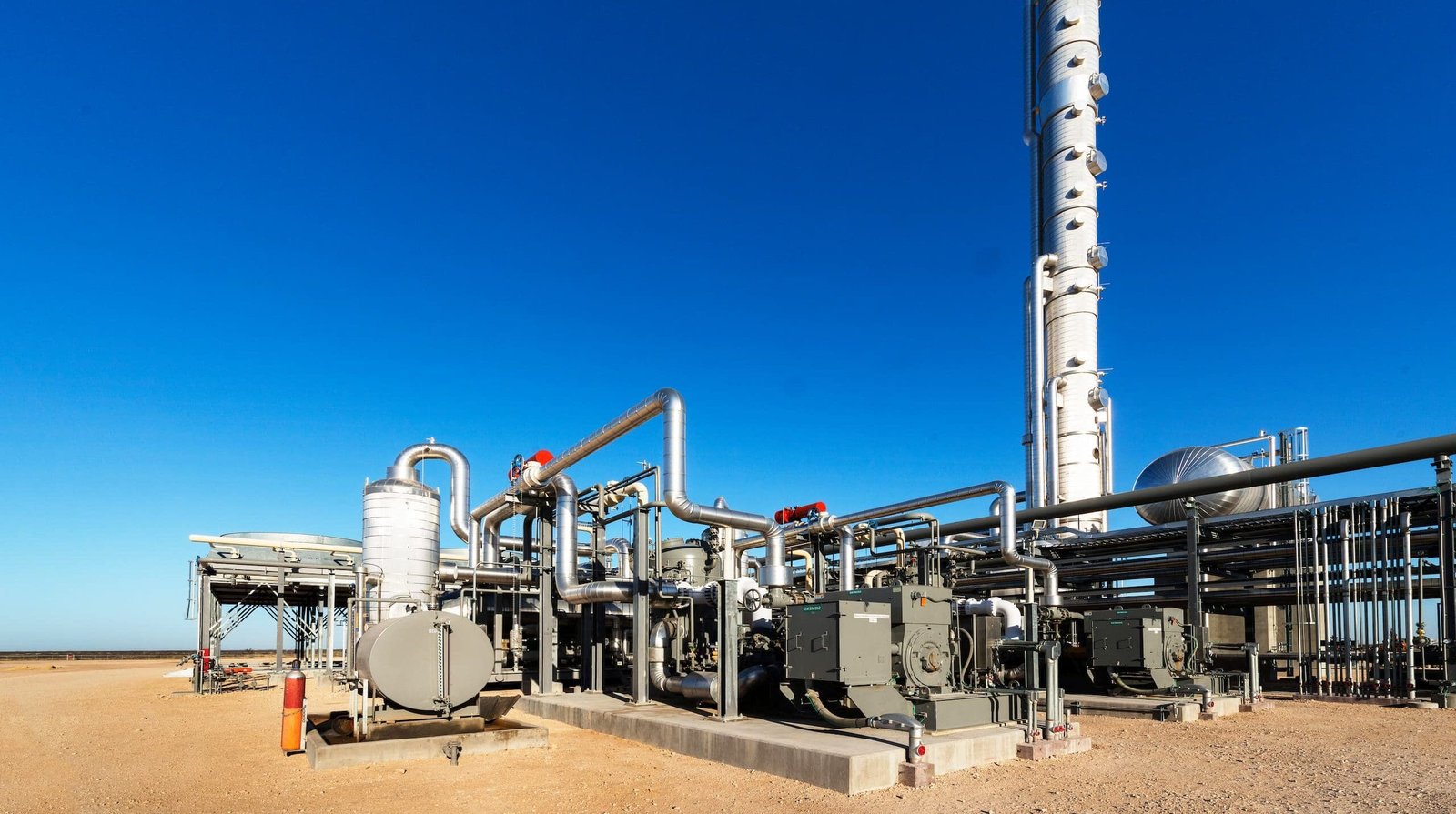
Concrete Work for Oil, Gas and Midstream Operators in West Texas
Oilfield concrete is judged by what happens on the day after the pour: whether the pad holds a compressor level, whether the containment curb keeps fluid where it belongs and whether the next crew can set equipment on the date promised. In the Permian Basin and its edges, where operators and midstream companies spread work across many leases, those outcomes depend as much on logistics as on mix design.
Concrete Contractors of West Texas builds compressor and pump foundations, tank pads, containment slabs, yard paving and shop floors for oil, gas and midstream owners, with trade partners coordinated for earthwork and utilities. We start each quote with the lease road, the nearest plant and the crew's drive, and we tell the owner plainly which of those is the cost driver.
Pricing a pad from the lease gate inward
We visit the site or ask for photos of the gate, the road and the pad location before pricing. We look for cattle guards, soft shoulders, overhead lines and the turnaround space a mixer truck needs. We then tally the haul, the pump needs and the number of placements.
The best-run oilfield jobs combine several small pours into one mobilization. Owners with a compressor pad, a skid foundation and a containment slab on the same lease get lower unit costs when we pour them together. We also ask whether a second operator is building nearby on the same week, since two pads on adjoining leases can share a crew move and a pump.
Before the pour we send the owner a one-page plan with truck count, expected arrival times, the person at the gate and the hour we expect to finish. Field supervisors tell us this saves phone calls on the day, because the pumper, the pad hand and the dispatcher all know what to expect.
Working the Permian Basin and its fringes
The Southwest Sandhill community lies along Interstate 20, roughly 37 road miles southwest of Odessa, with State Highway 18 on its east edge. A lease in that country is a short pickup ride from the highway and a long haul from the plant. Scurry County sits in the Permian Basin and had produced about 1,825,517,000 barrels of crude oil from 1923 to January 1, 1991, so the roads and yards there were built for oil traffic over many decades.
We mobilize crews across the Permian Basin. Crews drive in from the nearest finished job, equipment is staged on the lease or at a cooperating yard, and we agree with the owner on who pays for stand-by when a truck is late for reasons outside our control. Midland, Odessa and San Angelo serve as headquarters for some of the oil production activities in the Permian Basin, which means competing demand for plants in those cities is steady, and we book early.
Operator standards, environmental rules and permits
Operators and midstream companies write their own concrete standards, covering mix strength, rebar cover, anchor bolt templates and containment details. We read them against the drawings and list conflicts before pricing. Environmental rules add requirements for liner interfaces, sump locations and joint sealing that matter once a spill happens.
Permits for lease work vary by landowner, county and agency. We confirm which permits the owner holds and which we must obtain, and we do not start without them in writing. If the lease sits in a floodplain or beside a drainage, we also ask whether a stormwater plan is required and set up erosion control before the pour so runoff does not carry cement wash onto the neighbor's land.
Shops, pads and field buildings
The buildings around a field often include a pre-engineered metal building used as a shop, a warehouse for parts and a small office. They sit on a stem wall and slab, with a floor that tolerates heavy vehicles and chemicals. Outside, yards need paved aprons and trucks need a place to stand while loading.
Compressor stations require machine foundations with tight anchor bolt tolerances, which we handle with templates. Tank pads use rings or slabs designed by the engineer.
Neighbors on the same roads and plants
Energy operators share roads with utilities and energy companies and with industrial owners. Oilfield service companies are described as important to the economy of Post, alongside farming and ranching, and the town's mix is typical: a shop yard on one side of the road and a cotton field on the other. Coordination with those neighbors affects plant supply, truck timing and road maintenance.
Scheduling around rigs, crews and weather
Concrete rarely controls the critical path in the field, but it can delay it. A pad has to cure before heavy equipment sets on it, and a containment slab must be complete before the tank is filled. The plan runs backward from the day equipment arrives: cure time, plant reservation and a daily look at the forecast.
If the owner moves a date, we tell the plant and the concrete team the same day and reconfirm. Cold snaps in winter and summer afternoons above 100 degrees each get their own plan, since a pad that sits on a sandy lease loses moisture quickly and a pad poured on frozen ground can crack as it thaws.
What the concrete scope usually covers
A standard scope includes excavation coordination, forms, reinforcement, embedded items, placement, finishing, curing and cleanup. For hard ground, owners may need rock and hard ground excavation coordinated before concrete arrives. For secondary containment we place the curbs and slab as a unit, as described under containment pads.
Where mechanical equipment is involved we install anchor bolts to a template and verify elevations, because moving a bolt after the pour is expensive. Drains, sumps, pipe sleeves and curbs get the same treatment: we mark them on the form before placement and have the owner's representative sign off when a critical item is part of the scope.
Why the oil economy shapes concrete demand
The 1917 railroad extension to Lubbock made Seagraves a cattle-shipping center, and the town serves as a market for a three-county area. The Colorado River and Elm Creek converge at Ballinger, a reminder that water and land shape where roads and pads go. Eden collects about 26.5 inches of rain in a year and has touched 111 degrees, so crews in the Concho Valley plan for wetter ground than those farther west.
Across all of it, one principle holds: oil work moves quickly and the concrete has to move with it. That is why we keep standing relationships with plants, a standard inspection checklist and a crew that is used to being called on short notice.
Send the lease location and the drawings
Send the lease access details, the equipment drawings and your target dates. We will check haul time and plant supply and talk through a pour sequence with you.
Common Questions
Can you pour a compressor foundation to a manufacturer's template?
Yes. We build a template for the anchor bolts from the manufacturer's drawing, set it at the elevation the engineer specifies and measure it again once the concrete is in.
How do you handle a lease road with weight limits?
We ask for the limits during pricing, share truck weights with the owner and plan loads accordingly. If a road cannot carry full loads, we reduce the load size and add trips.
What does containment concrete require?
Containment needs watertight joints, a sloped floor to a sump and curbs sized to the engineer's volume. We follow the operator's detail and test where the owner requires it.
What if the ground on the lease is caliche or rock?
Hard ground changes excavation and sometimes the thickness of the pad. We coordinate the trade partner who excavates, review the geotechnical report and revise the plan if the material is harder than expected.
Do you work on weekends?
When the forecast and the equipment date require it, yes, with the plant confirmed and crew notice given in advance.