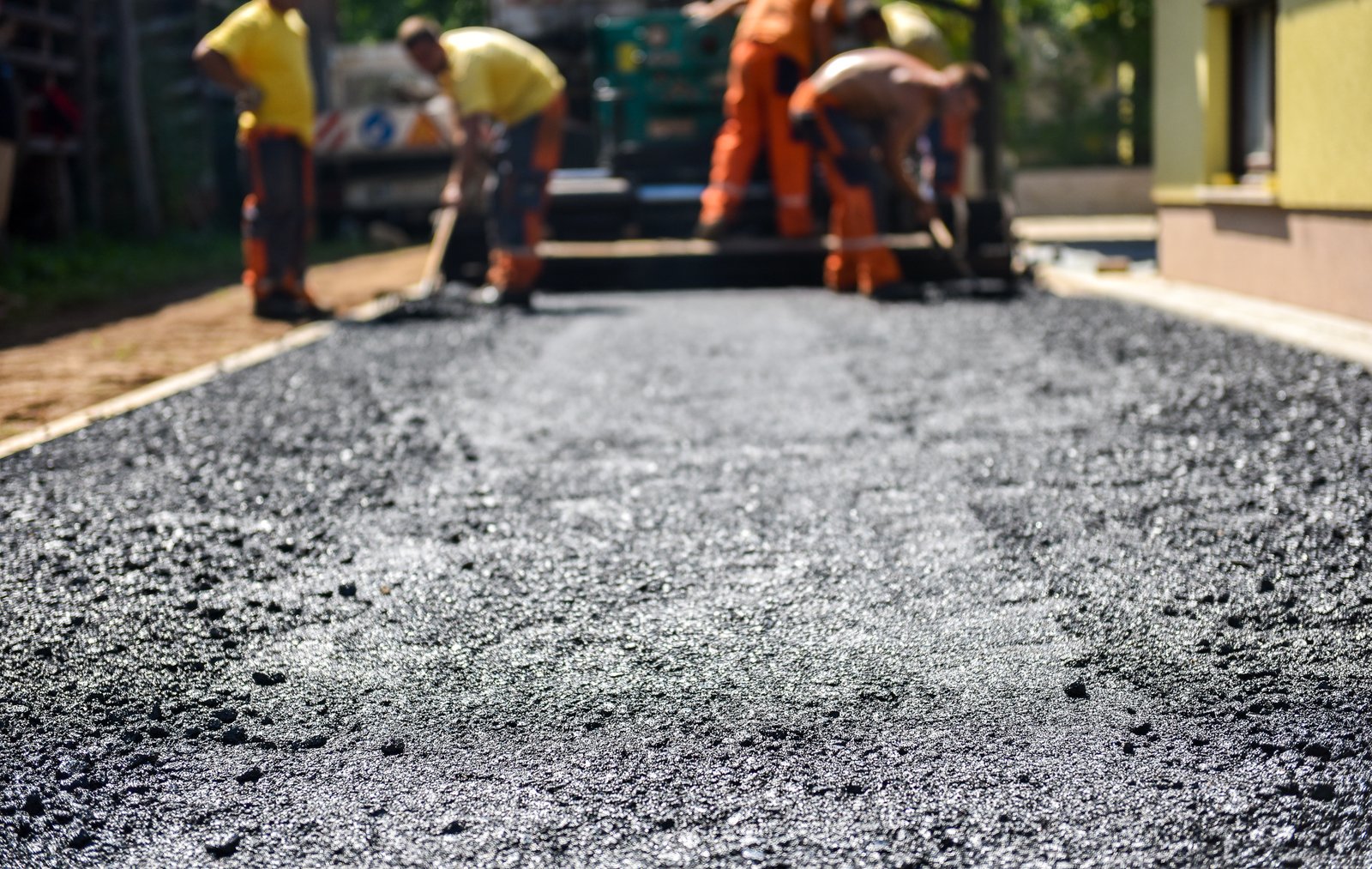
Asphalt Paving Base Preparation in West Texas
Asphalt only performs as well as the stone and soil under it, and a paving crew arriving at a poorly prepared base cannot fix the problem with more mix. Base preparation is the stretch of work that comes between the subgrade and the hot-mix truck: placing and compacting aggregate, trimming to grade and checking thickness so that the pavement above has uniform support. On West Texas jobs it also includes the quiet question of where the stone comes from.
We coordinate trade partners for the base and the paving, and we keep the concrete partners focused on curbs, aprons, dumpster pads and dock approaches that tie into the asphalt. Because concrete and asphalt meet at edges, we care about the base grade at those boundaries, where a half-inch error shows as a lip or a ponding line.
Below we describe the buyers, the safety points, the schedule, the connected services, our role, the standards, our approach and the scope.
Owners with asphalt lots and yards
Retail and office owners need parking and drive lanes, and schools need bus loops and staff lots. Logistics and industrial owners need truck circulation, and oilfield operators need yards that carry loaded trailers. Irrigation from underground aquifers supports farming around Pecos, with cotton, onions and cantaloupes the named crops, and agricultural buyers in such areas ask for packing yards and driveways with a firm base.
Municipal owners need streets, and counties need road overlays. See commercial developers and schools and healthcare owners for the buyers we meet most often on parking and drive work.
Hot mix, rollers and traffic
The base crew works beside trucks and rollers, so traffic control inside the site is essential. Spotters guide trucks, and workers stay out of the roller path. Dust from aggregate is controlled with water, and silica concerns are treated seriously when saw cutting or crushing is involved.
Paving adds heat. Hot mix runs at high temperatures, and summer sun on top of it is hard on a crew. We plan early starts and shade breaks and keep workers hydrated. The base stays clear of tools and debris so that nobody trips while rollers are moving.
Timing the base, the paving crew and the quarry
The base needs to be placed, compacted, tested and accepted shortly before paving, and the asphalt plant has its own schedule. Kermit's boom began with the Hendrick oilfield strike of July 16, 1926, and that oil-patch geography still leaves asphalt plants and aggregate sources a long way from a town like Kermit. A long haul shortens the window in which the mix stays hot and workable.
We confirm the quarry delivery, the trucking, the paving date and the weather forecast together. If wind or cold threaten the mat, the paving crew may postpone, and the base is protected in the meantime. Rain delays are shorter than the delays a wet base can cause, so we do not rush a soft base into paving.
Where base preparation connects
Base work sits after road subgrade preparation and often alongside parking lot concrete when a site mixes the two surfaces. It can include curb and gutter at the edges.
We treat the edge where asphalt meets concrete as its own detail, with a clean saw cut, a bond-breaking joint or a keyed transition, depending on the design.
Our part in a paving job
We coordinate the earthwork or the asphalt through the responsible trade partners. We coordinate trade partners for them and place the concrete elements, such as curbs, gutters, aprons and equipment pads, that tie into the pavement. The concrete partners we coordinate also set the forms and grade controls for those elements.
This arrangement works well when a project mixes materials. We schedule the concrete so that it is in place before the asphalt crew arrives, because paving against a finished curb gives a cleaner edge than trying to add the curb afterward.
Base specifications and acceptance
Specifications set the aggregate gradation, the thickness, the compaction target and the surface tolerance. The lab tests samples of the stone and the density of the compacted base. For public roads, agency standards add sampling frequency and sign-off steps.
Lubbock Preston Smith International Airport has an 11,500 foot concrete runway and an 8,003 foot crosswind runway about five miles north of Lubbock, and airport work follows stricter standards than ordinary parking. If a project touches a field like that, we confirm the airport authority requirements before pricing.
Controlling thickness and grade
We check the subgrade first, then spread aggregate in lifts. A grader or paver places the stone, a roller compacts it and a survey crew checks thickness and grade. Weak or wet spots are corrected before the next lift goes on.
Shallowater sits on the level Llano Estacado near 3,294 feet, and on ground that flat, drainage becomes the guiding rule. Even a small error in base grade can leave water standing on the finished asphalt, so we shoot grades often.
What the base scope includes
The scope typically includes subgrade check, geotextile if called for, aggregate supply, placing, compacting, trimming and testing. It sets the thickness, width and tolerance, and it lists the number of density tests.
Extra items include proofrolling, tack coat and edge shaping, which may be priced separately. We keep the quantities visible so that a change in the pavement design is easy to price. See concrete paving for the alternative surface when the design allows a choice.
Tell us about the lot
Send the pavement section, the site plan and the soil information, along with the nearest town. We will check the stone source and haul and phone you with the questions that settle the base thickness before a paving date is set.
Common Questions
How thick should the aggregate base be under asphalt?
Thickness comes from the pavement design, which weighs expected traffic against soil strength. Light parking may use a few inches of base, while heavy truck areas need much more. We follow the engineer's section and measure thickness at intervals so the finished depth matches the plan.
Why does the base matter so much to asphalt life?
Asphalt is flexible, so it relies on the base to spread loads. A weak or uneven base leads to rutting, cracks and potholes. Good compaction, proper thickness and a firm subgrade give the pavement years of service, and they cost far less than repairs later.
Can we pave over an old gravel yard?
Sometimes, if the existing base is sound, uniform and the right thickness. The engineer may call for testing, reshaping or added stone. We probe the yard before pricing, because buried soft spots and old utilities show up in these older yards more often than in new work.
What happens if it rains on a finished base?
A short shower on a sealed and well-drained base does little harm. A heavy storm may soften the surface, and the partner will have to dry, recompact and retest the area. We track the forecast, and a finished base does not sit unprotected when a heavy storm is coming.
Where does the stone come from?
Stone comes from the nearest approved quarry or pit, and the choice depends on the engineer's specification and the haul distance. In remote areas, the haul can be a large part of the cost. We compare sources on delivered price and confirm the material meets the spec before ordering the full amount.