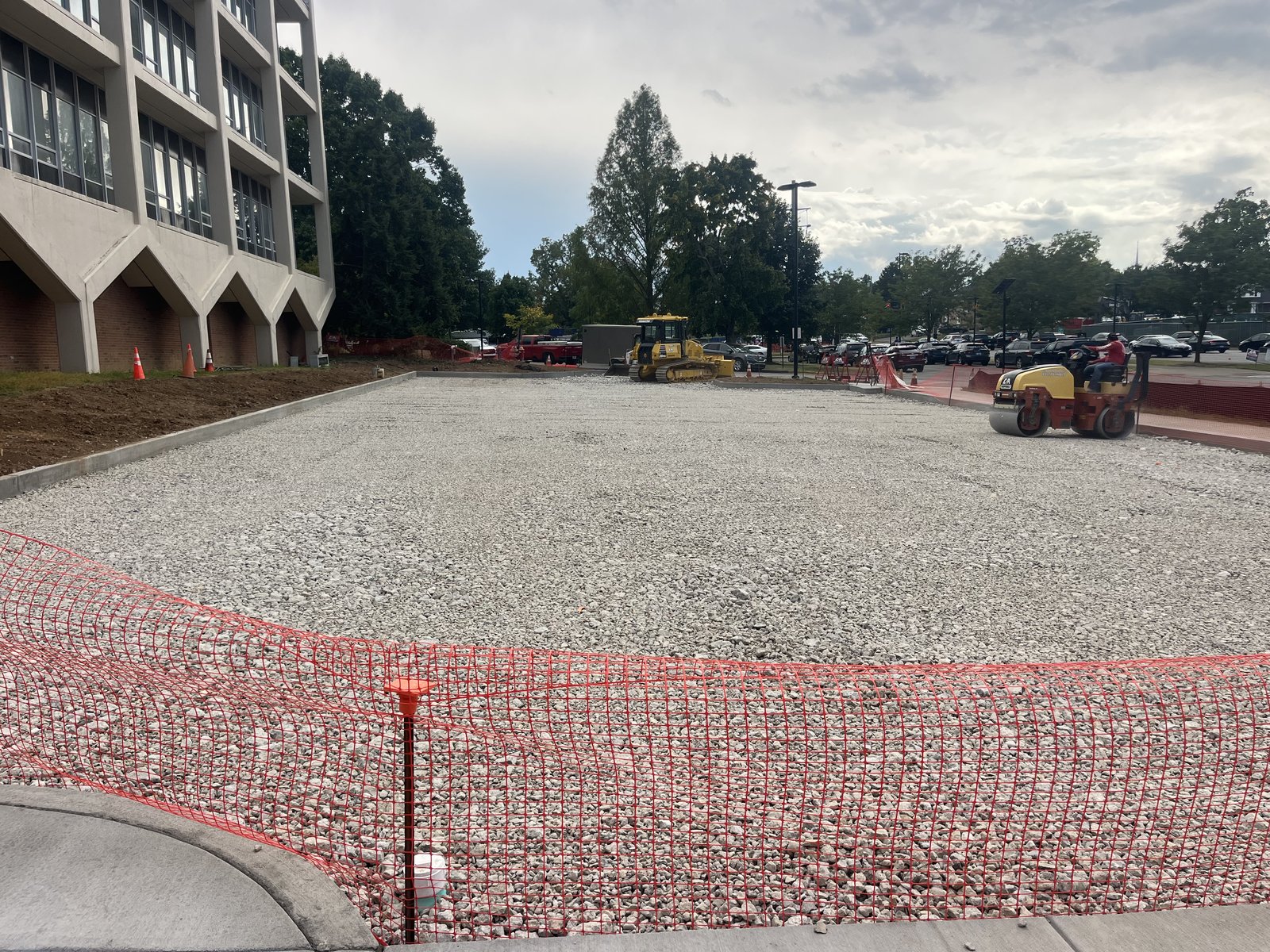
Road Subgrade Preparation for Pavement in West Texas
A road lasts as long as the ground under it allows, and in West Texas the ground can change from sand to caliche to clay inside a quarter mile. Subgrade preparation evens out that ground until it can carry pavement, through stripping, scarifying, moisture conditioning, compaction and proofrolling, so the surface responds the same way along its length. Concrete pavement is stiff, so a weak spot shows up as a crack at the joint rather than a rut.
We coordinate trade partners for the dirt work and the grading, then place the concrete paving for plant roads, truck courts, entrances and streets. Because we place pavement on the finished subgrade, we have a direct interest in how it is prepared, tested and protected during the days before the pour.
The sections below cover the standards, the schedule, our approach, the site conditions, the owners, the safety rules, the related services and the scope of work.
Standards for pavement subgrade
Public roads follow the agency standard for subgrade preparation, usually specifying compaction, moisture range, proofroll criteria and tolerances. Private plant roads follow the engineer's design. Work on a state highway or a farm-to-market road adds permits and traffic control plans.
Entrances to farm-to-market roads and state highways need driveway permits, and the permit office dictates the width, the radius and the pavement section at the connection. We confirm the paperwork early, because a permit that arrives late can hold up the subgrade for the whole entrance.
Sequencing subgrade, base and pavement
The subgrade must be finished, tested and accepted before base material goes on. Paving follows soon afterward, since an exposed subgrade can be damaged by traffic or rain. We try to keep the gap between acceptance and paving short, and where it cannot be short, we protect the surface.
Tahoka has a semiarid climate with average annual precipitation of about 20.68 inches, a July mean daily high of 93.3 degrees F, and a record low of 15 degrees below zero F. That range, from heat to hard freeze, shapes our work around Tahoka, since we avoid placing concrete on frozen ground and schedule hot-weather work for the cooler hours.
Proofrolling and what it shows
We proofroll with a loaded truck or heavy roller and watch the surface for pumping, rutting or movement. Soft areas are marked, undercut and replaced. A survey crew checks the grade after proofrolling to confirm that the finished surface matches the plan within tolerance.
We also keep a record of the results: dates, locations, equipment used and corrections made. The record helps if a question arises later about the pavement's performance, and it is often required by public owners.
Soils, floods and drainage along the alignment
San Angelo sits at the junction of the North, South and Middle Concho rivers, and a flood in 1882 destroyed the Tom Green County courthouse at the former county seat of Ben Ficklin. That history is a reminder that roads near rivers need drainage, culverts and a subgrade that tolerates water, and that moisture should be considered at the design stage.
Crane shows the long straight highways of the basin: U.S. 385 meets State Highway 329 there, and 385 covers 32 miles up to Odessa and 21 miles down to McCamey. A road job near Crane means a long daily haul for crews, so we stage close and keep the work area compact.
Who buys road work
Counties and cities buy streets, drives and parking. Oil, gas and midstream companies buy lease roads and plant roads. Developers buy streets inside a subdivision or business park, and industrial owners buy truck circulation. See municipal and public works and oil, gas and midstream for typical scopes.
A private owner often wants a faster schedule than a public one, but a public owner has stricter testing. We adapt the sequence to each, and we are open about what a shortcut costs.
Working beside traffic and heavy equipment
Road jobs often keep traffic moving past the work zone. We use a traffic control plan, flaggers where needed, and signs and barricades set to the standard. Equipment is parked off the traveled way, and workers wear high-visibility clothing.
Heat is a concern in summer, with pavement and equipment adding to it. Water, shade and rest cycles are part of the plan, and dust control protects both the crew and drivers passing by.
Services before and after the subgrade
The work leads into asphalt paving base preparation or concrete paving, and it often follows mass grading. Where the soil is weak, lime and cement soil treatment may be the right addition.
We plan these as a chain so that each step starts when the previous one is accepted.
Where a haul road will carry heavy trucks during construction and then become the permanent drive, we design the subgrade for the final loading from the start. Building it once to the permanent section costs less than rebuilding it after the construction traffic has broken it down.
What the subgrade scope includes
The scope covers stripping, scarifying, moisture conditioning, compaction, proofrolling, trimming and testing. It names the width, the length, the tolerance and the testing frequency. It also states what happens to unsuitable material and who pays for undercut beyond the allowance.
We include the final grade survey and the acceptance record in the scope, so the paving crew starts with documented ground. Anything outside the scope, such as utility relocation, is listed separately.
Share the road alignment
Send the plan and profile, the soil report and the pavement section, and tell us the nearest town to each end. We will estimate the travel for crews, mark the tests that carry risk and call to talk through scheduling before a trade partner is committed.
Common Questions
What is proofrolling and why does it matter?
In a proofroll, a heavily loaded truck or large roller passes over the subgrade while an inspector watches the surface for movement. Soft or pumping spots show where the soil is weak even when density tests pass in other places. It is a simple field test that finds problems before pavement covers them.
How uniform does the subgrade have to be?
Pavement design assumes a uniform support, so changes in soil type or moisture can cause differential movement. We treat transitions with extra care, blending or replacing material where soils change, and we aim for the same density and moisture across the road.
Can we pave right after the subgrade is accepted?
Often yes, which is the best case. If a delay occurs, the subgrade should be kept moist or sealed, protected from traffic and rechecked before base or concrete goes on. A long gap can allow drying, rutting or rain damage that requires rework.
How do you handle roads in flood-prone areas?
We follow the drainage design, including culverts, ditches and base thickness, and we avoid compacting wet subgrade. In low-lying areas, the engineer may call for geotextile or stabilization. We also watch the weather and stop work if a storm threatens the open subgrade.
What testing do you do?
The lab tests density and moisture at a set frequency, and the survey crew checks grade and thickness. The engineer or owner reviews the results before approving the next layer. We keep copies of all reports on site and in our job file.