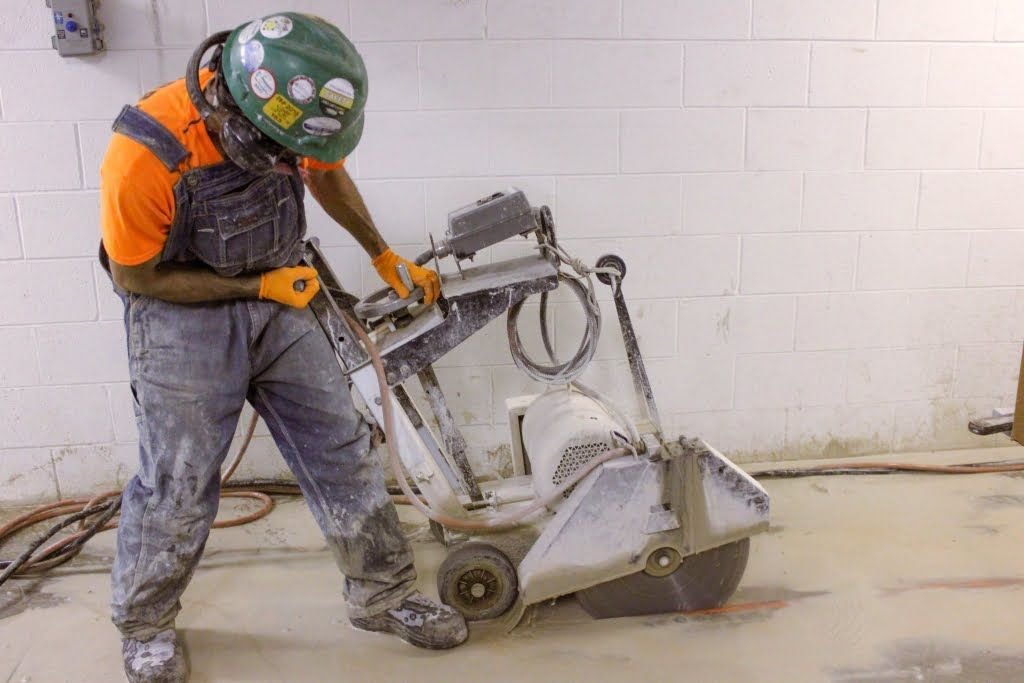
Concrete Sawing, Cutting and Coring in West Texas
Before a core bit touches a slab, someone has to find out what is inside it: conduit, post-tension tendons, rebar mats, radiant tubing or nothing at all. Sawing and coring look like small tasks beside a foundation pour, yet they are the scope where a missed scan turns into a cut utility, a damaged tendon or a shutdown.
We provide slab sawing, wall sawing, core drilling, joint cutting, trench cutting and opening cutouts for general contractors, plumbers, electricians, mechanical contractors and facility owners. Cutting is performed by specialty trade partners we coordinate with the placing sequence coordinated for the package, with ground-penetrating radar scans and utility locates completed before any blade turns. We pair the cutting with patch and repair work so the opening is closed the same trip.
In West Texas the real challenge is scheduling. A cutting crew with a truck and a water tank cannot make a half-day trip to a county seat pay off for a single hole, so we gather the cuts, confirm the scan results and plan one visit that does everything the job needs.
Booking cuts when the crew is a long drive away
Cutting needs to happen at the right point in the sequence. Control joints go in within hours of finishing, often the same evening, and a late cut invites random cracks. Openings for plumbing and electrical come after the slab has cured and the trades have marked their locations. Core holes for fasteners and penetrations depend on scan results and approved locations.
Western Texas College in Snyder is a two-year community college with programs in petroleum technology, solar energy technology and welding, and those labs and shops are the kind of buildings that need frequent slab penetrations during renovations. We schedule such work around semester breaks and give a day-by-day sequence to the facility staff so noisy cuts do not land in class hours.
Reinforcement, thickness and what is under the slab
The first decision is the method. Wet sawing controls dust and cools the blade, while dry cutting with vacuum is used where water would damage finishes. Deep cuts through reinforced slabs need powerful saws, diamond blades and a plan for removing the cut piece safely. Wall saws and wire saws handle thick or large sections.
The second decision is what lies beneath. A scan with ground-penetrating radar shows rebar, conduit and voids, and we mark those on the slab. Utility locating covers anything the scan misses. On post-tensioned slabs, a tendon cut can release stored energy, so no coring or sawing proceeds without a verified plan from the engineer.
Slurry, silica, noise and falling pieces
Concrete cutting creates silica dust, slurry and noise. We use water suppression or vacuum extraction, collect slurry and dispose of it properly, and require respirators and hearing protection. Slurry must not enter storm drains, so we use containment and a vacuum to pick it up.
Openings cut in suspended slabs and walls create a falling hazard for the piece itself and for people nearby. We brace, lift and rig cut pieces, clear the area below and barricade the opening afterward. In occupied buildings, we coordinate with the owner for isolation and ventilation.
What comes before and after the cut
Cutting leads into concrete demolition and removal when sections need to come out, and into concrete repair and restoration when openings or damaged joints need to be closed. For tie-ins to new work, such as a new pad poured against an old floor, equipment pads and machine foundations may require dowels drilled into the existing slab.
Where you plan a new foundation next to a cut, our slab-on-grade crews can pour into the opening the same trip, with dowels and joint details matched to the existing floor.
Who calls for cutting
General contractors and CM firms cut openings during tenant improvements and renovations. Utilities and energy companies need trenches cut through existing pavements and floors for new lines. Farm and ranch facilities deal with larger structural cutouts for doors and equipment.
The Roscoe Wind Farm in West Texas has 627 wind turbines and a total installed capacity of 781.5 MW, which shows the scale of energy work across the region and why operations and maintenance buildings, substations and storage yards are common places where cores and openings are needed. Irrigation reaches roughly 400,000 acres in Gaines County, which stands second among Texas cotton producers, so gins, warehouses and equipment barns across the area need cuts for new equipment as well.
Concrete cutting within our scope and what we coordinate
For smaller cutting such as control joints in a fresh slab, we coordinate the sawcutting team, since timing is critical and the work belongs with the pour. Sawing begins as soon as the concrete can take a blade without raveling, usually within the first few hours, and continues until the joint pattern is complete.
For heavy sawing, wall cutting, core drilling at depth and radar scanning, we coordinate specialty partners with the right equipment. We prepare the area, mark locations, supply water and power and sign off on the cut list. Because we know the slab, we can tell the cutters where reinforcement was placed and where tendons run, and we keep the as-built notes from the original pour in the project file for exactly that reason.
Why a hole can cost more than a pour
The price of cutting depends on depth, reinforcement, access and mobilization. A 4-inch core in a 6-inch slab is cheap. A 12-inch core through a mat of steel in a hard floor is not. Scanning adds time but saves rework. Travel to a remote site and the minimum charge matter on small jobs.
We reduce cost by grouping work, preparing access and providing water and power. Photographs of the work area and a marked-up drawing let us quote without a site visit in many cases, which saves the owner a trip charge on a small scope. When a site walk is needed, we combine it with another visit in the area.
Send a marked-up drawing of the cuts
List the openings, the slab thickness and the town, and we will group them into one visit with scanning, cutting and patching. A project manager can review photos by email if a site walk is not needed.
Common Questions
Do you scan the slab before coring?
Yes. Ground-penetrating radar and utility locating come before cutting in any slab where hidden items are possible. The scan results and marked locations go to the engineer or superintendent before the first hole is made.
When are control joints cut in a new slab?
As soon as the concrete is hard enough to resist raveling and before shrinkage cracks start, typically within hours of finishing. Hot and windy weather shortens that window, so we have saws on site during the pour.
Is cutting through a post-tensioned slab ever allowed?
Only when the engineer has approved a plan and the tendon layout is verified. We use scans and as-built drawings to identify tendons, and we do not cut where the location is uncertain. If the drawings and the scan disagree, the cut waits until the engineer resolves the difference in writing.
What do I need to provide on site?
Water, power if available, a clear work area and a marked list of locations. For remote sites, tell us what is not available so we can bring generators and water tanks.
Is dry cutting ever allowed?
Yes, with vacuum extraction and proper protective equipment, mainly indoors where water would damage finishes. Many jobs use wet cutting with slurry containment.