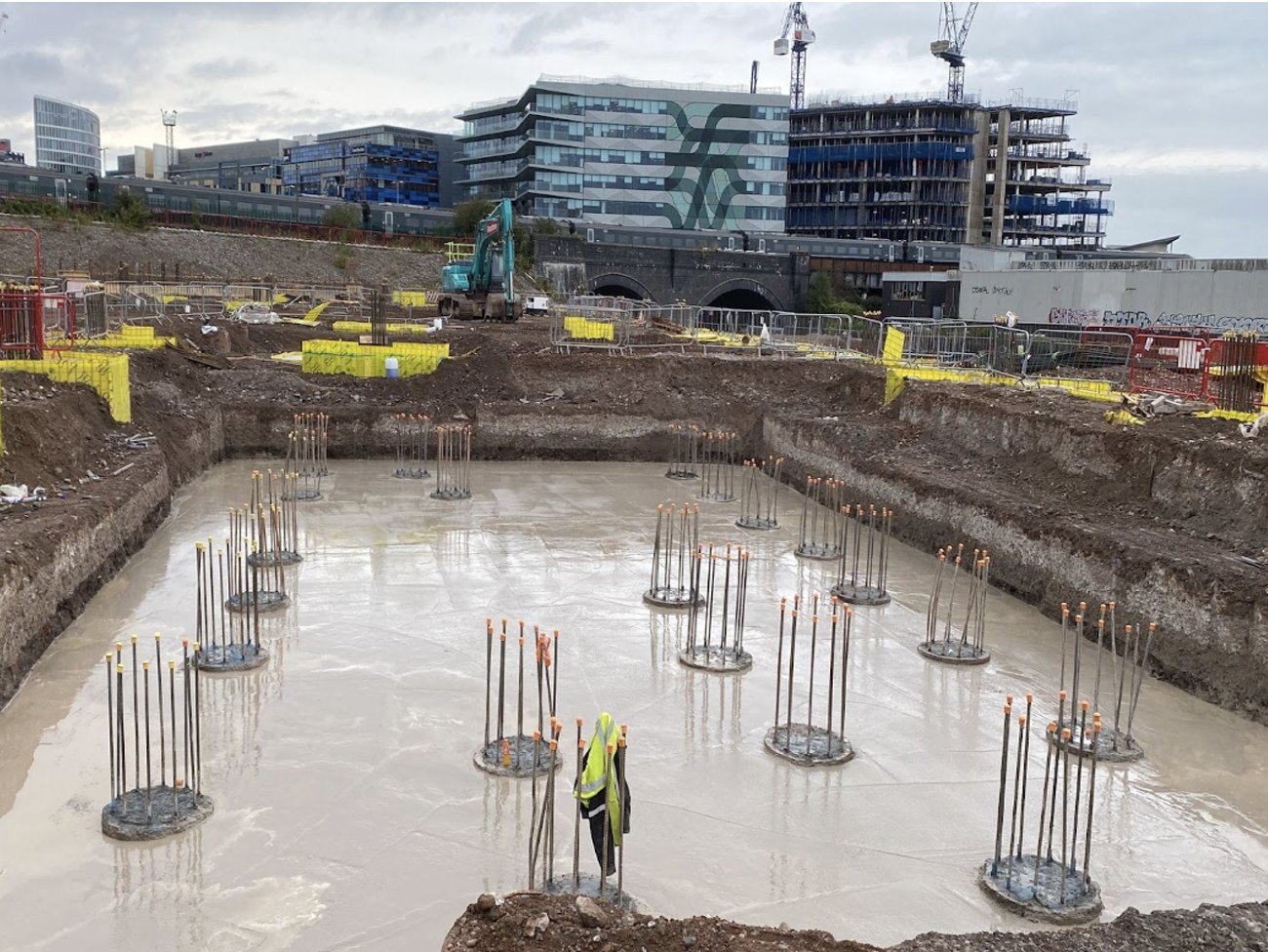
Cut and Fill Dirt Work for West Texas Building Sites
Cut and fill earthwork pays for itself when the dirt that comes out of a site goes back into the same site, since each cubic yard kept on the property avoids a haul truck on a farm-to-market road. Before a bid is final we try to get the quantities close enough that the pad, the drive and the drainage swale are built from the same dirt that comes out of the site, with only a small import or export to settle the difference.
The dozers and scrapers belong to the trade partners we coordinate, and we stay on site to tie their grades back to the foundation drawings. That makes us the party who knows where the slab elevation is fixed, where the drainage has to fall, and how much cut a building can take before the footings reach questionable soil. The partner moves the dirt, and we make sure it ends up where the concrete needs it.
Our planning covers cut and fill quantities, building loads, permits and cost drivers so owners and contractors can approve the grading plan before work begins.
How we plan a balance
We start with the topographic survey and the soil boring log, then mark the cut zones, the fill zones and the stockpile locations. Next we ask the earthwork partner for haul distances inside the site, since a long push over loose ground eats far more equipment time than the same volume moved on a firm haul road. Topsoil comes off first and is stored to the side, so the planned fill is made of material that will compact.
Thin lifts go down one at a time, with a test before each new layer, and a sketch of lift elevations keeps anyone from skipping a layer. That record is what a lab or an inspector will ask for later, and on a site far from town it saves a return visit. If the cut turns up soft or wet material, we stop and call the engineer before it gets buried under a building.
Buildings that sit on moved dirt
Most of the sites that need meaningful cut and fill are on sloped ground or beside a draw: a metal shop on a grade, a school addition, or a distribution building whose truck court needs a flat approach. In Midland, which stands near 2,779 feet, Midland Draw crosses the northern edge of town, and pads close to it often need fill to climb out of the drainage low point while floor levels stay even.
Industrial and warehouse buildings want large, even pads, which means the earthwork partner is working with long grade lines and tight tolerances. Light commercial buildings can accept a little more variance, but retail pads still need level surfaces for parking and accessible entrances. For the largest building footprints, the work ties directly into mass grading and then into the building pad itself.
Permits and the rules around moving soil
Cut and fill triggers a grading permit in most places, and a stormwater plan whenever the disturbed area is large enough. We pull the requirements from the local permit office early, since county seats and small cities handle review on their own timelines. The geotechnical report usually sets the fill type, the lift thickness and the compaction target, and the testing lab reports against those numbers.
Where the work touches a floodplain or a draw, the permit may add elevation rules for the building. We read those before the earthwork begins, because a pad set a foot low is a foot that cannot be recovered after the slab is poured. For erosion protection during the work, our plan follows the guidance in erosion control and SWPPP.
Site conditions that change the balance
Soil shrink and swell are the quiet numbers on every cut and fill estimate. Excavated caliche and rock often bulks up when it is dug, and some soils lose volume when they are compacted, so a site that looks balanced on paper can end up short or long once the machines run. We ask the partner to review the figures against what the borings show, and we keep a margin in the plan.
Elevation and weather matter too. Shallowater is a flat Llano Estacado town near 3,294 feet, and a site that level may need hardly any cut yet still depends on built-up fill to drain. Wind can dry a lift to dust before it is compacted, which is why engineered fill and soil stabilization sometimes enters the plan, and why the earthwork partner wets and rolls each lift on the same day it is placed.
Buyers who sign off on earthwork
Developers use cut and fill to make a speculative pad ready for the next tenant, and general contractors want the grade handed over with a clear record of tests. Utility companies and wind developers need level work areas and access roads that can carry cranes and hauling equipment in dry and wet weather alike. Municipal owners usually set the grade for a public building before bidding the concrete.
Schools and healthcare owners are particular about drainage and about fill that will not settle under a slab with sensitive equipment. We talk to those buyers early and share the testing schedule. Compare our handling of commercial developers and with schools and healthcare owners for the places where the paperwork parts ways.
Safety around moving soil
Scrapers, dozers, water trucks and haul trucks all move on a cut and fill site, and the foot traffic of the survey and carpentry teams shares the ground. We set haul roads and keep pedestrians out of them, with spotters at crossings and flaggers where public roads are used. Cut slopes are held back from the working zone, and anything deeper than five feet is benched or sloped according to the excavation rules.
Heat and glare drive many of the incidents on dirt jobs in this region. We plan shaded rest breaks, water stations and earlier starts, and we check that operators are not working past what the conditions allow. Dust control matters for the crew and for neighbors along the haul route, so the water truck stays busy.
What moves the price of dirt work
Haul distance and equipment mobilization move the price most. A scraper spread that has to travel from the Big Country to Presidio is billed for the road time, and an import of select fill from a distant pit is billed by the mile as well as by the yard. Where a site can be balanced internally, the savings are clear, and we show the owner the break-even.
Moisture and compaction effort come next. Dry soil on a West Texas site may need many gallons of water per yard to reach target density, and wet soil may have to be dried or replaced. Rock encountered during a cut changes the method and the rate, so we link that risk to rock and hard ground excavation before a lump-sum price is signed.
Share the site survey
Bring the topographic survey, the soil report and the building footprint, and tell us how close the nearest borrow pit sits. We will outline a balance, show where the numbers carry risk, and phone you with the questions an engineer needs to answer before earthwork is scheduled.
Common Questions
How do you estimate cut and fill before the site is open?
We use the topographic survey and the boring logs to calculate cut and fill quantities, then apply shrink or bulking factors for each soil layer. The number is a planning figure, not a guarantee, so we keep an allowance for import or export and update it as the first lifts reveal what the ground does.
Is it better to import fill or haul out surplus cut?
It depends on the haul distance and on what the soil tests show. In a remote area, hauling surplus off the property can cost more than regrading the site to keep the dirt, and local select fill may come from a pit many miles away. We compare both options on a per-yard delivered basis and show the owner the difference.
Will fill under a slab settle?
Properly placed, compacted and tested fill should not settle in a way that harms a slab. The problems come from thick lifts, wet material and skipped tests. We keep the lift records, rely on the lab for density results, and walk away from any lift that has not been accepted before the next one is placed.
What does wind do to an open earthwork site?
Wind dries exposed soil quickly and lifts fines into the air, which affects compaction and neighbors alike. We schedule water trucks, protect finished surfaces with watering or stabilization, and consider windbreaks for areas where blowing dirt causes problems. High wind can pause work entirely when visibility or equipment control is at risk.