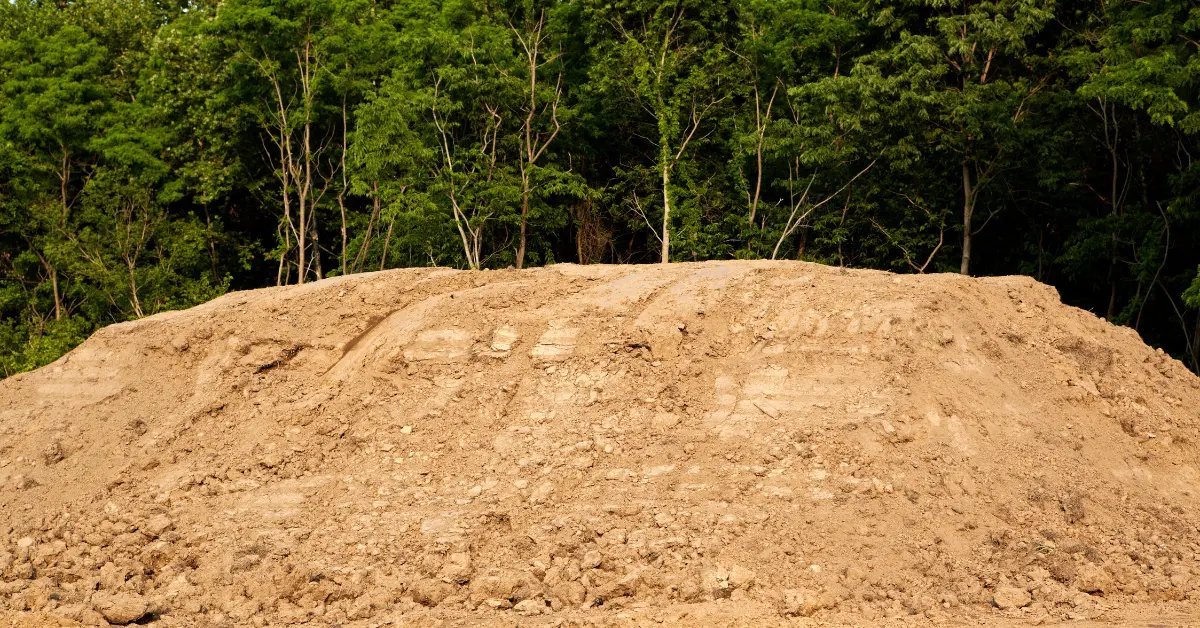
Engineered Fill and Soil Stabilization for West Texas Slabs
Fill earns the word engineered when it has a paper trail: a named material, measured lifts, a stated density and a test at each step. For a West Texas building pad it is often the difference between a slab that stays flat and one that follows the seasons up and down. Soil stabilization sits next to it, using binders and mixing to improve ground that is too soft or too reactive to leave as it is.
We bring the concrete knowledge to this work, because slabs and pavements reveal the quality of the ground below them. Our trade partners place the fill and mix the stabilizer; we set the elevation, read the test results and pour once the pad is accepted. The role fits a region where fill sources can be far away and a bad load of material could cost a full day of crew travel.
What follows describes the scope, the market, the buyers and the specs we work to, so a project manager can see where fill and stabilization fit into a budget and a schedule.
Fill types, lifts and stabilization methods
The fill may be select granular material, crushed rock base or processed on-site soil, depending on the geotechnical report. Each lift is spread to a specified thickness, wetted or dried to the target moisture, compacted and tested. Between lifts, the surface is left uniform so that layers bond and the next test is meaningful.
Stabilization options include blending lime, cement or fly ash into the upper soil, or reinforcing the base with geogrid. Every method brings its own mixing, curing and testing routine, and the engineer chooses among them from what the soil does. For deeper treatment, see lime and cement soil treatment.
Why fill matters on the plains and in the basin
Ransom Canyon sits inside Yellow House Canyon on the eastern rim of the Llano Estacado near 3,104 feet. Abernathy stands higher, close to 3,360 feet, with most of the city in Hale County and roughly a quarter reaching south into Lubbock County. The plains are flat, which sounds easy, but clay-rich soils on a flat site hold moisture and move.
Oil was discovered in Mitchell County in 1920, and a refinery operated in Colorado City from 1924 until 1969, so the ground around old field operations may include fill and disturbed soil that was never engineered. That makes testing and, where needed, removal and replacement part of responsible development.
Buyers who specify engineered fill
Wind and solar developers need stable pads for equipment and access roads that survive heavy loads. Texas State Technical College's West Texas campus launched a wind energy program in 2007, the first of its kind at a Texas community college, a sign of how established that industry is here.
Industrial, logistics and healthcare buyers order engineered fill for floors that cannot move. Municipal owners need it under streets and public buildings. See utilities and energy companies and industrial and manufacturing owners for related project types.
Hauling fill and mixers to remote pads
Post sits at the crossroads of U.S. Highways 84 and 380, with State Highway 207 and Farm to Market Roads 669 and 651 also serving the area, so a project near Post can draw fill and equipment from several directions. At Roscoe, where a Union Pacific line cuts through the middle of town, heavy hauls have to be timed around the rail crossings.
We map the haul from the nearest approved borrow pit to the site and test the material at the source, so the first load does not reveal a problem. Sources in the Permian Basin differ from those on the South Plains, and the engineer must approve each one.
Lifts, cure times and weather windows
The schedule is built around lifts and cure. A lime-treated layer needs mellowing time, and a cement-treated layer has a limited window to be compacted after mixing. We coordinate those timings with the trade partner and the lab so that no mixed material sits unfinished at the end of a shift.
Wind is the common schedule risk. Strong gusts carry off lime dust and dry the surface faster than expected, so the crew adjusts moisture and may pause for a gust front. Storms are short but sharp, and we cover or seal the finished lift whenever rain is forecast.
Density, gradation and acceptance testing
Specifications name the fill gradation, the plasticity limits, the density target and the testing frequency. Stabilized soils add strength and swell requirements. The lab reports against the specification, and the engineer accepts each area before the next layer is started.
Air quality and dust rules can apply to lime and cement work, as can stormwater requirements for disturbed ground. We follow the permit conditions and the guidance in erosion control and SWPPP to keep treated soil on the pad.
Records matter as much as results. We keep the daily lift log, the test locations and the engineer's acceptance letters in one binder for the owner, since a lender or a future buyer may ask for them years later.
Where this work connects
Fill and stabilization feed into building pad preparation, road subgrade preparation and over-excavation and recompaction. The concrete that follows may be a slab-on-grade floor or a paving section.
We keep the earthwork schedule, the lab visits and the concrete pour on a single timeline, and we confirm each handoff in writing so nobody has to guess whether a layer is accepted.
A pad that is accepted on Friday and poured on Monday should look the same on both days. When a weekend sits between the lab sign-off and the pour, we ask the trade partner to roll and seal the surface before leaving, and we recheck moisture on Monday morning before forms or steel are brought in. It costs little next to a reworked pad.
Tell us about the pad
Bring the soil report, the pad dimensions and the nearest town, and say whether the fill source is already chosen. We will review the haul distance, point out the choices the engineer should confirm, and phone you before a crew or a trade partner is scheduled.
Common Questions
How does engineered fill differ from plain borrow dirt?
Engineered fill is specified, tested and documented. It has a defined material, controlled lift thickness, a target density and a testing record. Ordinary fill is dirt placed without that control. Under a slab or pavement, the difference shows up as settlement over time, which can crack floors and joints.
When is soil stabilization better than replacing the soil?
Mixing in a binder tends to come out ahead when the soil is expansive and haul distances for replacement fill are long. Treating the soil where it lies avoids a double haul. Replacement can be better when the soil is contaminated, has too much organic material, or is a poor candidate for the binder.
How do you test the fill?
Density comes from a nuclear gauge or a sand cone, moisture from a quick field test, and a technician measures both against the lab's maximum. For stabilized layers, the lab also checks pH, strength or swell. We keep the tests tied to a map of the pad so every area has a record.
Can fill be placed in cold or windy conditions?
Fill can go down in cold weather unless the soil is frozen, which is rare in much of the region. Wind does not stop fill placement, but it dries the surface and complicates moisture control. Lime and cement work stops if gusts are too strong for safe handling.