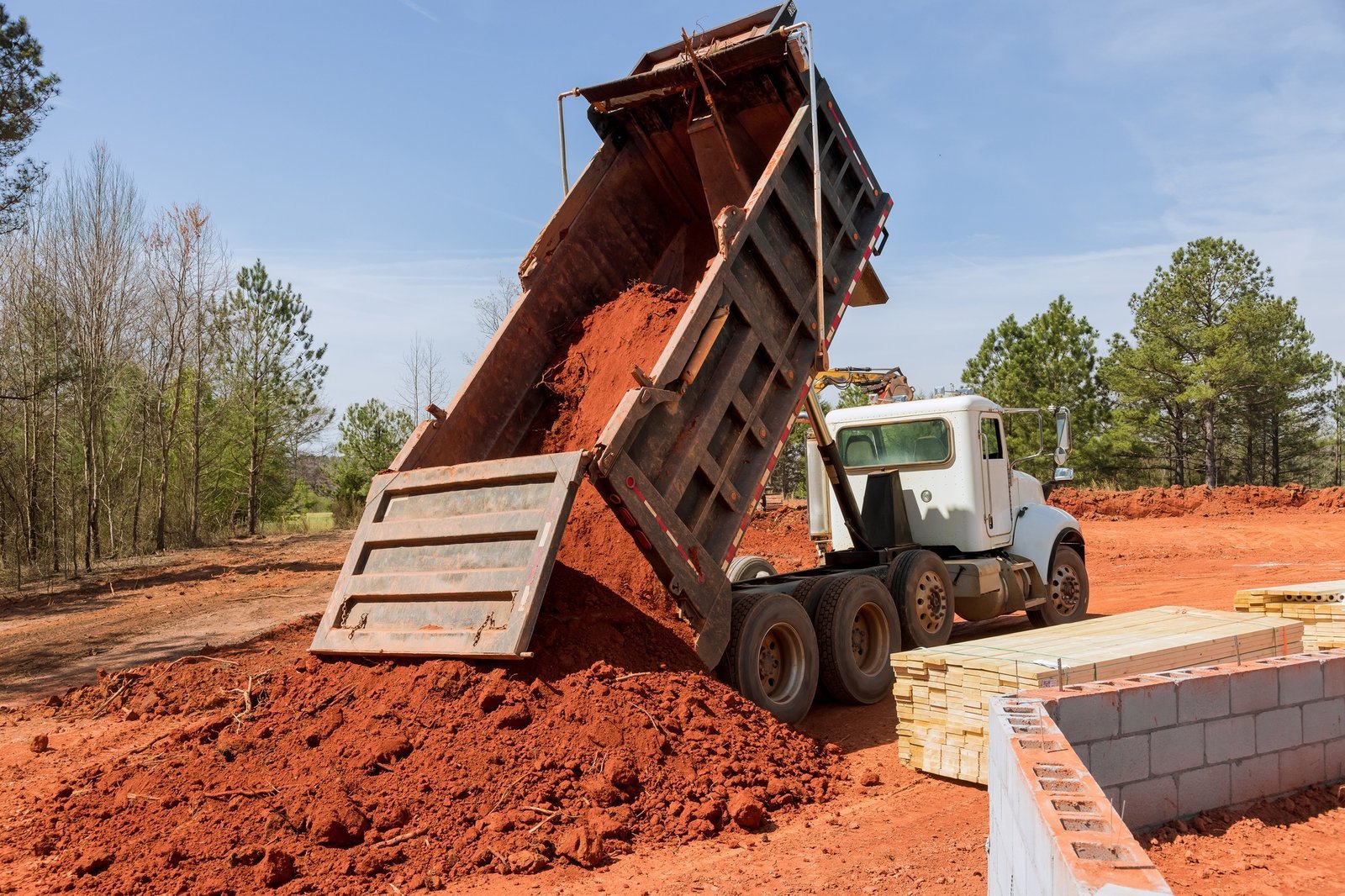
Soil Import, Export and Haul-Off Across West Texas
Every cubic yard that moves on or off a West Texas site is a truckload with a destination, a cycle time and a driver who counts the miles. The cost of dirt in this region is mostly the cost of trucking it, and the difference between a good and a bad haul plan can exceed the cost of the digging. We start from the question of where the material comes from and where it goes, then price the job from there.
We coordinate trade partners for the hauling and the earthwork, and we hold the line on documentation: tickets, material sources, disposal sites and the tests that show imported soil is what the plan says. The concrete partners we coordinate arrive after the haul is complete, and we need the pad to be clean, tested and on grade when they do.
Below are the buyers who ask for haul planning, the costs that shift a haul price, the roads that carry the trucks and the safety and scope items that come with moving this much material.
Buyers who generate or need material
Oil, gas and midstream operators produce spoil and need fill for pads and roads, often at the same time on different parts of a lease. Oilfield service companies are described as important to the Post economy, alongside farming and ranching, and the demand for pad and road material around such towns is a steady part of regional haul work. See oil, gas and midstream for the details.
Developers and general contractors generate surplus from basements, utility trenches and detention basins, and they need fill for building pads. Municipal buyers have road and drainage projects that either import base or export unsuitable soil. In each case, we ask who owns the material, who pays for disposal and who signs for the test results.
How haul prices are built
A haul is priced by the load, the hour or the yard, and each method hides different risks. Truck cycle time includes loading, travel, dumping and return, so a ten-mile haul and a fifty-mile haul differ by more than the extra distance. Scale tickets and waiting time at the pit can swing the total, as can slow farm-to-market road segments.
Disposal charges, pit royalties and testing add to the base price. Scurry County sits in the Permian Basin and had produced about 1,825,517,000 barrels of crude oil from 1923 to January 1, 1991, and sites with a legacy of oilfield activity may need tests for contaminants before material moves. We budget those tests when the site history suggests them.
Services that depend on the haul
Haul planning supports cut and fill earthwork, topsoil stripping and stockpiling and site clearing and grubbing. When a site generates a lot of debris, the next step may be concrete demolition and removal.
We view hauling as the glue between those scopes. If grading finishes with a surplus, the haul partner has to be ready the next morning, and if the fill is short, the import should already be scheduled.
Why hauling dominates the dirt budget here
The region is wide and the borrow sources are scattered. A pit that serves one county may be a half-day round trip from another, and a small town with one ready-mix plant is likely to have one gravel source as well. The result is that haul distance changes from site to site more than almost any other cost.
In the Southwest Sandhill community, Interstate 20 runs through the northern portion, roughly 37 road miles southwest of Odessa, and State Highway 18 follows its eastern edge. Work near Southwest Sandhill shows how a single interstate can give a site easy access to fill from a distant source, while a site a few miles off the highway gains little.
Haul routes and staging points
San Angelo is served by U.S. Highways 87, 67 and 277 and State Highways 208 and 126, a network that makes San Angelo a useful base for hauls across the Concho Valley. Trucks heading from there to the smaller towns follow farm-to-market roads, and load limits on some of them reduce what a truck can carry.
In a typical year Eden collects about 26.51 inches of precipitation, and it has reached 111 degrees F. A wet season brings soft haul roads and a hot summer brings dust and tire trouble, so we plan haul schedules around Eden and similar towns with weather in mind.
Truck traffic, loads and public roads
Haul trucks on public roads must be covered or loaded below the sides, and tracking mud onto highways draws complaints and citations. We require a clean exit, a rumble strip or a wash area and a sweeper when needed. Drivers, spotters and flaggers are briefed on the entrance and exit points.
Inside the site, truck routes are marked and kept apart from walking paths. Backing is minimized, and dump areas are inspected for soft edges. In summer, drivers get water and shade at the loadout, and in high wind, dumping may stop until the dust settles.
What the haul scope includes
The scope names the source and the destination, the material type, the quantity, the testing and the paperwork. Imported material comes with a source approval from the engineer, and exported spoil goes to a permitted site or a place the owner has designated. Scale tickets or load counts are collected daily and reconciled with the surveyed quantities.
Unsuitable material, such as soil with debris or contamination, is handled separately from clean spoil. If the plan reveals a mix of both, we ask the trade partner to separate them early, because disposal prices for each category differ sharply.
Buildings that drive the import and export
Large pads for warehouses, plants and terminals are the main import customers, since they need many thousands of yards of fill. Buildings with basements or deep pits, such as dock-height facilities, create the largest export loads. Smaller shops and offices need a few loads of select fill or base rock.
Medical and school buildings often have tight sites and limited laydown space, so truck deliveries are timed to the hour. See distribution center projects for an example of how import quantities build up on a flat site.
Give us the quantities
Share the surveyed cut and fill numbers, the soil reports and the possible pit or disposal sites. We will estimate the truck count and cycle time and call you about any quantity that looks risky before the first truck is booked.
Common Questions
How many cubic yards fit in a truck?
A tandem dump carries around ten to twelve cubic yards, while a belly dump or end dump can carry more, depending on the road limits. Material swells when excavated, so a yard in place becomes more than a yard in the truck. We convert quantities with the correct factor so the truck count matches reality.
Who tests imported fill?
Testing at the pit and a second round at the site are normally required by the engineer or the owner. A lab checks gradation, plasticity and sometimes chemical content. We make sure the first load is approved before the whole delivery begins, since rejecting a load after it has been placed costs far more.
Where can excess spoil go?
It depends on the material and the location. Clean soil may be used by another project or a landowner who wants fill, and unsuitable material goes to a permitted facility. We list the options in the scope and confirm the destination in writing before trucks leave the gate.
Can hauling continue in windy or wet weather?
Wind is rarely a reason to stop hauling, though dust may require water or a pause. Rain is a bigger issue because it softens haul roads and can force a shutdown to protect the road. We plan float days into the haul schedule for those situations.
Do road weight limits affect the haul?
Yes. Many county and farm-to-market roads have posted weight limits, especially in wet seasons. We check the route and the limits and select trucks that comply, which sometimes means more trips with smaller loads. Overweight permits are an option when the route allows.