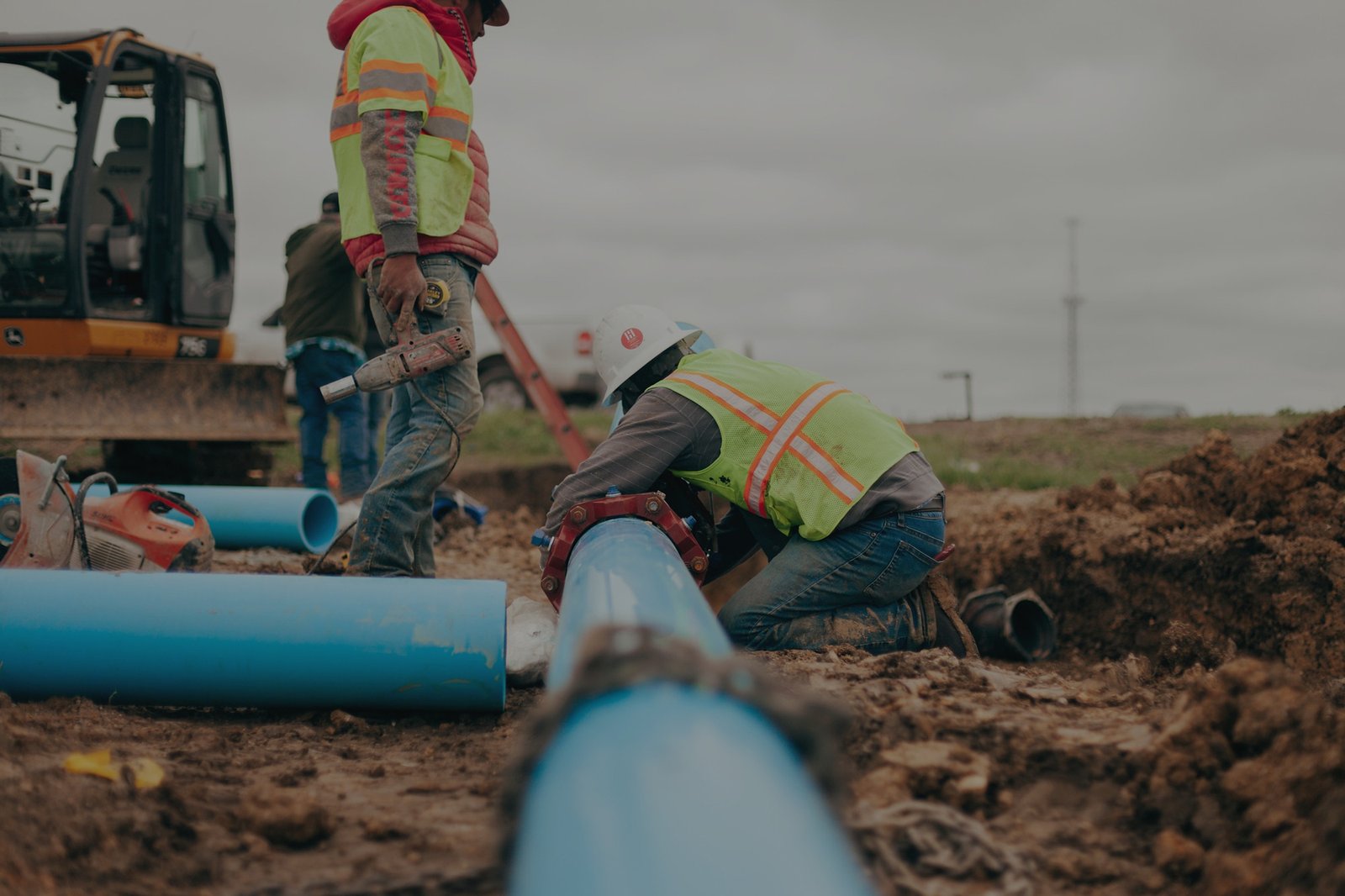
Site Utilities for West Texas Developments
Trench depth, not building size, sets the pace of most site utility packages in West Texas, and the pace is set again by the distance a pipe crew has to travel to start. We manage the underground work that serves a building or a development: water service, sewer, storm drainage, fire lines, electrical and communications conduit, and the structures that tie them together. The concrete partners we coordinate place the concrete on these systems, including thrust blocks, vault bases, encasements and collars, and partner trades that we schedule take the pipe, excavation and backfill, so one calendar runs the whole sequence.
The order of work matters more underground than above it. Storm and sewer lines run by gravity, so their grades come first, and everything else threads around them. Pressure lines follow, then dry utilities, and the building pad waits for the last connection under it. A misplaced sleeve or a late utility crossing forces a trench to reopen after the base is compacted, and that repair costs more than any careful drawing review would have.
Remote sites add logistics. A pipe delivery that must travel two hours from the supplier, a pump rental from a distant yard and a crew that needs lodging all show up in the schedule and the price. We ask for these answers during the first walk and write them into the sequence, so the owner sees the calendar before the first trench is cut.
What the ground and the water table decide
Soil conditions change quickly across the region. The ground around Ozona is shallow, and the town draws its water from deep wells, so a pipe crew there plans around a well-fed system rather than a nearby river. In other places, caliche layers slow trenching, sandy soil caves, and clay swells after rain. A geotechnical report and a few test pits tell us far more than a guess, and we ask for both before pricing deep lines.
Existing utilities are the other major unknown. Older towns often have lines that are not on any drawing, and rural properties may have private lines, abandoned pipes and field drains. We schedule potholing and locating ahead of trenching to confirm what lies under the path, and we mark every finding on the drawings so crews work from the same information.
Where utility money goes
Pipe material and depth are the visible costs; mobilization and rock are the hidden ones. A deep sewer line costs more per foot than a shallow service line because of shoring, spoil handling and slower progress. Hard ground or rock, if present, can double the trench time for a section. We carry allowances where a geotechnical report is not available, and we explain which items are allowances and which are firm.
Distance also matters. Hauling bedding sand or crushed rock a long way raises the price of every trench foot, so we look at local sources, and we compare importing against using select native material when the engineer permits. Testing, pressure checks, disinfection and inspection fees are small lines, but they gate acceptance by the utility owner. Pricing separates each system so an owner can see how a change in water main length or sewer depth affects the total.
Buildings that need a utility package
A warehouse needs a fire line and often a storm connection sized for a large roof, plus a small sewer service for restrooms. A manufacturing plant may need process water, heavy electrical duct banks and a pretreatment tie-in, which makes the underground package larger than the building footprint suggests. Retail, medical and school projects fall between those two extremes, usually with a standard water and sewer pair plus fire protection and conduit.
Agricultural and energy buildings are different. A gin, a barn or a pump station may need only water and electrical service, but the line can run a mile or more from the road. In those cases the cost per building is dominated by the length of the extension, and the owner and the utility provider need to agree early on who pays for the main extension and who owns it after construction.
Sequencing trenches and deliveries
We build the utility schedule around three constraints: the sequence of gravity lines, the delivery time of pipe and structures, and the weather. Precast manholes, vaults and large pipe often have longer lead times than the trench work, so orders go in as soon as the layout is approved. If a supplier needs several weeks, the trench crew should not be waiting on the truck, and we shift the work to a section that can proceed.
Wind and heat influence the plan too. Trench safety, concrete cure and crew stamina all benefit from early starts in summer, and a wind event can stop crane picks for precast. We cluster inspections so the owner's representative visits once rather than three times. Backfilling right after inspection keeps the open trench footage small, which reduces risk of cave-ins, flooding from a stray storm and complaints from neighbors.
Utility work across the sub-regions
In the Big Country, Abilene's average rainfall is 23.78 inches a year, and the city built several lakes to secure water supply, so utility work in Abilene often includes large-diameter lines tied to that system. In the Concho Valley, Ozona shows what a small-town project looks like when the main must cross a wide, thinly settled area.
In the Permian Basin and on the Plains, trenching plans must account for traffic from oilfield trucks, long gaps between suppliers and the rural character of the roads. We mobilize crews from staging points chosen for each project, and we price travel separately. Our storm drain and fire line teams work from the same utility sheet.
Who we build utility packages for
General contractors and commercial developers are the most frequent buyers because they need utilities complete before a building pad can be accepted. Municipal public works departments hire us for line extensions and replacements, with bid documents that follow city or county standards. Industrial owners need dependable service before equipment arrives, so schedules are tied to commissioning dates.
Utility and energy companies bring a different set of needs, including crossing agreements, easement limits and access through lease roads. For utilities and energy companies, we work inside the owner's safety rules and coordinate with the inspector on every crossing. For every buyer, we hold a pre-trench meeting with the utility owner to confirm materials, depth and testing requirements.
Send the civil sheets
Send the utility plan, the site address and the date you need the pad ready. We will talk through the sequence, the crew travel and the supply routes before settling on the schedule.
Common Questions
Do you install the pipe yourselves?
Partner trades that we direct lay the pipe and handle excavation and backfill, and the concrete partners pour the concrete on the system, such as thrust blocks, collars and vault bases. One schedule runs all of it, and one point of contact answers your questions.
What should I send for a site utility quote?
Send the civil sheets and the utility provider's requirements along with the soil report if one exists, plus the address. If the site is remote, tell us the nearest town and how pipe and sand will reach it. We can price from partial information, but we mark every assumption.
What do you do about lines nobody knew about?
Locating comes before digging, using records, utility locates and potholing. Lines that turn up after the plans were drawn are documented and reported to the engineer so the design or the path can be adjusted. We do not guess at depth near an unmarked line.
How long does a typical utility package take?
It varies with length, depth, soil and material lead times. A small commercial lot may take a few weeks, while a larger development runs longer. We give a sequence with the proposal and update it when deliveries are confirmed.
Who inspects and accepts the work?
The utility owner or city inspector accepts water, sewer and storm lines after pressure, deflection or camera tests as required. We schedule inspections ahead of backfill and keep test records for the closeout file.