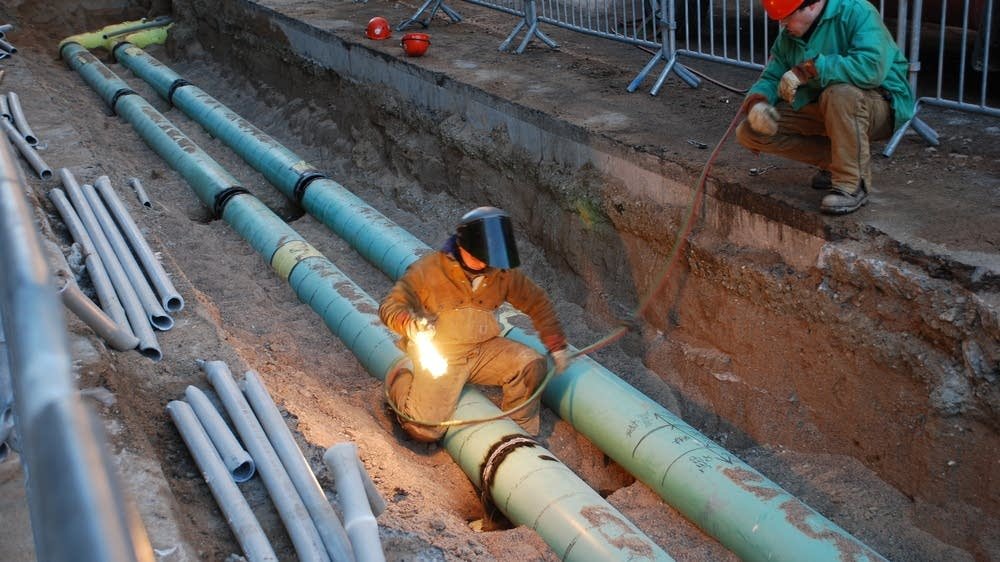
Utility Relocation for West Texas Projects
Highway widening is the usual reason a water line, a gas main or a power conduit has to move, but on a private site the cause is often simpler: a new building lands on top of something that was buried before anyone drew a plan. We relocate existing utilities so construction can proceed, coordinating trade partners for the excavation, pipe and cable work and the utility owners who must approve and energize each change. The concrete partners we coordinate place the concrete that supports the new routes, including encasements, thrust blocks, pads, vaults and collars.
Moving a live utility is a different job from installing a new one. The old line is serving customers or equipment until the new one is ready, and the cutover is a short, planned interruption that has to line up with the owner's operations. A school cannot lose water on a class day, a feed mill cannot lose power during harvest, and a hospital cannot lose anything. The relocation plan starts with the outage window, and the construction schedule is built backward from it.
Owners in the region also face distance. The utility's crew may be based in another town, and a specialized part may need a shipment from a supplier a day away. Because a missed truck delays a cutover, we confirm every delivery and every crew booking in writing before the day of the work.
Owners who need lines moved
Municipal and public works departments relocate lines ahead of road projects, drainage upgrades and facility expansions. A 4.2 mile southern extension of Interstate 27 from Loop 289 in Lubbock was approved in September 2024, and projects like it push relocation work onto every utility in the corridor.
Farm operators relocate irrigation lines, power poles and fuel lines when a barn, a gin or a grain facility expands. Pecos is known for irrigation from underground aquifers that supports cotton, onions and cantaloupes, and relocations around Pecos have to protect the wells and pipelines the crops depend on. Utilities and energy companies relocate their own facilities to make way for new substations and pipeline crossings.
The services that move with a relocation
A relocation draws on several other trades. Potholing and locating comes first, since the plan depends on the real depth and position of each line. New pipe often means a short water main installation with fittings, valves and restraint. Electrical moves involve duct banks and handholes that the concrete partners form and pour.
Because the pieces come from different disciplines, a single point of coordination saves time. We write one sequence that shows who shuts what down, who excavates, who connects and who restores, and we share it with the utility owners so everyone works from the same page. Where the new route shares a corridor with other site utilities, the sequence also shows the required clearances so no crew buries a line too close to its neighbor.
What a relocation includes
The scope usually begins with a survey and a records search, followed by potholing at the points where the new line will cross or tie in. The design is approved by the utility owner, and any easements are updated. The new line is installed, tested and connected, the old line is isolated and abandoned or removed, and the ground is restored.
Abandoning a line in place may require grouting a pipe to prevent future settling under a slab, while removal may be required for conflicts. Concrete work includes thrust restraint, protective encasement under crossings and vault bases. We record the as-built location of the new and the abandoned line on a drawing the owner can keep.
Easements deserve attention. A relocated line may now sit outside the strip of land the utility owns, and the paperwork has to catch up with the pipe. We ask for the easement review at the start so nothing is buried where the utility has no right to be, and so a later sale or refinance of the property does not turn up a mismatch.
Planning the cutover
The cutover is the moment that matters. We rehearse it on paper with the utility owner: valves to close, customers to notify, the time to restore, and a fallback if something fails. Materials are staged at the site the day before, the crew is rested and the new line is tested before shutdown.
During the outage, a foreman owns the clock and tells the owner every thirty minutes how it is going. If a problem puts the restoration at risk, we tell them early, so they can decide whether to extend, delay or install a temporary bypass. When service returns, we check pressure or continuity, clean up and document the change.
Small towns raise their own challenge, since the utility may have one or two crews for the entire system. We book their time before our own schedule is final, offer weekend or night windows when the owner prefers, and provide the excavation, shoring and traffic control ahead of their arrival so their hours go to the connection and nothing else.
Hazards on live lines
Gas lines, energized cables and pressurized water mains each carry specific hazards, and the utility owner sets the rules for working near them. We follow those rules, use hand digging near marked lines and station a watch person at each critical crossing. Equipment keeps a set distance from overhead conductors, and no one enters a trench until the line has been confirmed isolated and locked out.
Emergency plans are reviewed before work begins, including who calls the utility, where the nearest hospital is and which road the ambulance would use. On remote sites, where response time is long, we increase the number of trained first-aid people on the crew.
Public safety is part of the plan. Open excavations near sidewalks or driveways are fenced and lit, trench plates carry traffic at crossings, and signs tell neighbors what to expect and when service will return. Where a relocation touches a school, clinic or care facility, the administrator receives a written outage notice and a direct phone number for the foreman.
Show us what is in the way
Send a plan or a photo of the conflict, the utility owner's name and any outage restrictions. We can walk the site, discuss the cutover and explain how we would sequence the work.
Common Questions
Who pays to relocate a line?
That depends on the easement and whatever agreements were signed earlier. Some utilities relocate at their own expense when they hold a prior right, while others bill the party causing the move. Check the easement and ask the utility early, because the answer shapes the budget.
How long will service be interrupted?
Most cutovers last a few hours when the new line is ready and tested. We plan the work to keep the outage as short as possible and agree on the window with the owner. Critical customers may need a temporary bypass or generator.
Can you move a gas line?
Gas work is performed by the utility or its qualified contractor. We coordinate the schedule and handle the excavation support, concrete and restoration around it. The utility controls the isolation and the connection.
What if an unmarked line turns up mid-job?
We stop work near it, mark it, and notify the engineer and the likely owners. Hand digging and potholing reduce the chance of a strike. The response may be a change to the route or a new relocation.