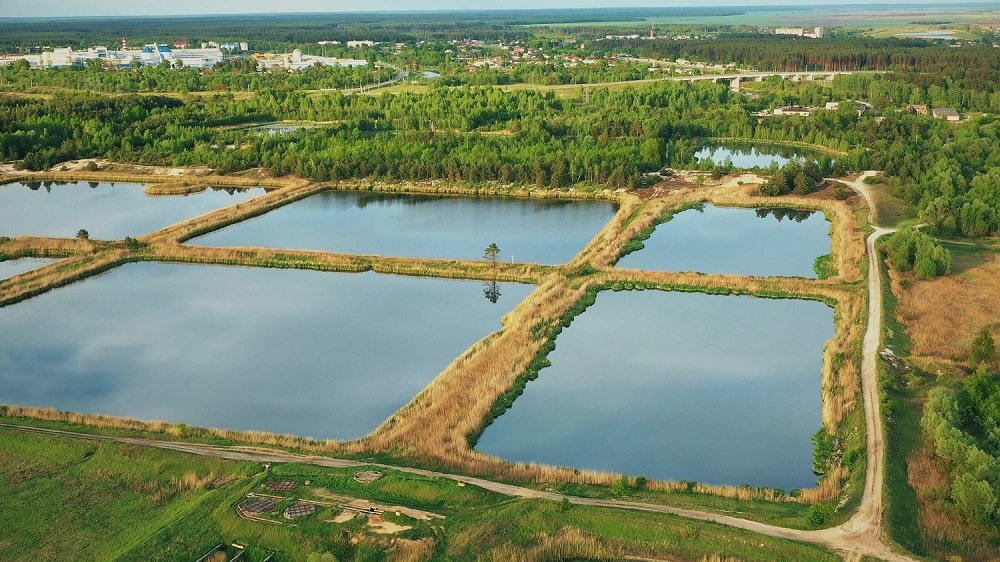
Detention and Retention Ponds in West Texas
Rainfall is scarce, so a detention pond in West Texas sits dry for months and then has to take a year of rain in an afternoon, and it has to release that water slowly enough that the neighbors downstream notice nothing. We build detention and retention basins for commercial lots, industrial yards, subdivisions and public sites. Trade partners we coordinate take the excavation and shaping, and the concrete partners we coordinate pour what makes a basin work: outlet structures, weirs, spillways, aprons, pilot channels, trickle drains and headwalls.
Detention ponds hold water briefly and release it through a controlled outlet, which brings peak flow back to its predevelopment rate. Retention ponds hold water longer, with little or no outlet, and let it soak into the ground or evaporate. In dry country, retention is practical where soils drain well, while detention is more common where the pond must tie to a public system. The drainage study picks the type, and the contractor builds it to the section on the plan.
Basins are large and relatively simple on paper, but they leave little room for error. A pond bottom a half foot off grade can pool water and grow weeds, and an outlet set too high can leave the pond holding more than it should. We survey the bottom, the side slopes and the outlet invert as the work proceeds, not after.
When the pond gets built
Basins are often the first thing built on a site, because grading and paving drain to them and because the construction stormwater plan relies on them. We set the sequence with the grading plan so the outlet structure is placed before the surrounding fill rises, which avoids cutting into new embankment to set a box later.
Concrete work in the pond is scheduled for dry weather windows. Rain on a fresh outlet structure or spillway apron damages the surface, and standing water in the bottom makes forming and finishing difficult. We watch the forecast and keep the crew flexible, shifting to the next structure when a storm threatens.
Buildings that trigger a pond
Large roofs and paved yards shed water fast. A warehouse with truck courts and trailer parking can raise runoff beyond what a city system accepts, so the site includes a pond. A retail shopping center with a large parking lot is a similar case, as are schools and clinics with big lots.
The pond often takes a corner or an edge of the property. Ponds near Tye, a community at roughly 1,811 feet, need grade and outfall locations that respect the way the land falls toward the next drainage path. Finding the low corner is the first design step, and we confirm it in the field. If the pond is near a property line, a road or a culvert that will carry the release, we stake the discharge point early so the outlet pipe is laid at the right elevation and the neighbor never ends up with a puddle.
Drainage rules and inspections
The local drainage ordinance sets the storm to be managed, the allowed release rate and the freeboard above the water level. A professional engineer signs the drainage study, and the city or county reviews it. Embankment slopes, spillway capacity and outlet details come from the same package.
The state construction stormwater program adds its own requirements for the disturbed area. We follow the pollution prevention plan, keep inspection logs and protect the pond bottom from sediment until the surrounding site is stabilized. At closeout, the owner receives as-built grades and a maintenance outline.
Building the basin and its structures
We stake the pond limits, strip topsoil, and confirm the soil type with the geotechnical report. Embankment fill goes in lifts and is compacted and tested. The concrete partners then form the outlet box, set the pipe, and pour the structure, including a trash rack mount and a concrete weir if the design calls for one. Spillway aprons and pilot channels follow.
Finishing details make a pond maintainable. We pour a concrete pad at the inlet to resist scour, set steps or a ramp for mowing and cleaning equipment, and place a clear access route. Slopes are seeded or protected as specified, and we check that the pond drains to its designed level.
Ponds in a region of long hauls
The Texas Pacifico line runs 376 miles from San Angelo Junction near Coleman through San Angelo to Alpine, interchanging with BNSF and Fort Worth and Western at the junction. Rail like that moves aggregate and material for logistics sites, and the developers who build there often need large ponds beside big pavement areas. The same freight lines also set which suppliers can deliver rock for spillways and riprap.
Van Horn has U.S. Highway 90, State Highway 54 and Interstate 10 for regional travel. A basin near Van Horn is typically built by crews who travel in, and a contractor who plans the haul of concrete, rock and equipment saves the owner money.
Pond cost drivers
Earthwork volume is the biggest number, and it depends on the shape of the land and the soil. Where the pond cut balances the fill needed elsewhere on the site, the owner saves haul costs. Where it does not, material must be exported. Concrete elements are small relative to the earthwork, yet they carry the complexity.
Liners, riprap, hard-armored spillways and special outlets raise the price. Rock for riprap can be costly if it travels far. Mass grading coordination reduces both cost and rehandling, and a good plan reuses excavated soil for building pads or berms.
Owners who build basins
Commercial developers and logistics and warehouse developers build the most ponds, driven by large paved areas. Municipal and public works owners build regional detention facilities that serve several sites. Plainview has been the Hale County seat since the county was organized in 1888, and county seats like it manage drainage across both public buildings and private development.
Whoever the owner is, the pond must work on the first big rain. We help with preconstruction planning, run the structure sequence and give the owner a clean set of records.
Share the drainage study
Send the drainage study with the grading plan and the address, and we will go over outlet details, earthwork and weather windows with you before anyone mentions dates.
Common Questions
How does a detention pond differ from a retention pond?
A detention pond holds stormwater briefly and releases it at a controlled rate through an outlet. A retention pond holds water longer, with little outflow, and relies on infiltration or evaporation. The drainage study and local rules decide which one a site needs.
How big does the pond need to be?
Size follows the drainage study, which compares runoff before and after development. More pavement and roof means a bigger pond. The engineer calculates the volume, and we build to the grades on the plan.
Can the pond be used for anything else?
Some owners add a dry-bottom park, a ball field or a landscaped feature, as long as drainage and maintenance rules are met. Standing water, deep slopes and steep sides call for safety features. The city decides what is allowed.
Do ponds need maintenance?
Yes. Sediment, weeds and debris reduce capacity and clog outlets. The owner should inspect after storms, clear trash racks and mow slopes. We leave a short maintenance outline at closeout.
What if the pond holds water for days after rain?
Slow draining can come from clay soil, a clogged outlet or a bottom set too flat. We check the grades and outlet first, then talk to the engineer about regrading or adding a trickle drain.