Flex and Light Industrial Buildings in West Texas
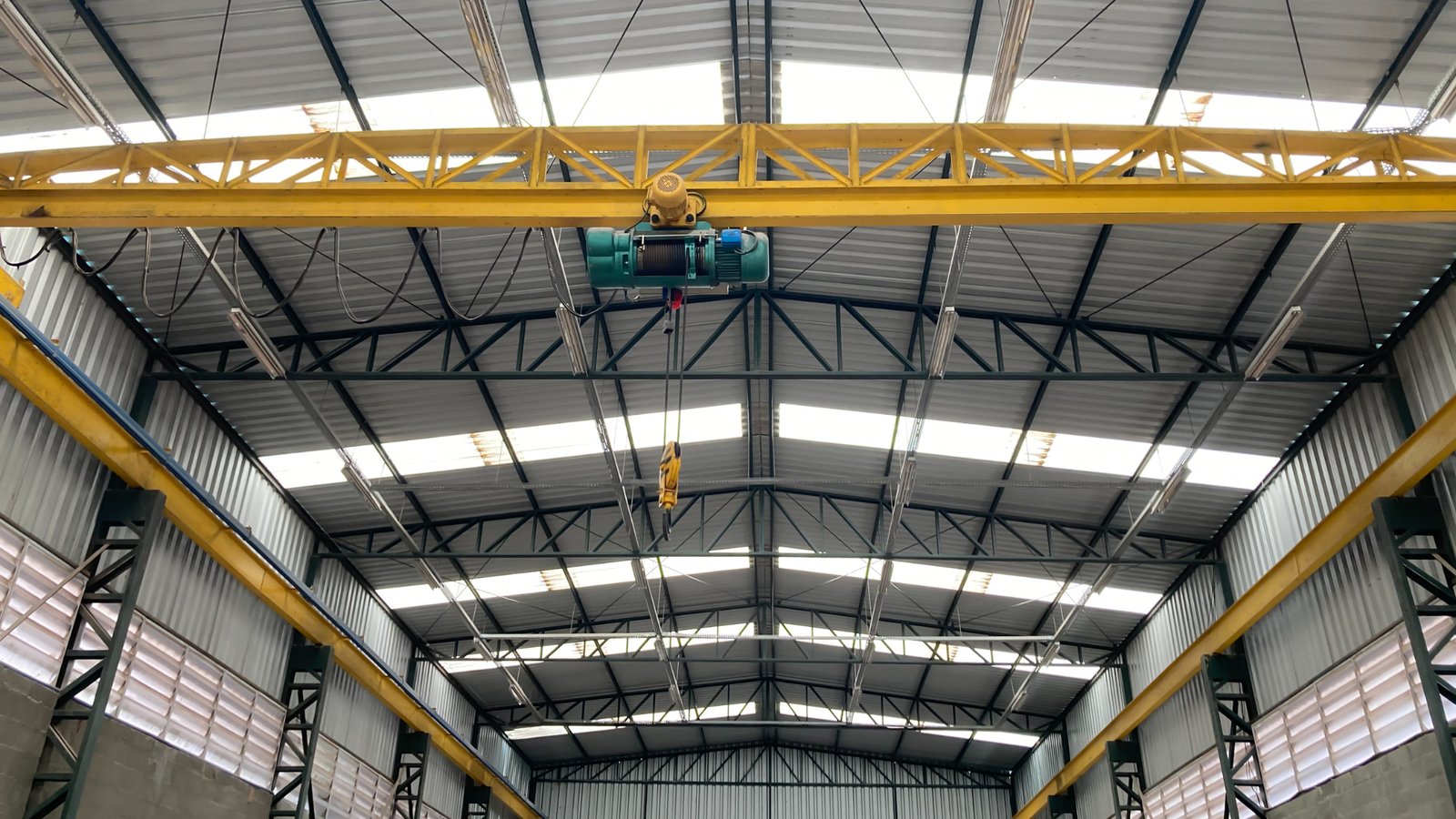
Wind turbine service shops near Roscoe are a good picture of flex space in West Texas: a building with a clear shop bay, a few offices, a yard for trucks and a slab that can handle a crane one day and parts racking the next. The Roscoe Wind Farm runs 627 turbines for 781.5 MW of capacity, and every one of those machines needs technicians, tools and a place to stage parts. The buildings that serve them do not look like a distribution giant, and they rarely get a big contractor's attention, but they are some of the most common commercial projects in the region.
We build flex and light industrial slabs, aprons and yards in towns and on rural lots, with the pipe and dirt-work firms coordinated by us. A shop of this size is often poured in a single day, which makes the plant distance and crew travel the largest unknowns. Owners deciding between a metal shell and masonry will find the floor questions covered on our page for pre-engineered metal buildings.
Concrete placement and related trade coordination
The concrete partners we coordinate pour and trowel footings, slabs on grade, overhead door aprons, small dock positions, sidewalks and the truck yard. For a flex building the interior slab usually needs enough thickness for a forklift or a service truck, and the yard concrete needs enough strength to turn heavy tires without scuffing. We work out the section with the owner and the engineer, pointing out when a thinner design is reasonable.
Grading, water service and sewer taps are handled by partners we coordinate and the stormwater path. Because small buildings have small budgets, we bundle the work into one mobilization when possible so the owner does not pay for several trips to a remote lot.
Edge details deserve attention on small buildings. A thickened edge at the overhead door, a recessed slab at the entry and a sloped apron that sheds water away from the shop are cheap to form and annoying to fix. We walk the layout with the owner before the forms close.
Small-town flex sites and the roads that serve them
U.S. Highways 20/80 and 84 run through Roscoe, about eight miles west of Sweetwater, and Farm Road 608 also serves the town. U.S. Highway 84, Farm to Market Road 400 and Farm to Market Road 41 serve Slaton, and the Caverns of Sonora lie about eight miles west of Sonora, which is at an elevation of 2,129 feet. Those descriptions show the type of site we reach: a county seat or a junction town where the land is affordable and the road is good enough for tractor trailers.
We mobilize crews to those places from our regional staging points and tell owners what each trip adds to the estimate. The closer the town is to a plant, the lower the haul cost; the farther, the more we recommend grouping slabs.
Sequence matters in a small town. We confirm the plant's hours, whether it needs a day of notice, and whether the driver can reach the lot without crossing a bridge or railroad crossing that limits loads. Those small checks keep a one-day pour from turning into a two-day argument.
Where flex fits among other building types
Flex space sits between an office and a warehouse. It has a dock or a drive-in door, a finished front and a floor that can hold light production. If the owner needs bulk storage with higher stacking, a warehouse section is more suitable. If the building will hold a production line, see the loads discussed under manufacturing plants.
Many flex projects are built as shells with later tenant improvements, so we place the slab to accept future partitions, trench drains and equipment pads without cutting through reinforcement.
Clear height, door size and truck turning are the other early decisions. A tenant who runs box trucks needs a deeper apron than one who runs pickups, and a tenant with a lift needs a floor flat enough to run it safely. We ask for the tenant type, even if it is a guess, because an apron cannot be widened cheaply after the yard is poured.
Services that often come with a flex building
The common companions are a parking lot, sidewalks, ADA ramps and a truck yard. We price parking lot concrete and sidewalks and flatwork with the building so the owner can see the whole site cost, and we plan ADA ramps and accessible routes from the entrance to the public way.
Where the tenant needs drainage, a trench drain across the shop floor gets laid out before the slab pour so the floor can slope toward it without making the rest of the room uneven.
Safety on small, exposed sites
Small projects are not low-risk projects. A crew on a single-slab job has less shade, less support and a longer drive to help than a crew on a large campus. We run a short orientation at the start of each day and confirm water, shade and communication. Heat is the main concern in summer, and gusting wind is the main concern in the cool months.
We also manage the neighbors. Shops near towns share roads with school buses, farm equipment and oilfield trucks, so we mark the mixer route and place a flagger where trucks turn into the lot. Rebar, form stakes and saw dust stay inside a marked work zone, and the crew leaves the lot tidy when each placement is done.
Who builds flex and light industrial here
The owners range from local developers to regional service firms. Irrigation covers about 400,000 acres of Gaines County, and only one other Texas county grows more cotton, which is the kind of customer base that supports equipment dealers, supply shops and service buildings. Western Texas College in Snyder offers programs in petroleum technology, solar energy technology and welding, which feeds a skilled workforce for the same kinds of shops.
Developers who build to lease should see our work for commercial developers, and companies expanding a plant yard can read about industrial and manufacturing owners.
Describe the lot and the tenant
Send a plat, the building size and a note on the tenant you expect. Your estimate will name the town, the plant we plan to use and the days we need on site, so a small project does not get a vague number.
Common Questions
What slab thickness suits a shop with a service truck?
Many owners choose a thicker section than office floors because trucks and lifts concentrate load. The engineer sets the final design from the soil report and the equipment list, and we can price a thinner and a thicker option side by side.
Can the floor be poured before the tenant is known?
Yes, and it is common. We recommend a durable general-purpose section with a joint layout that tolerates later partitions, plus extra thickened areas where machines are likely to land.
How do you price a very small building in a remote town?
We show a separate mobilization line so the owner can see what travel costs. Combining the slab with the yard and sidewalks into one pour week often spreads the trip cost across more concrete.
Do you build the whole site or only the concrete?
We build the concrete and bring the pipe and dirt-work specialists into one schedule, so the owner talks to a single contact while each firm performs its own scope.